
Learn › Life cycle › The Jewish wedding
Jewish Wedding Customs and Traditions Explained
The meaning of Jewish wedding customs: the aufruf, fasting, bedeken, chuppah, circling, ring, ketubah, breaking the glass, yichud and more.
Part 14 of 21 · Love and marriage, step by step
On this page · 3 min read
Before the weddingThe wedding dayUnder the chuppahAfter the chuppahJewish wedding customs, from the veiling of the bride to the breaking of the glass, each carry a deep meaning about love, commitment and building a Jewish home. This guide explains the most common traditions, in the order they usually happen. For the core ceremony and its laws, see our main Jewish wedding guide.
Before the wedding
- Not seeing each other. Many couples do not see each other for the week before the wedding, which makes the reunion at the wedding even more joyful.
- The aufruf. On the Shabbat before the wedding, the groom is called up for an aliyah to the Torah, and the congregation celebrates, sometimes by tossing soft candies.
- Mikvah. Before the wedding, the bride immerses in the mikvah, a deeply spiritual step into married life.
The wedding day
- A personal Yom Kippur. The wedding day is like Yom Kippur for the couple: all past mistakes are forgiven. Many brides and grooms fast until the ceremony and add the Yom Kippur confession to their afternoon prayer.
- Kabbalat panim. The bride and groom greet guests in separate rooms. In Chabad, the groom traditionally recites a Chassidic discourse, while friends sing.
- Tenaim and ketubah. Before the ceremony, the ketubah, the marriage contract, is signed by two witnesses. Some families also read the tenaim, the engagement terms, and the mothers break a plate.
- Bedeken. The groom, escorted by family and friends, goes to the bride and lowers her veil over her face. This recalls Rebecca, who covered her face when she met Isaac, and shows that the groom loves her for her inner beauty. The bride is often blessed: "Our sister, may you become thousands of myriads."
Under the chuppah
- The chuppah. The canopy represents the new home the couple will build. In Chabad, the chuppah is held outdoors under the open sky, recalling G-d's blessing that Abraham's descendants would be as many as the stars.
- Escorted by parents. The groom and bride are each walked to the chuppah, often by their parents, sometimes holding candles.
- Seven circles. The bride circles the groom seven times, like the seven days of creation, building a wall of love and protection around their home.
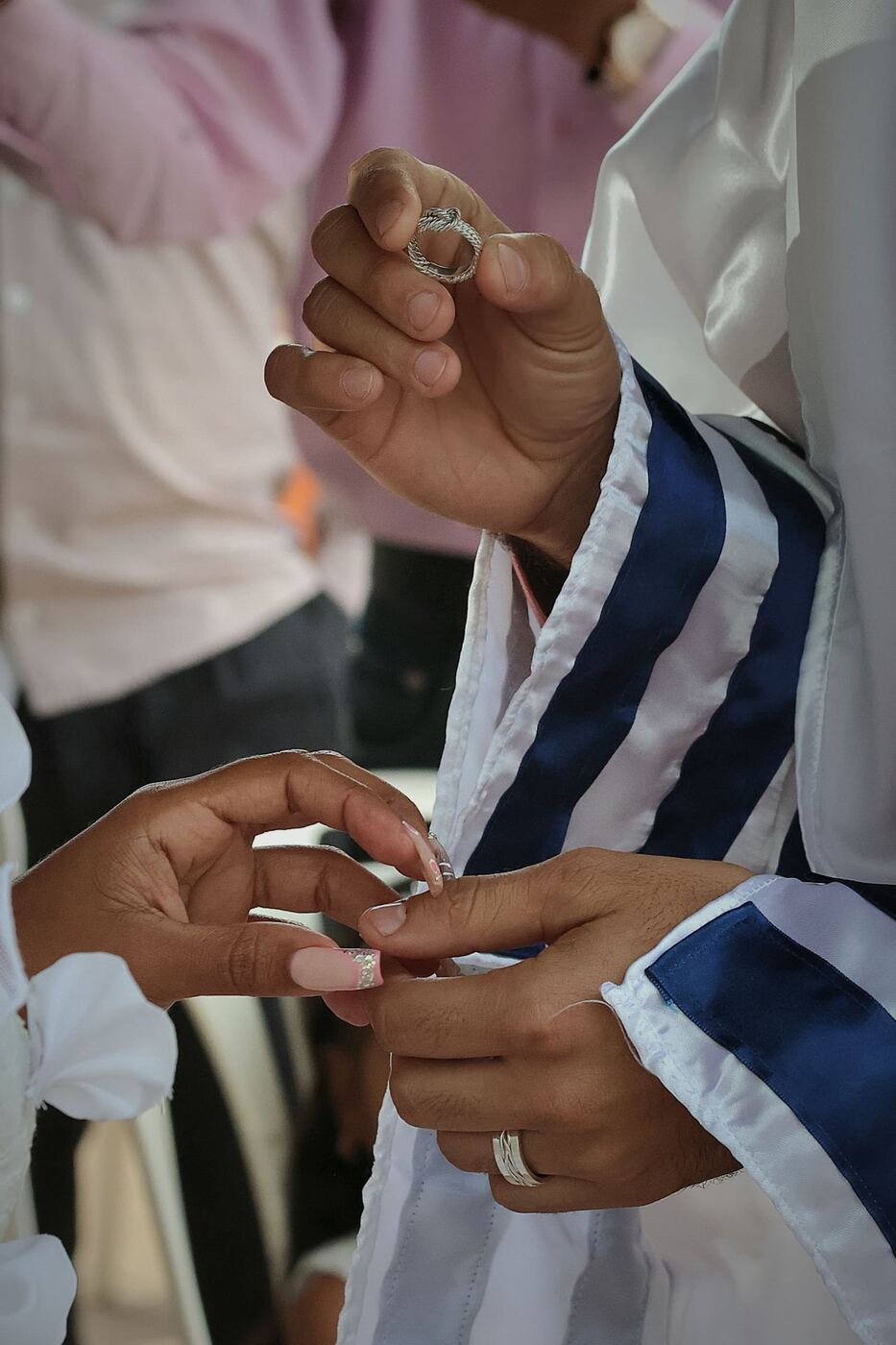
- The ring. The groom places a plain ring on the bride's finger and says the words of betrothal. A simple ring with no stones reflects a marriage built on wholeness and honesty.
- The ketubah is read aloud and given to the bride.
- Seven blessings. The Sheva Brachot are recited over a cup of wine.
- Breaking the glass. The groom breaks a glass to remember the destruction of the Holy Temple, even at the happiest moment. Then everyone shouts "Mazal tov!"
After the chuppah
- Yichud. The couple spend a few minutes alone in a private room, their first moments as a married couple, and often break their fast together.
- Dancing. The meal is full of joyful dancing. It is a mitzvah to bring joy to the bride and groom.
- Sheva Brachot. For a week after the wedding, festive meals are held with the seven blessings. See Sheva Brachot.
In Lamorinda: Planning a Jewish wedding? Rabbi Labkowski is glad to help. See jewishlamorinda.com/help/getting-married or call 925-384-7242.
Common questions
Why is a glass broken at a Jewish wedding?
To remember Jerusalem and the destroyed Holy Temple. Even at our greatest joy, we remember that the world is not yet complete, and we pray for its rebuilding.
Why does the bride circle the groom seven times?
Seven represents completeness, like the seven days of creation. The circles show the bride building the walls of their new home and the bond between them. Some say it parallels the seven blessings.
Do we have to follow every custom?
The essentials are the ring, the witnesses, the ketubah and the blessings. Customs add meaning and beauty. Speak with the Rabbi about which customs fit your family.
Step by step · Part 14 of 21
Love and marriage, step by step
NextYichud: The Couple's First Minutes Alone After the ChuppahWhat is the yichud room? The private minutes a couple spend alone after the chuppah, the witnesses and the first meal. Ask Chabad of Lamorinda.All 21 parts
- Jewish Dating: Finding Your Match the Jewish Way
- Bashert: Is There One Soulmate for Everyone?
- Jewish Engagement: The L'chaim, Tenaim and the Months Before the Wedding
- Tenaim: The Engagement Agreement and the Broken Plate
- A Jewish Wedding in Lafayette, Moraga or Orinda: Rabbi, Chuppah and Planning
- Choosing a Wedding Date: Jewish Calendar Guidelines
- Kallah Classes: Preparing for Marriage as a Jewish Bride
- Chosson Classes: Preparing for Marriage as a Jewish Groom
- What Is an Aufruf? The Groom's Torah Honor Before the Wedding
- Ketubah and Wedding Ring: The Jewish Marriage Contract Explained
- Fasting on Your Wedding Day: Why Bride and Groom Fast and How It Ends
- The Jewish Wedding: Traditions and Ceremony Explained Step by Step
- What Is a Chuppah? The Wedding Canopy and Its Meaning
- Jewish Wedding Customs and Traditions Explained
- Yichud: The Couple's First Minutes Alone After the Chuppah
- Attending a Jewish Wedding: A Guest's Guide
- Sheva Brachot: The Seven Wedding Blessings Explained
- The First Year of Marriage: Shana Rishona in Jewish Tradition
- Jewish Wedding Anniversary: Ways to Celebrate on Your Hebrew Date
- Shalom Bayit: Peace in the Jewish Home
- Marrying Again: A Jewish Guide to a Second Marriage
Questions about this, or something on your mind? Message the Rabbi or the Rebbetzin privately, or call 925-384-7242. · Email
Read next
 The Jewish Wedding: Traditions and Ceremony Explained Step by StepA step-by-step guide to the Jewish wedding: the ketubah, chuppah, ring, seven blessings, breaking the glass, and what they mean.Read next →