
Learn › Life cycle › The Jewish wedding
What Is an Aufruf? The Groom's Torah Honor Before the Wedding
An aufruf is when the groom is called to the Torah on the Shabbat before his wedding. Learn the meaning, the candy and Kiddush, and what to expect.
Part 9 of 21 · Love and marriage, step by step
On this page · 3 min read
What an aufruf isWhy we do itWhat to expect as a guestFor the couple: how to arrange oneAn aufruf (אויפרוף, Yiddish for "calling up") is the custom of calling the groom, the chatan (חתן), up to the Torah for an aliyah on the Shabbat before his wedding. It is followed by a celebration: the congregation often throws candy at the groom, and a festive Kiddush follows the service.
Couples and families in Lafayette, Moraga and Orinda can arrange one with the Rabbi, and guests are always welcome.
What an aufruf is
On Shabbat morning, the Torah is read in synagogue and several people are called up by their Hebrew names for an aliyah, a blessing over the Torah reading. At an aufruf, the groom receives the most festive aliyah. The custom parallels the Torah honor of a boy before his bar mitzvah: it marks entry into a new stage of adult life.
If the groom will be away on the Shabbat before the wedding, the aufruf may be held the week before, though ideally he is also called up the Shabbat immediately before the wedding.
Why we do it
The custom has several meanings:
- Sustaining the world. A couple helps sustain the world by raising children who study Torah, so the groom reads from the Torah.
- A royal parallel. A Jewish king had to keep two Torah scrolls, and the groom is called up twice, before and after the wedding.
- A new kind of learning. Torah studied after marriage has a different depth than before.
- Maturity. Being called up marks that he is an adult, ready for marriage.
- Holy beginnings. Starting the celebration on Shabbat connects the wedding's physical details to its spiritual heart.
- Blessing for livelihood. Candies and nuts showered on the groom express hope for a sweet life and blessings.
In ancient times, grooms and mourners entered the Temple through separate gates, and grooms were blessed to have children. The Sages later moved that blessing to the synagogue on Shabbat after the Temple was destroyed.
What to expect as a guest
Here is what the scene usually looks like:
- The Torah is taken from the Ark and read. Guests answer "amen" after each blessing.
- The groom is called up, often with extra song, wearing a tallit.
- Afterwards, people traditionally throw candy at him, and the children gather it up.
- The men may dance around the sanctuary with the groom. Guests need not dance, and no fancy steps are needed.
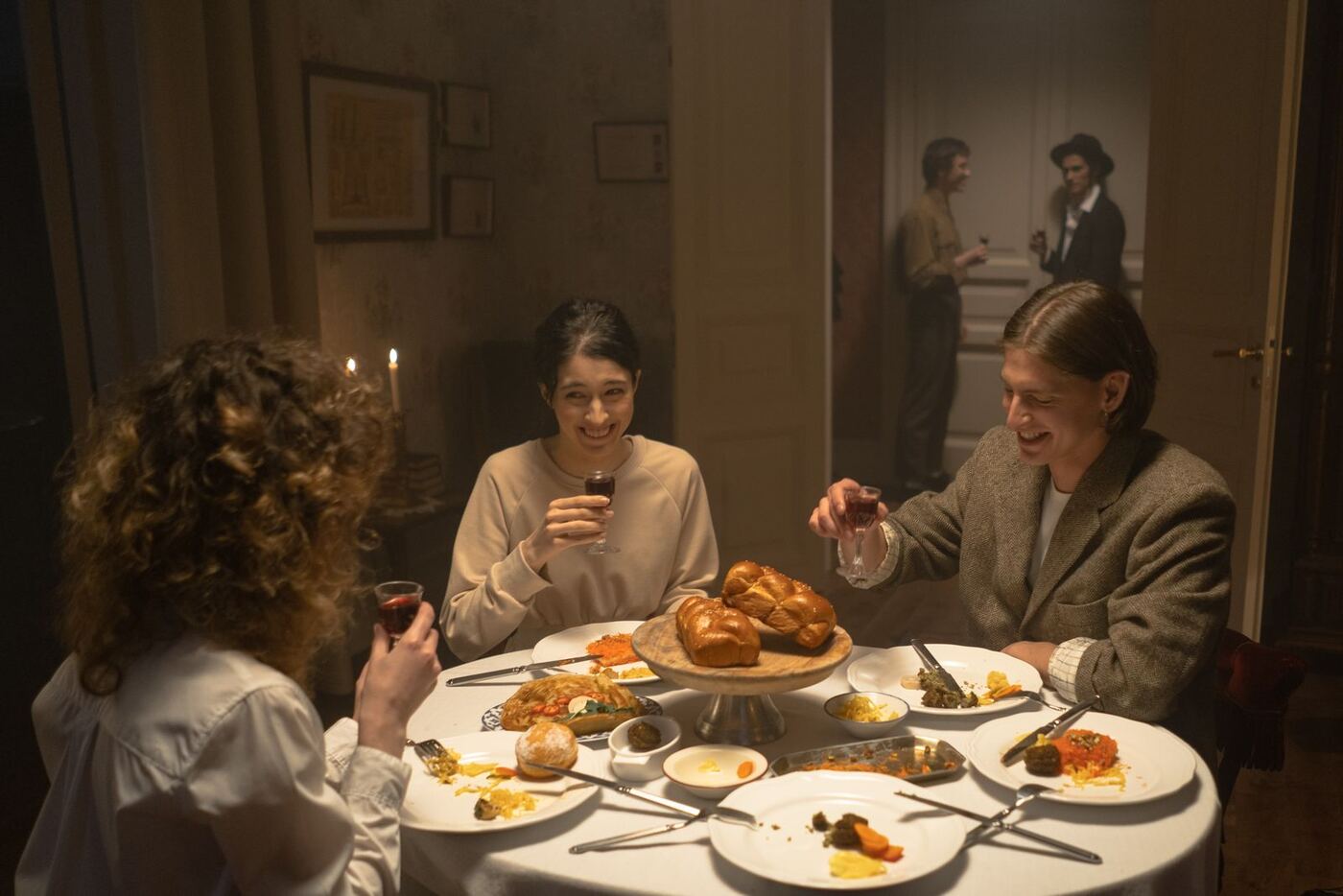
- A Kiddush follows, with wine and a light meal. For an aufruf it is often bigger, such as a hot Kiddush with cholent.
In some communities, the celebration runs the whole Shabbat, beginning with a Friday night meal. If you are not familiar with a Shabbat service, see Shabbat in Lamorinda and the Shabbat times.
For the couple: how to arrange one
- Choose the Shabbat before your wedding. If travel makes that hard, ask the Rabbi about the week before.
- Call the Rabbi at 925-384-7242 well in advance, and ask about the service and the Kiddush.
- Plan the Kiddush. Many couples sponsor the Kiddush that day. See sponsoring a Kiddush.
- Invite family and friends, and let them know what to expect. They are welcome whether or not they know the service.
- Prepare to read or follow the blessings. Ask the Rabbi for the words in Hebrew and English.
Customs vary: some communities hold a separate gathering for the bride, and Sephardic and Ashkenazi customs differ in details. Ask the Rabbi what we do here and what fits your family.
In Lamorinda: Engaged, or invited to an aufruf? Call Rabbi Labkowski at 925-384-7242 to talk about arranging one at Chabad of Lamorinda in Lafayette.
Common questions
What is an aufruf?
An aufruf is the custom of calling the groom to the Torah on the Shabbat before his wedding. It is followed by a celebration, often with candy and a festive Kiddush.
Why is candy thrown at an aufruf?
The candies and nuts thrown at the groom express blessing and hope for a sweet life. Children usually collect them.
Do I have to dance or know Hebrew at an aufruf?
No. Guests answer "amen" and may watch. No fancy steps are expected.
What if the groom is away on the Shabbat before the wedding?
The aufruf can be held the week before, though ideally he is also called up the Shabbat just before the wedding. Ask the Rabbi.
Is there an aufruf for the bride?
The Torah honor is for the groom. In some communities there is a separate gathering for the bride, and customs vary. Ask the Rabbi.
How can we arrange an aufruf in Lafayette, Moraga or Orinda?
Call Chabad of Lamorinda in Lafayette at 925-384-7242 or write through talk to the Rabbi.
Take the next step
- Read Jewish wedding customs and Chosson classes.
- Plan a sponsor for the day: sponsoring a Kiddush.
- Call us to set the date: talk to the Rabbi.
Step by step · Part 9 of 21
Love and marriage, step by step
NextKetubah and Wedding Ring: The Jewish Marriage Contract ExplainedWhat a ketubah is, what it says, who signs it, and why a Jewish wedding ring is a plain band given under the chuppah.All 21 parts
- Jewish Dating: Finding Your Match the Jewish Way
- Bashert: Is There One Soulmate for Everyone?
- Jewish Engagement: The L'chaim, Tenaim and the Months Before the Wedding
- Tenaim: The Engagement Agreement and the Broken Plate
- A Jewish Wedding in Lafayette, Moraga or Orinda: Rabbi, Chuppah and Planning
- Choosing a Wedding Date: Jewish Calendar Guidelines
- Kallah Classes: Preparing for Marriage as a Jewish Bride
- Chosson Classes: Preparing for Marriage as a Jewish Groom
- What Is an Aufruf? The Groom's Torah Honor Before the Wedding
- Ketubah and Wedding Ring: The Jewish Marriage Contract Explained
- Fasting on Your Wedding Day: Why Bride and Groom Fast and How It Ends
- The Jewish Wedding: Traditions and Ceremony Explained Step by Step
- What Is a Chuppah? The Wedding Canopy and Its Meaning
- Jewish Wedding Customs and Traditions Explained
- Yichud: The Couple's First Minutes Alone After the Chuppah
- Attending a Jewish Wedding: A Guest's Guide
- Sheva Brachot: The Seven Wedding Blessings Explained
- The First Year of Marriage: Shana Rishona in Jewish Tradition
- Jewish Wedding Anniversary: Ways to Celebrate on Your Hebrew Date
- Shalom Bayit: Peace in the Jewish Home
- Marrying Again: A Jewish Guide to a Second Marriage
Questions about this, or something on your mind? Message the Rabbi or the Rebbetzin privately, or call 925-384-7242. · Email
Read next
 Jewish Wedding Customs and Traditions ExplainedThe meaning of Jewish wedding customs: the aufruf, fasting, bedeken, chuppah, circling, ring, ketubah, breaking the glass, yichud and more.Read next →