
Learn › Life cycle › The Jewish wedding
The Jewish Wedding: Traditions and Ceremony Explained Step by Step
A step-by-step guide to the Jewish wedding: the ketubah, chuppah, ring, seven blessings, breaking the glass, and what they mean.
Part 12 of 21 · Love and marriage, step by step
On this page · 2 min read
The meaning of a Jewish weddingBefore the weddingThe ceremony, step by stepAfter the weddingA Jewish wedding is a ceremony under a chuppah (canopy) in which a bride and groom are joined through a ring, a marriage contract called a ketubah, and seven blessings. It is considered one of the holiest days of a person's life, when two halves of one soul are reunited.
The meaning of a Jewish wedding
Jewish mysticism teaches that before birth, a husband and wife are one soul that is divided into two. Marriage brings them back together. That is why the wedding day is compared to a personal Yom Kippur: many brides and grooms fast until the ceremony and pray for a fresh start.
Before the wedding
- Aufruf: on the Shabbat before the wedding, the groom is called up to the Torah and the community celebrates.
- Mikvah: the bride immerses in a mikvah shortly before the wedding, a deeply spiritual preparation.
- Not seeing each other: many couples do not see each other for the week before the wedding, which makes the day even more special.
The ceremony, step by step
- Kabbalat panim: the bride and groom greet guests in separate rooms. The groom sits at a table called the tish, surrounded by friends.
- Signing the ketubah: at the groom's tish, two kosher witnesses sign the marriage contract, which lists the groom's obligations to his wife.
- Badeken (veiling): the groom covers the bride's face with a veil, recalling how Rebecca veiled herself when she met Isaac.
- The chuppah: the couple stands under a canopy, ideally outdoors under the open sky, symbolizing the home they will build. The bride may circle the groom seven times.
- Betrothal blessings: blessings are said over a cup of wine.
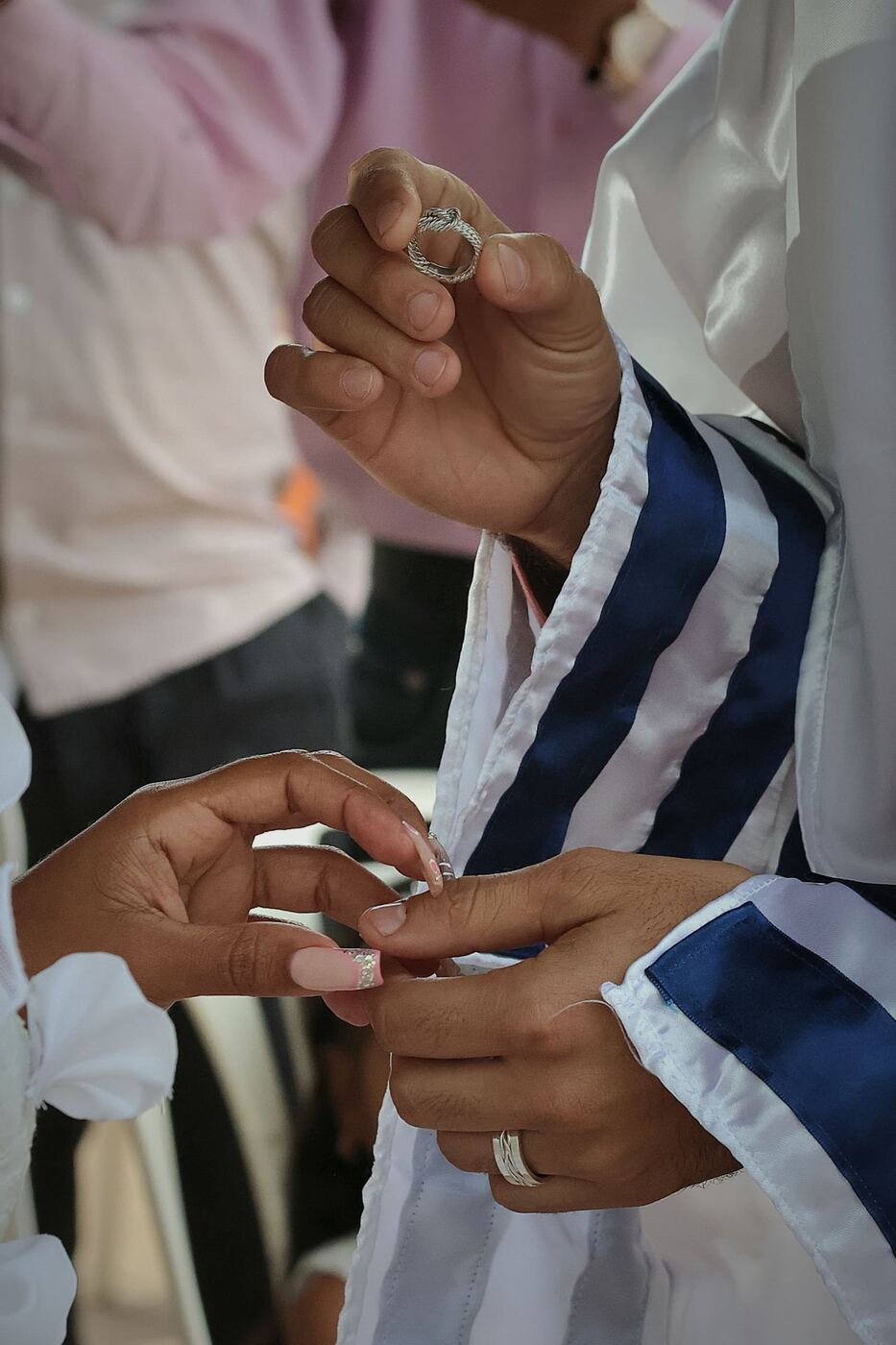
- The ring: the groom places a plain ring on the bride's finger and says, "Behold, you are consecrated to me with this ring according to the law of Moses and Israel." This is the legal heart of the marriage.
- Reading the ketubah: the contract is read aloud.
- Sheva brachot (seven blessings): seven blessings are recited over a second cup of wine, often by honored guests.
- Breaking the glass: the groom breaks a glass to remember the destruction of the Temple in Jerusalem, even at our happiest moments. Everyone shouts "Mazel tov!"
- Yichud: the couple spends a few private minutes together.
After the wedding
The celebration continues with dancing and a festive meal. For the next seven days, festive meals called sheva brachot are held in the couple's honor.
In Lamorinda: Getting married? Call Rabbi Labkowski at 925-384-7242 and we will help you plan a traditional Jewish wedding that is warm, personal and meaningful.
Mark the occasion: sponsor a Kiddush or give in their honor Sponsor in honor or memory of a loved one →
Common questions
What is a ketubah?
A ketubah is the Jewish marriage contract, written in Aramaic. It guarantees the wife's rights and the husband's responsibilities. The bride keeps it, and it should be stored safely.
Why is the ring plain?
The ring should be a simple band with no stones, so its value is clear and the commitment is pure and unbroken, like a circle with no end.
Do both bride and groom need to be Jewish?
A Jewish wedding according to Jewish law is between two Jews. If you have questions about your situation, please speak privately with the Rabbi. We are here to help with kindness.
Can we have a Jewish wedding if we are already civilly married?
Yes. Many couples who married civilly later choose to have a chuppah. It is a beautiful step at any stage. Ask the Rabbi about the details.
Who can officiate?
A Rabbi who knows the laws of marriage should guide the ceremony to ensure it is valid, especially the ring, the witnesses and the ketubah.
Step by step · Part 12 of 21
Love and marriage, step by step
NextWhat Is a Chuppah? The Wedding Canopy and Its MeaningWhat is a chuppah? The Jewish wedding canopy on four poles, why it is open to the sky, who stands under it and what it means. Ask Chabad of Lamorinda.All 21 parts
- Jewish Dating: Finding Your Match the Jewish Way
- Bashert: Is There One Soulmate for Everyone?
- Jewish Engagement: The L'chaim, Tenaim and the Months Before the Wedding
- Tenaim: The Engagement Agreement and the Broken Plate
- A Jewish Wedding in Lafayette, Moraga or Orinda: Rabbi, Chuppah and Planning
- Choosing a Wedding Date: Jewish Calendar Guidelines
- Kallah Classes: Preparing for Marriage as a Jewish Bride
- Chosson Classes: Preparing for Marriage as a Jewish Groom
- What Is an Aufruf? The Groom's Torah Honor Before the Wedding
- Ketubah and Wedding Ring: The Jewish Marriage Contract Explained
- Fasting on Your Wedding Day: Why Bride and Groom Fast and How It Ends
- The Jewish Wedding: Traditions and Ceremony Explained Step by Step
- What Is a Chuppah? The Wedding Canopy and Its Meaning
- Jewish Wedding Customs and Traditions Explained
- Yichud: The Couple's First Minutes Alone After the Chuppah
- Attending a Jewish Wedding: A Guest's Guide
- Sheva Brachot: The Seven Wedding Blessings Explained
- The First Year of Marriage: Shana Rishona in Jewish Tradition
- Jewish Wedding Anniversary: Ways to Celebrate on Your Hebrew Date
- Shalom Bayit: Peace in the Jewish Home
- Marrying Again: A Jewish Guide to a Second Marriage
Questions about this, or something on your mind? Message the Rabbi or the Rebbetzin privately, or call 925-384-7242. · Email
Read next
 Mikvah: What It Is and Why Jewish Women ImmerseA gentle guide to the mikvah, the Jewish ritual bath: its meaning, family purity, preparation, and who uses it and when.Read next →