
Learn › Life cycle › The Jewish wedding
Attending a Jewish Wedding: A Guest's Guide
Invited to a Jewish wedding? What happens from the badeken to breaking the glass, what to wear, what to give, when to arrive and what "Mazal tov" means.
Part 16 of 21 · Love and marriage, step by step
On this page · 3 min read
When to arriveThe badekenThe chuppahBreaking the glassYichud and the mealDancing: why it is sometimes separateWhat to wearGiftsWhat to sayThe invitation came, and you are thrilled, and maybe a little unsure. You do not need to know anything to enjoy a Jewish wedding; the joy carries everyone. But knowing what is coming makes it even sweeter.
When to arrive
Jewish weddings often begin with a reception before the ceremony, called the kabbalat panim (welcoming the faces). Guests greet the bride, who sits like a queen surrounded by friends and family, and the groom, who sits with the men at a table called the tish, where the marriage documents are signed and words of Torah are shared. Arrive at the time on the invitation; this hour is part of the celebration, not just waiting.
The badeken
Before the ceremony, the groom is escorted with singing and dancing to the bride, and he lowers her veil over her face. This is the badeken. It recalls our matriarch Rebecca, who covered herself when she first saw Isaac, and it is a moment of great emotion. Parents often bless the bride here. Stand, watch and clap along.
The chuppah
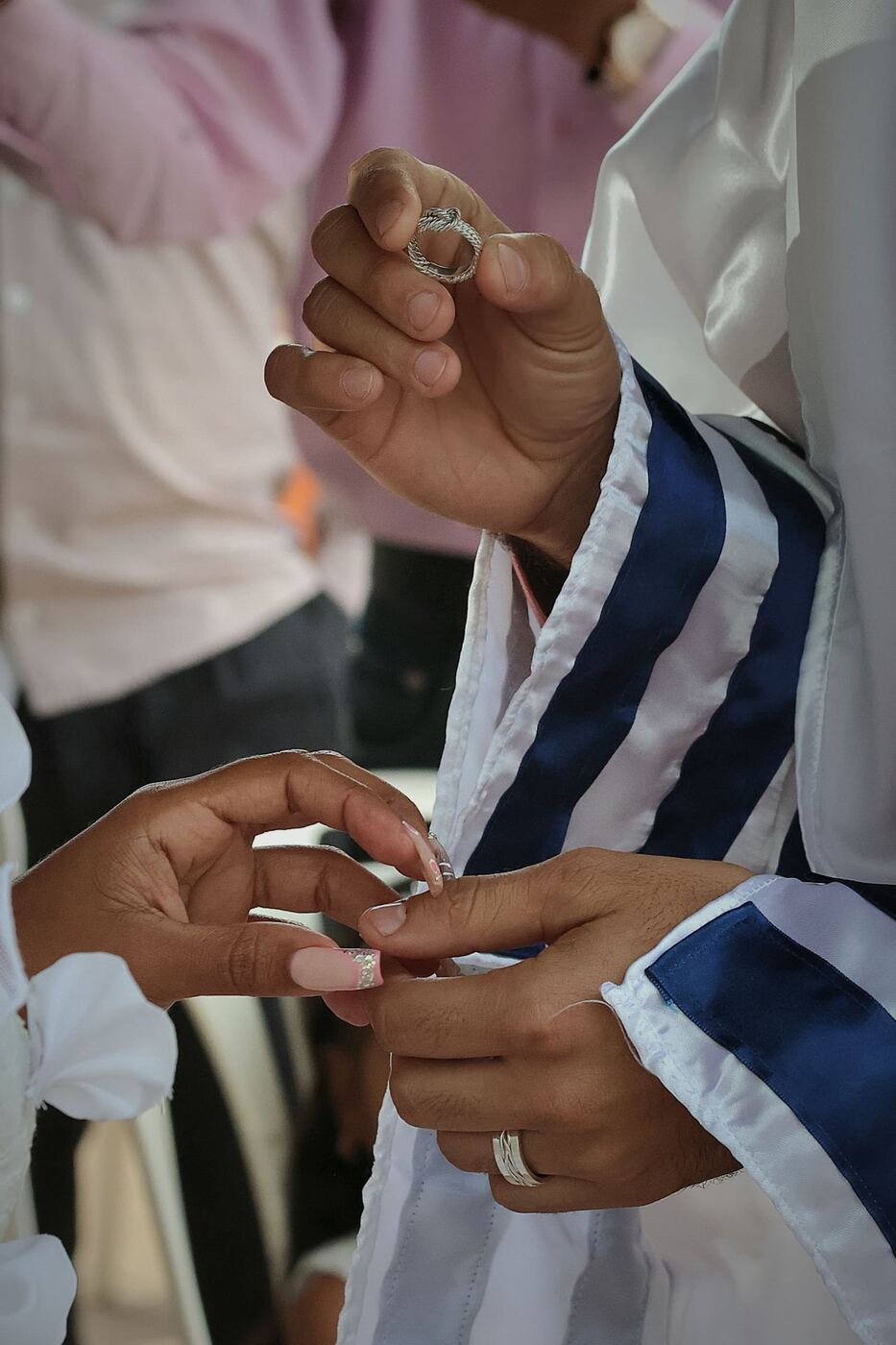
The ceremony takes place under the chuppah, a canopy open on four sides like the tent of Abraham and Sarah, a home open to guests. The groom is led in first, then the bride, who in many communities circles the groom seven times. A blessing is said over wine, a ring is placed on the bride's finger, the ketubah is read, and seven blessings are sung. Guests stand while the couple enters and sit when invited; follow the people around you. Silence your phone; many couples ask guests not to take pictures during the ceremony.
Breaking the glass
At the end, the groom stamps on a glass and everyone shouts "Mazal tov!" Even at the happiest moment we remember the destruction of Jerusalem and that the world is not yet whole. Then the music starts and the dancing escorts the couple out. See the Jewish wedding and wedding customs for the meaning of each step.
Yichud and the meal
The couple then spends a few minutes alone in a private room (yichud), their first moments together as husband and wife. Guests move to the meal, which begins with a blessing over bread; the couple enters to music and the dancing begins in earnest. After the meal, the Grace After Meals is sung and the seven blessings are repeated; see sheva brachot.
Dancing: why it is sometimes separate
At traditional weddings men dance with the groom and women with the bride, often on two sides of a divider. This is not about distance; it is about letting go. Free of self-consciousness, guests dance with abandon, lift the couple on chairs, and perform tricks and silly routines whose whole purpose is to make the bride and groom happy. Bringing joy to a couple is a mitzvah, and the dancing is where guests fulfill it. Join in: the circle always has room for one more.
What to wear
Dress as for a festive, dignified occasion. At Orthodox weddings, women usually choose a dress or skirt below the knee with covered shoulders, and men wear a suit and a kippah (a basket is usually at the door). When in doubt, modest and elegant is always right. See tzniut.
Gifts
Checks and gift cards are common and appreciated; many give in multiples of 18, the numerical value of chai, "life" ($36, $54, $180). If the couple is religious, Judaica, Shabbat candlesticks or a Kiddush cup are lovely. See Jewish gift ideas.
What to say
"Mazal tov!" to the couple, their parents and grandparents, and anyone who looks happy. It is the all-purpose blessing of joy. To the parents you can also say, "May you have much nachas" (joy and pride from the children).
In Lamorinda: Invited to a wedding and not sure what to expect? Rabbi Yisroel Labkowski is happy to answer any question, for guests from Lafayette, Moraga and Orinda: 925-384-7242.
Common questions
I am not Jewish. Am I welcome?
Absolutely. Guests of every background are welcome at a Jewish wedding. Simply follow the people around you, stand when they stand, and join the dancing if you like.
Do I have to wear a kippah?
Men are asked to cover their heads during the ceremony and the meal, Jewish or not, as a sign of respect. One will be provided.
Will there be food I can eat?
Traditional weddings are kosher, so meat and dairy are not served together. Dietary needs are usually asked about on the reply card. See kosher, and getting married for how the Rabbi helps couples in Lamorinda.
Step by step · Part 16 of 21
Love and marriage, step by step
NextSheva Brachot: The Seven Wedding Blessings ExplainedWhat the Sheva Brachot are, what the seven blessings say, and how the week of festive Sheva Brachot meals after a Jewish wedding works.All 21 parts
- Jewish Dating: Finding Your Match the Jewish Way
- Bashert: Is There One Soulmate for Everyone?
- Jewish Engagement: The L'chaim, Tenaim and the Months Before the Wedding
- Tenaim: The Engagement Agreement and the Broken Plate
- A Jewish Wedding in Lafayette, Moraga or Orinda: Rabbi, Chuppah and Planning
- Choosing a Wedding Date: Jewish Calendar Guidelines
- Kallah Classes: Preparing for Marriage as a Jewish Bride
- Chosson Classes: Preparing for Marriage as a Jewish Groom
- What Is an Aufruf? The Groom's Torah Honor Before the Wedding
- Ketubah and Wedding Ring: The Jewish Marriage Contract Explained
- Fasting on Your Wedding Day: Why Bride and Groom Fast and How It Ends
- The Jewish Wedding: Traditions and Ceremony Explained Step by Step
- What Is a Chuppah? The Wedding Canopy and Its Meaning
- Jewish Wedding Customs and Traditions Explained
- Yichud: The Couple's First Minutes Alone After the Chuppah
- Attending a Jewish Wedding: A Guest's Guide
- Sheva Brachot: The Seven Wedding Blessings Explained
- The First Year of Marriage: Shana Rishona in Jewish Tradition
- Jewish Wedding Anniversary: Ways to Celebrate on Your Hebrew Date
- Shalom Bayit: Peace in the Jewish Home
- Marrying Again: A Jewish Guide to a Second Marriage
Questions about this, or something on your mind? Message the Rabbi or the Rebbetzin privately, or call 925-384-7242. · Email
Read next
 The Jewish Wedding: Traditions and Ceremony Explained Step by StepA step-by-step guide to the Jewish wedding: the ketubah, chuppah, ring, seven blessings, breaking the glass, and what they mean.Read next →