
Learn › Prayer & Torah › The daily prayers and the Shema
The Morning Service (Shacharit): A First-Timer's Guide
Walk through Shacharit, the Jewish morning service, step by step: blessings, psalms, Shema, Amidah, Torah reading and the closing prayers.
Part 6 of 27 · Learning to pray
On this page · 3 min read
A word about the prayer bookThe order of the serviceWhat the leader doesWhen to stand, sit and bowWeekday and Shabbat services in LamorindaHow to start without feeling lostShacharit is the Jewish morning service, said every day of the year. It follows a set order, so once you know the map, you can find your place at any minyan. A weekday service takes about half an hour to 45 minutes; on Shabbat it is longer, with the Torah reading and a talk. You do not need Hebrew: a prayer book with English will carry you through.
A word about the prayer book
Chabad prays from the text called Nusach Ari, a version arranged around the customs of the Arizal, the great sixteenth-century Kabbalist, and used by Chassidim. Most Ashkenazi and Sephardic prayer books share the same main prayers, but some wording and the order of a few lines differ. If you pray at another synagogue, it will feel familiar. If something looks different, that is normal; ask the Rabbi.
The order of the service
- Morning blessings. Modeh Ani, washing the hands, Asher Yatzar, the blessings on the Torah, and the morning blessings. On weekdays, men put on a tallit and tefillin (in Chabad, a tallit gadol is worn after marriage; all men wear tzitzit).
- Pesukei Dezimra ("verses of song"). Psalms of praise that warm the heart before we pray. They include Ashrei and Psalm 150, and end with the blessing Yishtabach.
- The Shema and its blessings. The call to the congregation, Barchu, then blessings about creation and love, and the Shema itself, the Jewish declaration of faith. This is the heart of the first half.
- The Amidah. The silent standing prayer of requests and thanks. Read about it in our guide to the Amidah.
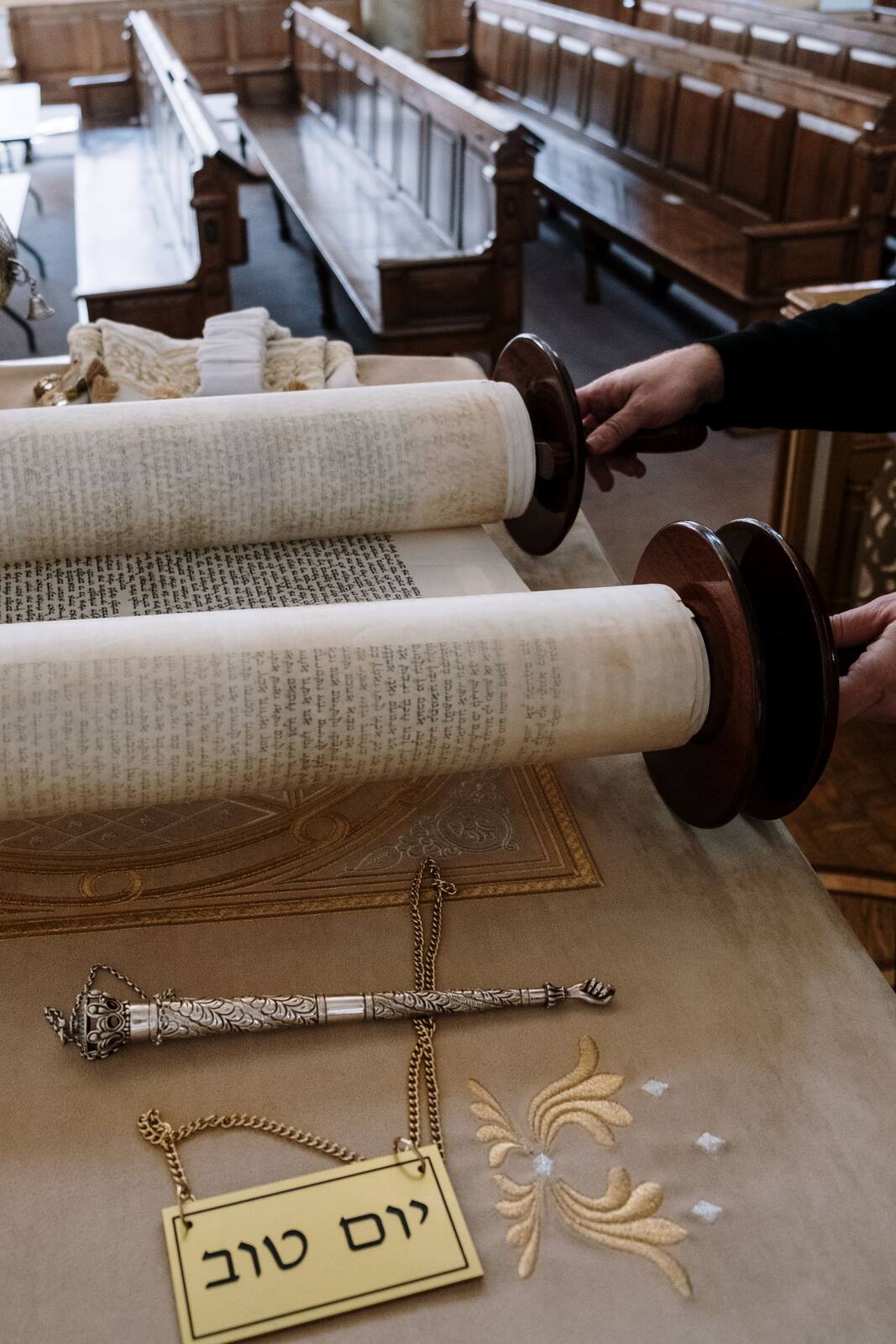
- Torah reading on Mondays, Thursdays and Shabbat (and on some holidays). A scroll is taken out and read aloud; the weekday reading is short, and on Shabbat it is longer, with seven readings. See Torah reading.
- Closing. The Song of the Day, concluding hymns such as Ein Kelokeinu, then Aleinu and the mourner's Kaddish.
What the leader does
A member of the congregation, called the shaliach tzibbur, leads. He does not "perform"; he helps everyone keep time. At certain points, prayers are said only with a minyan, ten Jewish adults (traditionally, ten men; ask the Rabbi about how this works for you). See minyan.
When to stand, sit and bow
Follow the congregation. People stand for Barchu, the Amidah and Aleinu, and sit for much of the rest. Do not worry about getting it wrong: no one is watching you, and every person there once was new.
Weekday and Shabbat services in Lamorinda
Chabad of Lamorinda's morning services are Sunday 8:00 AM and Monday to Friday 6:30 AM, and on Shabbat the service is Saturday at 10:00 AM, followed by a hot Kiddush lunch. The Rabbi explains as we go, so first-timers are never left behind. For the Shabbat experience, see Shabbat in Lamorinda.
How to start without feeling lost
- Come once just to watch and listen.
- Next time, follow only the Shema in English.
- Later, learn one part at a time: morning blessings, then Ashrei, then Aleinu.
In Lamorinda: Join our weekday morning minyan, or call Rabbi Labkowski at 925-384-7242 and we will show you where we are in the prayer book.
Common questions
What is Shacharit?
Shacharit is the Jewish morning prayer service, said every day. It can be said from sunrise. The ideal is to finish by the end of the first third of the day (the fourth halachic hour), and if that time was missed it may be said until midday. Ask the Rabbi for the exact times.
What is the order of the Shacharit service?
Morning blessings, Pesukei Dezimra (psalms of praise), the Shema and its blessings, the Amidah, then on Mondays, Thursdays and Shabbat the Torah reading, and finally the closing prayers including Aleinu.
How long is the Shacharit service?
A weekday service takes around half an hour to 45 minutes. Shabbat morning is longer because of the Torah reading and a talk.
What is Nusach Ari?
It is the order and wording of prayer based on the teachings of the Arizal, the sixteenth-century Kabbalist. Chabad follows it in its prayer book, which was arranged by Rabbi Schneur Zalman of Liadi.
What do you wear to morning prayers?
Men wear tefillin on weekdays and a tallit (in Chabad, after marriage). Everyone is welcome in modest, ordinary clothing.
Do I have to read Hebrew to pray Shacharit?
No. Most prayer books have English beside the Hebrew, and you may also pray in your own words.
Take the next step
- Start with the very first prayers: morning blessings and Modeh Ani.
- Come to a service in Lafayette. Call 925-384-7242 to hear what is planned, or read first time at synagogue.
- Keep reading: next, the Amidah.
Step by step · Part 6 of 27
Learning to pray
NextAshrei (Psalm 145): Why We Say It Three Times a DayAshrei is Psalm 145, a song of praise said three times a day. Learn what it means, why the Sages loved it, and how to say it with feeling.All 27 parts
- Jewish Prayer: How and When Jews Pray, a Beginner's Guide
- Modeh Ani: The Jewish Morning Prayer of Thanks
- Mah Tovu: Meaning of "How Goodly Are Your Tents" and the Prayer That Opens the Day
- Adon Olam: Meaning, Author and Why We Sing It Before Prayer
- The Morning Blessings: Starting the Day With Thanks
- The Morning Service (Shacharit): A First-Timer's Guide
- Ashrei (Psalm 145): Why We Say It Three Times a Day
- Barchu: The Call to Prayer and the Blessings Before the Shema
- The Shema Prayer: Meaning, Words and When to Say It
- The Amidah: The Central Jewish Prayer Explained
- Kedushah: Standing With the Angels in Prayer, Meaning and Responses
- What Is Tachanun? Why Jews Put Their Head Down in Prayer
- What Is Hallel? Full vs. Half Hallel on Holidays and Rosh Chodesh
- What Is Musaf? The Additional Prayer of Shabbat, Holidays and Rosh Chodesh
- Aleinu: The Closing Prayer, Its Meaning and Why We Bow
- The Siddur: A Guide to the Jewish Prayer Book
- How to Follow the Service: Finding Your Place in the Siddur
- Daily Prayers: Shacharit, Mincha and Maariv Made Simple
- Mincha and Maariv: The Afternoon and Evening Prayers
- Minyan: Why Jewish Prayer Needs Ten
- Leading the Prayers: Being a Chazzan for the First Time
- Talking to G-d in Your Own Words
- Praying for Others: For the Sick, for Family and for the World
- Why Pray If G-d Already Knows What We Need?
- How to Focus When You Pray: Kavanah and a Wandering Mind
- Can I Pray in English? Hebrew, Understanding and Heartfelt Prayer
- The Bedtime Shema: Jewish Prayers Before Sleep
Questions about this, or something on your mind? Message the Rabbi or the Rebbetzin privately, or call 925-384-7242. · Email
Read next
 Going to Synagogue for the First Time: What to ExpectA friendly guide for first-time visitors to a synagogue: what to wear, what happens during services, Shabbat etiquette, and how to follow along.Read next →