
Learn › Prayer & Torah › Jewish prayer: first steps
Jewish Prayer: How and When Jews Pray, a Beginner's Guide
A beginner's guide to Jewish prayer: the three daily services, the siddur, praying with a minyan, praying in any language, and how to start.
Part 1 of 27 · Learning to pray
On this page · 2 min read
What prayer isThe three daily prayersThe heart of the service: the AmidahHow to start prayingPraying with a minyanWomen and prayerJewish prayer is a daily conversation with G-d, made up of set prayers from the siddur (prayer book) and our own personal words. Jews traditionally pray three times a day: in the morning, afternoon and evening.
What prayer is
The Hebrew word for prayer is tefillah (תְּפִלָּה). The Sages call prayer "the service of the heart." It includes praising G-d, asking for our needs and thanking Him. Chassidic teaching adds that tefillah comes from a word meaning "to connect": prayer is how the soul bonds with G-d, every single day.
The Torah does not set a text for prayer. In the early Second Temple era, the Men of the Great Assembly, a council of Sages and prophets led by Ezra, composed the core prayers, including the Amidah, so every Jew would have the right words.
The three daily prayers
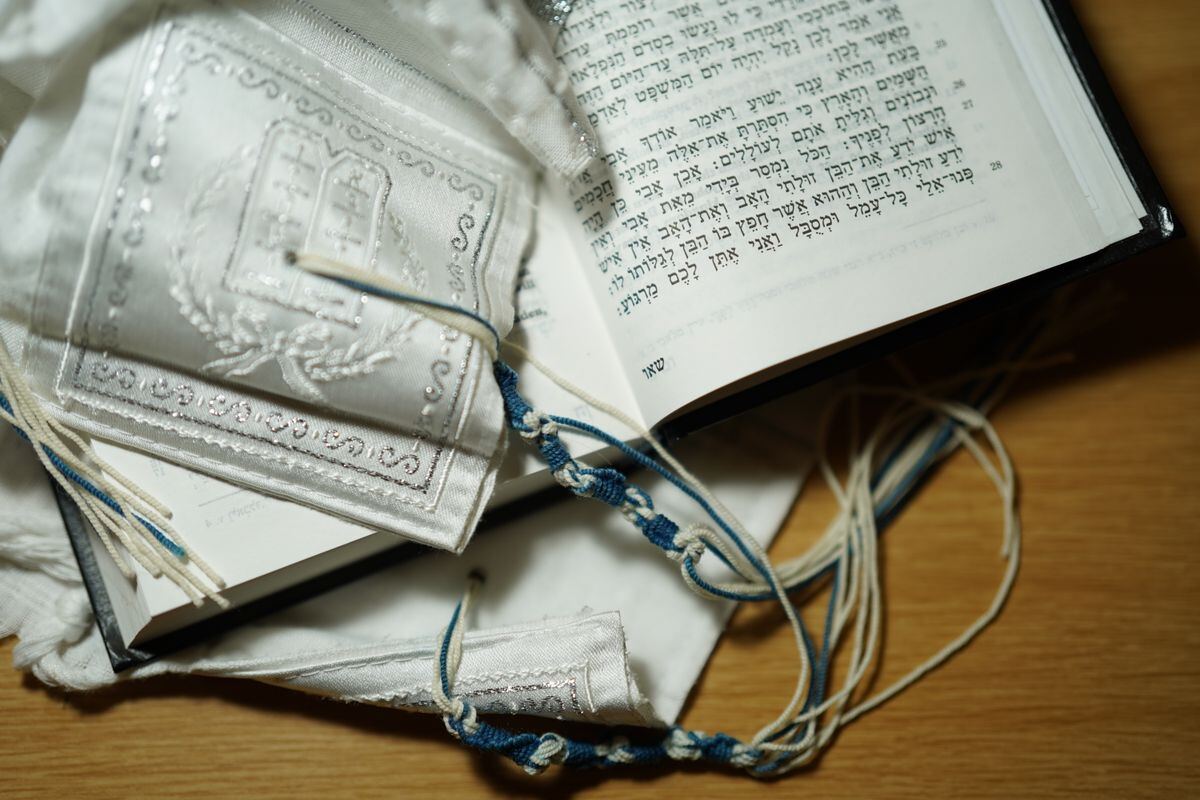
- Shacharit (morning): the longest service, including the morning blessings, Psalms of praise, the Shema and its blessings, and the Amidah. Men wear tallit and tefillin on weekdays.
- Mincha (afternoon): a short service, centered on the Amidah, said from early afternoon until sunset.
- Maariv (evening): said after nightfall, including the Shema and the Amidah.
On Shabbat, holidays and Rosh Chodesh, an extra service called Musaf is added.
The heart of the service: the Amidah
The Amidah ("standing prayer"), also called Shemoneh Esreh, is said silently while standing with feet together, facing Jerusalem. On weekdays it has 19 blessings: praise, requests (for wisdom, health, livelihood, redemption and more) and thanks. On Shabbat and holidays, the middle requests are replaced with blessings about the day.
How to start praying
You do not need to do everything at once. Here are simple steps:
- Say Modeh Ani as soon as you wake up.
- Say the Shema morning and night. The first verse alone is a great start.
- Get a siddur with English translation. Chabad uses the Siddur Tehillat Hashem, in the Nusach Ari tradition.
- Pick one prayer and say it daily, adding more over time.
- Talk to G-d in your own words. Personal prayer is always welcome, in any language.
- Join a minyan. Praying with a community adds power to our prayers.
Praying with a minyan
A minyan is a group of ten Jewish men age 13 and older. Some parts of the service, such as Kaddish, the Torah reading and the repetition of the Amidah, are said only with a minyan. The Sages teach that G-d's presence rests among a praying community, and that communal prayer is especially accepted.
Women and prayer
Women are obligated in prayer too. Many authorities hold that women should say at least the morning blessings and the Amidah of Shacharit, and ideally Mincha as well. At minimum, a heartfelt prayer each day with praise, a request and thanks fulfills the basic mitzvah according to some opinions. Ask the Rabbi for guidance that fits your schedule.
In Lamorinda: We welcome you to pray with us, can help you get a siddur, and are happy to teach you how to follow the service. Call 925-384-7242.
Common questions
Can I pray in English?
Yes. Jewish law allows praying in any language you understand, and G-d hears every prayer. Hebrew has special holiness, so many people mix the two, saying what they can in Hebrew and the rest in English.
Do I need to go to synagogue to pray?
No. You can pray anywhere, at home, at work or on a hike. Praying with a minyan is preferable when possible, but private prayer is fully valid.
What should I do if I do not understand the Hebrew?
Use a siddur with translation, and read the English if you need to. Over time, learning the meaning of the main prayers makes them much more meaningful.
How long does daily prayer take?
The full morning service takes about 30 to 45 minutes, while Mincha and Maariv take around 10 to 15 minutes each. A shorter prayer said with feeling is better than a long one said in a rush.
Step by step · Part 1 of 27
Learning to pray
NextModeh Ani: The Jewish Morning Prayer of ThanksThe Modeh Ani prayer said on waking up, in Hebrew, transliteration and English, what it means, and how to wash hands in the morning.All 27 parts
- Jewish Prayer: How and When Jews Pray, a Beginner's Guide
- Modeh Ani: The Jewish Morning Prayer of Thanks
- Mah Tovu: Meaning of "How Goodly Are Your Tents" and the Prayer That Opens the Day
- Adon Olam: Meaning, Author and Why We Sing It Before Prayer
- The Morning Blessings: Starting the Day With Thanks
- The Morning Service (Shacharit): A First-Timer's Guide
- Ashrei (Psalm 145): Why We Say It Three Times a Day
- Barchu: The Call to Prayer and the Blessings Before the Shema
- The Shema Prayer: Meaning, Words and When to Say It
- The Amidah: The Central Jewish Prayer Explained
- Kedushah: Standing With the Angels in Prayer, Meaning and Responses
- What Is Tachanun? Why Jews Put Their Head Down in Prayer
- What Is Hallel? Full vs. Half Hallel on Holidays and Rosh Chodesh
- What Is Musaf? The Additional Prayer of Shabbat, Holidays and Rosh Chodesh
- Aleinu: The Closing Prayer, Its Meaning and Why We Bow
- The Siddur: A Guide to the Jewish Prayer Book
- How to Follow the Service: Finding Your Place in the Siddur
- Daily Prayers: Shacharit, Mincha and Maariv Made Simple
- Mincha and Maariv: The Afternoon and Evening Prayers
- Minyan: Why Jewish Prayer Needs Ten
- Leading the Prayers: Being a Chazzan for the First Time
- Talking to G-d in Your Own Words
- Praying for Others: For the Sick, for Family and for the World
- Why Pray If G-d Already Knows What We Need?
- How to Focus When You Pray: Kavanah and a Wandering Mind
- Can I Pray in English? Hebrew, Understanding and Heartfelt Prayer
- The Bedtime Shema: Jewish Prayers Before Sleep
Questions about this, or something on your mind? Message the Rabbi or the Rebbetzin privately, or call 925-384-7242. · Email
Read next
 The Shema Prayer: Meaning, Words and When to Say ItThe Shema Yisrael prayer in Hebrew, transliteration and English, what it means, when to say it, and how to say the bedtime Shema.Read next →