
Learn › Prayer & Torah › The synagogue and its services
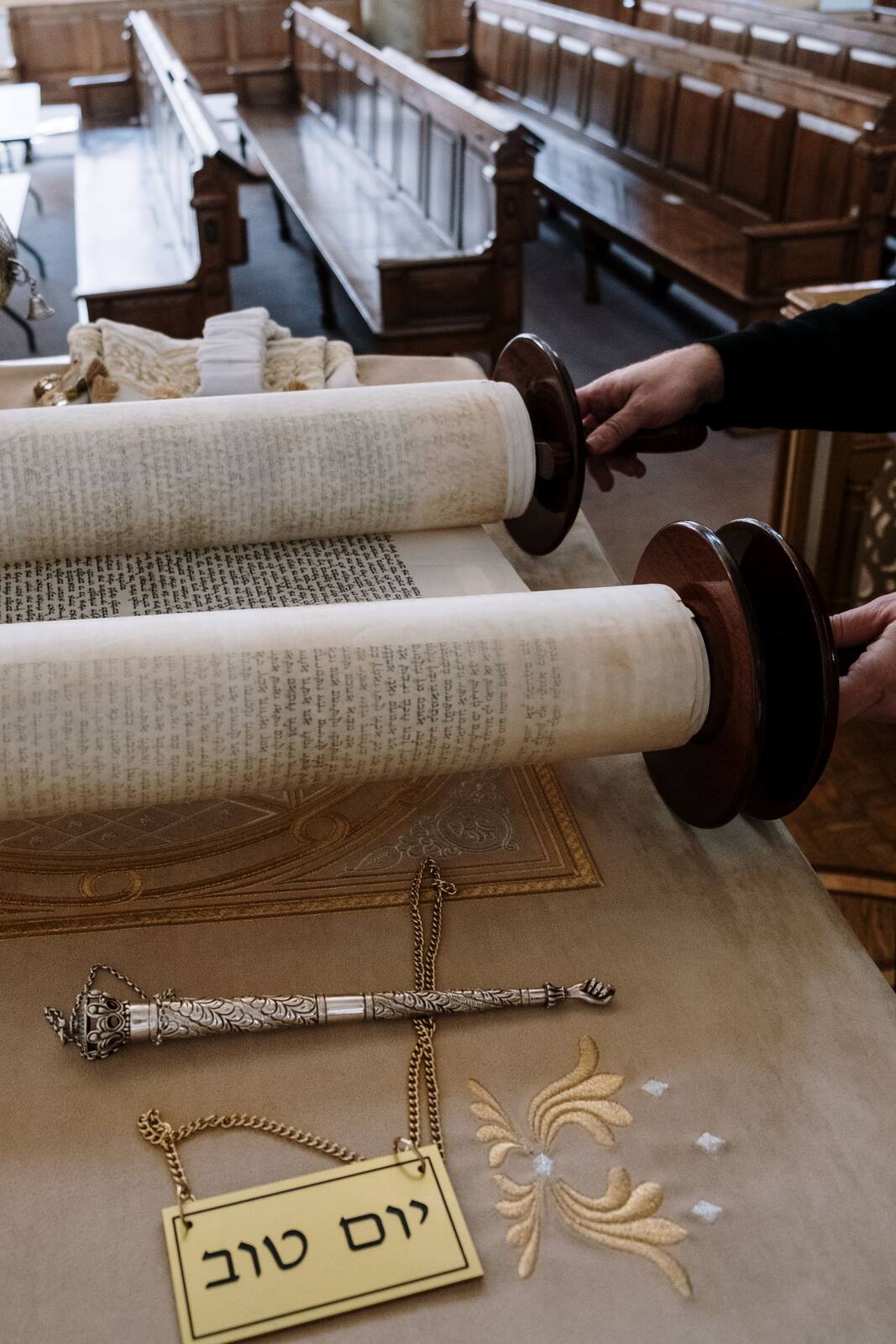
What Is Hallel? Full vs. Half Hallel on Holidays and Rosh Chodesh
Hallel is the set of Psalms 113 to 118 sung on Jewish holidays and Rosh Chodesh. Learn which days get full or half Hallel, and why.
Part 13 of 27 · Learning to pray
On this page · 3 min read
What is Hallel?Which days have full Hallel?Which days have half Hallel?Days without HallelHallel at the SederJoining inHallel (הַלֵּל, "praise") is a collection of Psalms 113 to 118, sung in the morning service on Jewish holidays and on Rosh Chodesh, the new moon. It is a song of thanks to G-d for the Exodus from Egypt and for the miracles in every generation, and it comes in two versions: full Hallel and half Hallel.
What is Hallel?
The six chapters of Tehillim (Psalms) that make up Hallel praise G-d for taking the Jewish people out of Egypt, which is why it is also called "Egyptian Hallel." On the days it is said, it is sung joyfully, and many of the psalms have traditional tunes. It follows the Amidah, the central silent prayer; see the Amidah and the Shacharit morning service.
Hallel is preceded by a blessing in which we thank G-d for making us holy and commanding us to say it, and followed by a closing blessing that ends "Blessed are You, G-d, King who is extolled with praises." The final verses, from Psalm 118:21, are repeated twice.
Which days have full Hallel?
Full Hallel, the entire six psalms, is said on:
- Sukkot, every day (and Shemini Atzeret). On Sukkot the Four Kinds are held during Hallel and the lulav is waved in six directions at four points; see the four kinds.
- Chanukah, every day. Work is allowed and it is not a biblical festival, but Hallel marks the miracles of Chanukah. See al hanissim and Hallel.
- Passover, the first day (the first two days outside Israel).
- Shavuot.
Together with Sukkot, Passover and Shavuot, these are the three pilgrimage festivals when the Torah calls for rejoicing.
Which days have half Hallel?
Half Hallel, where two paragraphs are left out, is said on Rosh Chodesh and on the remaining days of Passover. In fact it is closer to 85 percent of the whole. The customary skips are the first half of Psalm 115 and the first half of Psalm 116, since their themes repeat in the second halves.
During half Hallel, the blessings are recited by the prayer leader, and the congregation answers "Amen." Rosh Chodesh is a day the Torah calls a festival (a mo'ed), but work is not forbidden, so the joy is a bit more restrained. Learn more in Rosh Chodesh.
There are reasons why Passover's last days get half Hallel while every day of Sukkot gets full Hallel. On Sukkot each day had a different offering in the Temple, so each day is its own holiday. On Passover the same offering was brought daily, and the Midrash says the final days recall the Egyptians drowning at the Red Sea, when G-d said it was not a time for full joy.
Days without Hallel
Hallel is not said on Rosh Hashanah or Yom Kippur. The Talmud says G-d told the angels it is not fitting for Israel to sing while the books of life and death are open. It is also not said on Shabbat alone, or on Purim. For Purim, one reason given is that reading the Megillah is itself a kind of Hallel.
Hallel at the Seder
On Passover night, part of Hallel is recited within the Haggadah, and the rest after the Grace After Meals. No blessing is said before this Hallel. The second and fourth cups of wine are raised during it, and "the Great Hallel" (Psalm 136) is also recited. See the Passover Seder.
Joining in
You do not need to know Hebrew to enjoy Hallel. Follow along in a siddur with a translation and let the melody carry you. Families across Lafayette, Moraga and Orinda can ask Chabad of Lamorinda which holiday mornings are coming up and how to take part. Whether you stand or sit at particular points is a matter of local custom, so ask the Rabbi.
In Lamorinda: Come sing Hallel with us on a holiday morning. See /events or call Rabbi Labkowski at 925-384-7242 to hear what is planned.
Common questions
What is Hallel in Judaism?
Hallel is a set of six psalms, 113 to 118, of praise and thanks, said in the morning service on Jewish holidays and Rosh Chodesh.
What is the difference between full Hallel and half Hallel?
Full Hallel includes all the psalms; half Hallel leaves out two paragraphs, as on Rosh Chodesh and the later days of Passover.
Is Hallel said on Rosh Chodesh?
Yes, half Hallel is said on Rosh Chodesh, and only the prayer leader recites the blessings.
Why is Hallel not said on Rosh Hashanah and Yom Kippur?
Because these are solemn days of judgment and repentance, and the joyful tone of Hallel does not fit them.
Is Hallel said on Chanukah?
Yes, full Hallel is said on every day of Chanukah.
Where can I hear Hallel near Lafayette, Moraga or Orinda?
Call Chabad of Lamorinda in Lafayette at 925-384-7242 to hear what is planned for the next holiday.
Take the next step
- Read the next guide in our prayer series, al hanissim and Hallel, for Chanukah.
- Learn how a month begins in Rosh Chodesh.
- See what is coming up in events or the Jewish holidays, and come sing with us.
Step by step · Part 13 of 27
Learning to pray
NextWhat Is Musaf? The Additional Prayer of Shabbat, Holidays and Rosh ChodeshWhat Musaf means, when it is said, why we pray it, and where it fits in Shabbat morning services. Join us for Shabbat in Lafayette.All 27 parts
- Jewish Prayer: How and When Jews Pray, a Beginner's Guide
- Modeh Ani: The Jewish Morning Prayer of Thanks
- Mah Tovu: Meaning of "How Goodly Are Your Tents" and the Prayer That Opens the Day
- Adon Olam: Meaning, Author and Why We Sing It Before Prayer
- The Morning Blessings: Starting the Day With Thanks
- The Morning Service (Shacharit): A First-Timer's Guide
- Ashrei (Psalm 145): Why We Say It Three Times a Day
- Barchu: The Call to Prayer and the Blessings Before the Shema
- The Shema Prayer: Meaning, Words and When to Say It
- The Amidah: The Central Jewish Prayer Explained
- Kedushah: Standing With the Angels in Prayer, Meaning and Responses
- What Is Tachanun? Why Jews Put Their Head Down in Prayer
- What Is Hallel? Full vs. Half Hallel on Holidays and Rosh Chodesh
- What Is Musaf? The Additional Prayer of Shabbat, Holidays and Rosh Chodesh
- Aleinu: The Closing Prayer, Its Meaning and Why We Bow
- The Siddur: A Guide to the Jewish Prayer Book
- How to Follow the Service: Finding Your Place in the Siddur
- Daily Prayers: Shacharit, Mincha and Maariv Made Simple
- Mincha and Maariv: The Afternoon and Evening Prayers
- Minyan: Why Jewish Prayer Needs Ten
- Leading the Prayers: Being a Chazzan for the First Time
- Talking to G-d in Your Own Words
- Praying for Others: For the Sick, for Family and for the World
- Why Pray If G-d Already Knows What We Need?
- How to Focus When You Pray: Kavanah and a Wandering Mind
- Can I Pray in English? Hebrew, Understanding and Heartfelt Prayer
- The Bedtime Shema: Jewish Prayers Before Sleep
Questions about this, or something on your mind? Message the Rabbi or the Rebbetzin privately, or call 925-384-7242. · Email
Read next
 Al HaNissim and Hallel: The Chanukah PrayersWhat Al HaNissim is, where it is added on Chanukah and Purim, what to do if you forget it, and why the full Hallel is said every day of Chanukah.Read next →