
Learn › Prayer & Torah › Jewish prayer: first steps
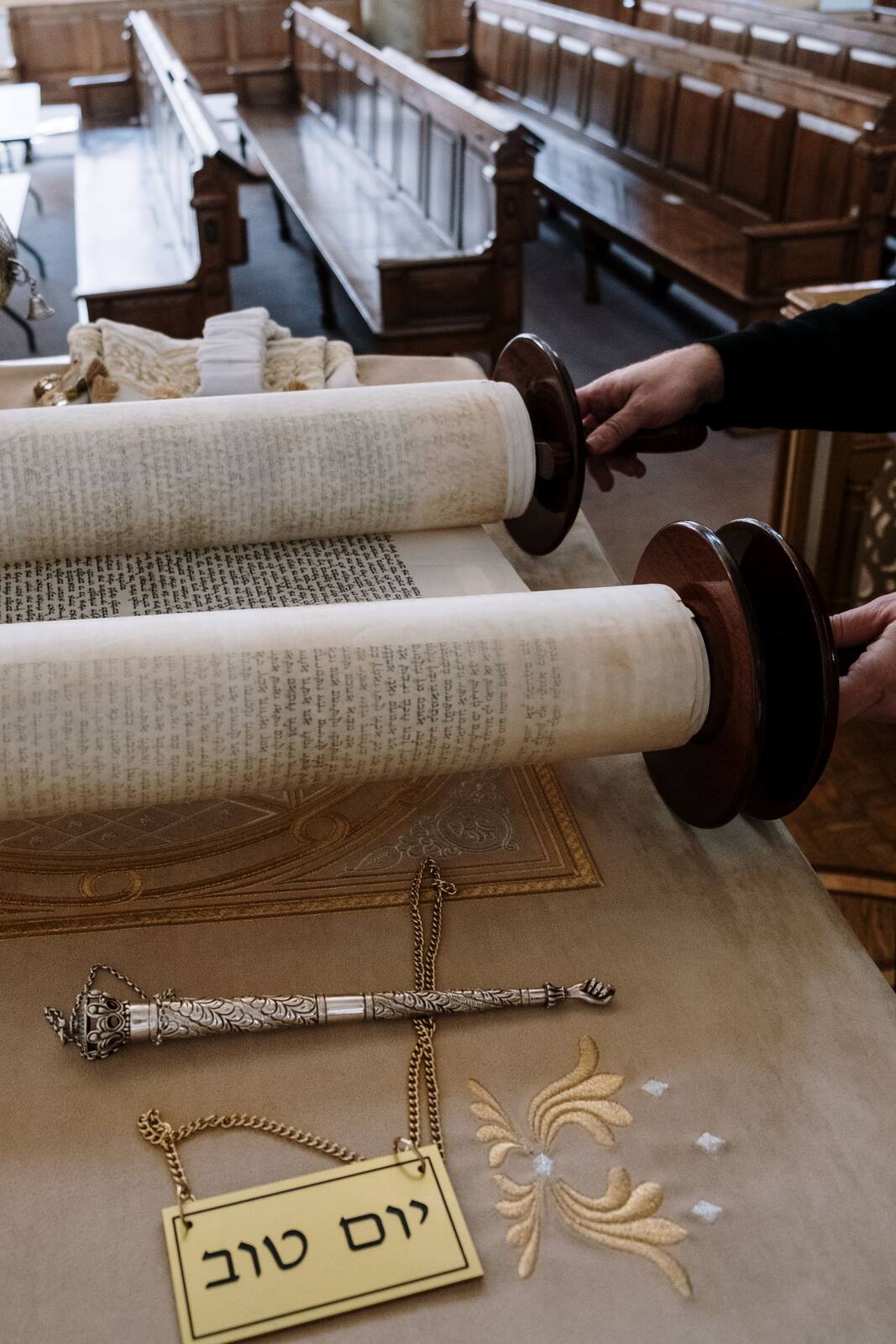
Can I Pray in English? Hebrew, Understanding and Heartfelt Prayer
Can you pray in English in Judaism? Yes, with some guidance. Learn what Jewish law allows, why Hebrew matters, and how understanding makes prayer real.
Part 26 of 27 · Learning to pray
On this page · 2 min read
What Jewish law says about the language of prayerWhy Hebrew still mattersWhy understanding matters moreA simple path: English, then HebrewAt a service, you can follow in EnglishYes, you can pray in English, or any language you understand. The Amidah, the heart of Jewish prayer, may be recited in any language, though Hebrew is preferred when possible. What matters most is that you understand what you are saying and mean it.
What Jewish law says about the language of prayer
One should pray in Hebrew when possible, and otherwise in a language one understands. On the Amidah, all opinions agree that it can be said in any language. On the Shema, the Talmud records a dispute: one view says it must be said in the original Hebrew, while the majority allow any language one understands, and the halachah follows the majority. Even so, many people say the Shema in Hebrew, even if they also read the English alongside it. If this matters in your own situation, please ask the Rabbi.
Why Hebrew still matters
Hebrew is the language of the Torah, and the prayers were composed in Hebrew. Many Jews feel that saying the same words that Jews have said for generations connects them to the whole Jewish people. Because not everyone was fluent in Hebrew, the prayer leader repeats the Amidah aloud so the congregation can answer "Amen."
Why understanding matters more
You can say every word in Hebrew, but if your heart is not in it, you have not truly prayed. Concentration, or kavanah (כַּוָּנָה), is the most important part of prayer, and prayer is like standing before the King: "Know before Whom you stand." A little said with attention is better than a lot said without understanding. The point is not to stop praying in Hebrew, but to keep learning what the words mean.
A simple path: English, then Hebrew
- Start with a siddur that has English. Read the translation slowly. See The Siddur.
- Pick a few lines to learn well. Begin with a few lines you have learned to understand, then slowly add more.
- Say the Shema. Learn its first line in Hebrew with its meaning. See Shema.
- Learn the letters. You do not have to be fluent to start. Try Hebrew Reading for Adults and Hebrew Lessons in Lamorinda.
- Keep speaking from the heart. English works for your own words and requests. See Talking to G-d in Your Own Words.
At a service, you can follow in English
In synagogue, you can read the English next to the Hebrew, say "Amen," and let your own words fill the gaps. Learn how in Finding Your Place in the Siddur. See also Kavanah in Prayer.
In Lamorinda: Want to learn what the Hebrew means, or start praying with confidence? Call Rabbi Labkowski at 925-384-7242 or see /programs/adult-education.
Common questions
Can you pray in English in Judaism?
Yes. A person should pray in Hebrew when possible, and otherwise in a language they understand. All agree the Amidah may be said in any language.
Do I have to pray in Hebrew?
No, but it is preferred. Understanding is more important than the language. Ask the Rabbi about your own situation.
Can I say the Shema in English?
There is a Talmudic dispute: one opinion says Hebrew only, another says any language. Many say it in Hebrew and read the English meaning. Ask the Rabbi what to do.
Is prayer in English as meaningful as Hebrew?
Prayer is meaningful when it is understood and sincere. Words without heart are not true prayer, in any language.
How can I learn to pray in Hebrew?
Start small, learn the meaning, and learn to read. See Hebrew Lessons in Lamorinda or call 925-384-7242.
Can children pray in English?
Yes. Children learn best when they understand. See Teaching Children to Pray.
Take the next step
- Read Kavanah in Prayer and What Does Daven Mean? to go deeper.
- Join adult education in Lafayette, or call 925-384-7242 to ask about learning Hebrew.
- Families in Lafayette, Moraga and Orinda can start with Teaching Children to Pray.
Step by step · Part 26 of 27
Learning to pray
NextThe Bedtime Shema: Jewish Prayers Before SleepWhat the Bedtime Shema is, why we say it, the key parts including the Hamapil blessing, and a simple version for children.All 27 parts
- Jewish Prayer: How and When Jews Pray, a Beginner's Guide
- Modeh Ani: The Jewish Morning Prayer of Thanks
- Mah Tovu: Meaning of "How Goodly Are Your Tents" and the Prayer That Opens the Day
- Adon Olam: Meaning, Author and Why We Sing It Before Prayer
- The Morning Blessings: Starting the Day With Thanks
- The Morning Service (Shacharit): A First-Timer's Guide
- Ashrei (Psalm 145): Why We Say It Three Times a Day
- Barchu: The Call to Prayer and the Blessings Before the Shema
- The Shema Prayer: Meaning, Words and When to Say It
- The Amidah: The Central Jewish Prayer Explained
- Kedushah: Standing With the Angels in Prayer, Meaning and Responses
- What Is Tachanun? Why Jews Put Their Head Down in Prayer
- What Is Hallel? Full vs. Half Hallel on Holidays and Rosh Chodesh
- What Is Musaf? The Additional Prayer of Shabbat, Holidays and Rosh Chodesh
- Aleinu: The Closing Prayer, Its Meaning and Why We Bow
- The Siddur: A Guide to the Jewish Prayer Book
- How to Follow the Service: Finding Your Place in the Siddur
- Daily Prayers: Shacharit, Mincha and Maariv Made Simple
- Mincha and Maariv: The Afternoon and Evening Prayers
- Minyan: Why Jewish Prayer Needs Ten
- Leading the Prayers: Being a Chazzan for the First Time
- Talking to G-d in Your Own Words
- Praying for Others: For the Sick, for Family and for the World
- Why Pray If G-d Already Knows What We Need?
- How to Focus When You Pray: Kavanah and a Wandering Mind
- Can I Pray in English? Hebrew, Understanding and Heartfelt Prayer
- The Bedtime Shema: Jewish Prayers Before Sleep
Questions about this, or something on your mind? Message the Rabbi or the Rebbetzin privately, or call 925-384-7242. · Email
Read next
 How to Focus When You Pray: Kavanah and a Wandering MindYour mind wanders during prayer? Learn what kavanah means and simple, kind ways to concentrate, from Chabad teaching. Ask us in Lafayette.Read next →