
Learn › Prayer & Torah › The daily prayers and the Shema
What Is Tachanun? Why Jews Put Their Head Down in Prayer
What Tachanun is, why people lean on their arm after the Amidah, why it is longer Monday and Thursday, and which days skip it. Ask us in Lafayette.
Part 12 of 27 · Learning to pray
On this page · 3 min read
What Tachanun isWhy do people put their head down?Why is Tachanun longer on Monday and Thursday?When is Tachanun not said?How to take part as a newcomerTachanun (תחנון) is a set of quiet, heartfelt prayers for mercy that Jews say after the morning and afternoon Amidah on ordinary weekdays. The moment when everyone rests their head on their arm is part of it, and it is skipped on happy days such as Shabbat, Rosh Chodesh and Chanukah.
What Tachanun is
The word means "supplications," pleading prayers asked humbly. Tachanun in the Chabad siddur has four parts: Viduy (confession), the Thirteen Attributes of Mercy (said only with a minyan, a group of ten), Nefilat Apayim (the prayer said with the head lowered) and a shortened Avinu Malkeinu.
The Thirteen Attributes of Mercy are the qualities of kindness that G-d revealed to Moses on Mount Sinai. Saying them is a way of reminding ourselves, and asking G-d, to treat us with that same compassion.
Why do people put their head down?
This is the moment that puzzles visitors most. It is called Nefilat Apayim, "falling on the face." The Torah describes Moses praying in three ways: sitting, standing and falling on his face. Today we lower our head onto the arm to show awe, humility and surrender to G-d, especially when we ask forgiveness. Rabbeinu Bechaye gives three meanings: fear of G-d, the pain of asking forgiveness, and setting aside our own wants before Him.
Which arm? The most common custom in the morning is to lean on the right arm, out of respect for the tefillin on the left arm. In the afternoon, and in the morning for someone not wearing tefillin on the left arm, people lean on the left. Some communities differ, so watch what the people around you do, or ask the Rabbi.
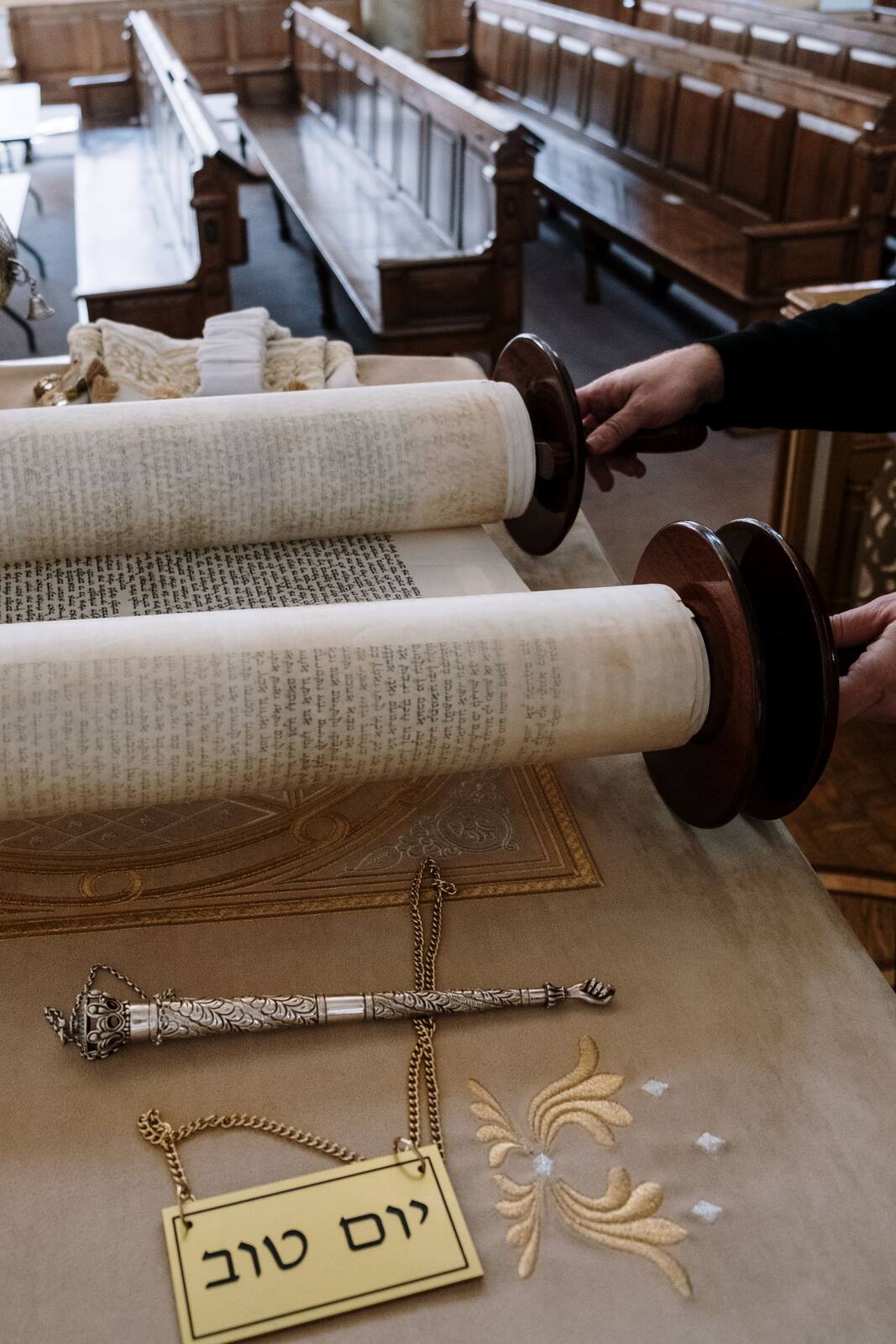
Joshua also "fell on his face" before the Ark of G-d (Joshua 7:6). This is the basis of the custom to do Nefilat Apayim mainly where a Torah scroll is present. The face is covered with an arm or garment, and the supplication is said with sincerity. It is not a pose.
Why is Tachanun longer on Monday and Thursday?
On Mondays and Thursdays the morning Tachanun is much longer. These are days especially fitting for seeking G-d's favor.
When is Tachanun not said?
It is a prayer of humility, so it is left out when the day is joyful. Among others, it is not said:
- On Shabbat, starting from Friday afternoon, and on Rosh Chodesh
- On Chanukah and on Purim (from the afternoon of the 13th through the 15th of Adar)
- Throughout the month of Nissan
- On Lag BaOmer, and for the first twelve days of Sivan
- On the day before Rosh Hashanah and on Rosh Hashanah, from the day before Yom Kippur until 2 Cheshvan, and on Tisha B'Av
- On Tu BiShvat and the 15th of Av
Chabad also skips it on several days that remember miracles of release, such as the 10th, 19th and 20th of Kislev. The site calendar shows the holidays, so do not rely on a list typed from memory. For other occasions, such as a bris or a wedding in the synagogue, ask the Rabbi.
How to take part as a newcomer
- After the Amidah, see what the community does. If everyone lowers their head, you may too.
- Read the English silently if Hebrew is hard. The confession and the plea for mercy are a conversation you can have in your own words.
- If no one is leaning, you do not have to. Many days have no Tachanun at all.
- Come back on a Monday or Thursday to hear the longer version, then a Shabbat to enjoy the joy of a day without it.
In Lamorinda: Not sure when to lean and when to skip? Join a service and we will show you. Call Rabbi Labkowski at 925-384-7242.
Common questions
What is Tachanun in Judaism?
Tachanun is a short set of prayers asking for mercy, said after the Amidah on weekday mornings and afternoons. It includes confession and a prayer said with the head lowered.
Why do Jews put their head on their arm during prayer?
It is called Nefilat Apayim, "falling on one's face." It shows humility and surrender to G-d, following Moses and Joshua, who fell on their faces in prayer.
Which arm do you lean on for Tachanun?
The most common custom in the morning is the right arm, because the left arm has the tefillin. In the afternoon it is the left. Customs vary, so ask the Rabbi.
Why is there no Tachanun on some days?
Tachanun is left out on festive days like Shabbat, Rosh Chodesh, Chanukah, Purim and all of Nissan, because it is a prayer of sorrow and humility.
Why is Tachanun longer on Monday and Thursday?
These are especially auspicious days to seek G-d's favor, so the morning prayer is longer.
Do I have to say Tachanun if I am new to prayer?
No. If you are just starting, listen first, and say what you can in English. The Rabbi can guide you.
Take the next step
- Join us for a weekday morning, and see Tachanun in person. Call 925-384-7242 to hear what is planned for Lafayette, Moraga and Orinda families.
- Read how the day's prayers fit together in the Amidah, and the Mincha and Maariv services.
- See what a joyful day without Tachanun feels like: Shabbat in Lamorinda.
Step by step · Part 12 of 27
Learning to pray
NextWhat Is Hallel? Full vs. Half Hallel on Holidays and Rosh ChodeshHallel is the set of Psalms 113 to 118 sung on Jewish holidays and Rosh Chodesh. Learn which days get full or half Hallel, and why.All 27 parts
- Jewish Prayer: How and When Jews Pray, a Beginner's Guide
- Modeh Ani: The Jewish Morning Prayer of Thanks
- Mah Tovu: Meaning of "How Goodly Are Your Tents" and the Prayer That Opens the Day
- Adon Olam: Meaning, Author and Why We Sing It Before Prayer
- The Morning Blessings: Starting the Day With Thanks
- The Morning Service (Shacharit): A First-Timer's Guide
- Ashrei (Psalm 145): Why We Say It Three Times a Day
- Barchu: The Call to Prayer and the Blessings Before the Shema
- The Shema Prayer: Meaning, Words and When to Say It
- The Amidah: The Central Jewish Prayer Explained
- Kedushah: Standing With the Angels in Prayer, Meaning and Responses
- What Is Tachanun? Why Jews Put Their Head Down in Prayer
- What Is Hallel? Full vs. Half Hallel on Holidays and Rosh Chodesh
- What Is Musaf? The Additional Prayer of Shabbat, Holidays and Rosh Chodesh
- Aleinu: The Closing Prayer, Its Meaning and Why We Bow
- The Siddur: A Guide to the Jewish Prayer Book
- How to Follow the Service: Finding Your Place in the Siddur
- Daily Prayers: Shacharit, Mincha and Maariv Made Simple
- Mincha and Maariv: The Afternoon and Evening Prayers
- Minyan: Why Jewish Prayer Needs Ten
- Leading the Prayers: Being a Chazzan for the First Time
- Talking to G-d in Your Own Words
- Praying for Others: For the Sick, for Family and for the World
- Why Pray If G-d Already Knows What We Need?
- How to Focus When You Pray: Kavanah and a Wandering Mind
- Can I Pray in English? Hebrew, Understanding and Heartfelt Prayer
- The Bedtime Shema: Jewish Prayers Before Sleep
Questions about this, or something on your mind? Message the Rabbi or the Rebbetzin privately, or call 925-384-7242. · Email
Read next
 The Amidah: The Central Jewish Prayer ExplainedWhat the Amidah (Shemoneh Esrei) is, its structure of praise, requests and thanks, when it is said, and how to stand and pray it.Read next →