
Learn › Prayer & Torah › The synagogue and its services
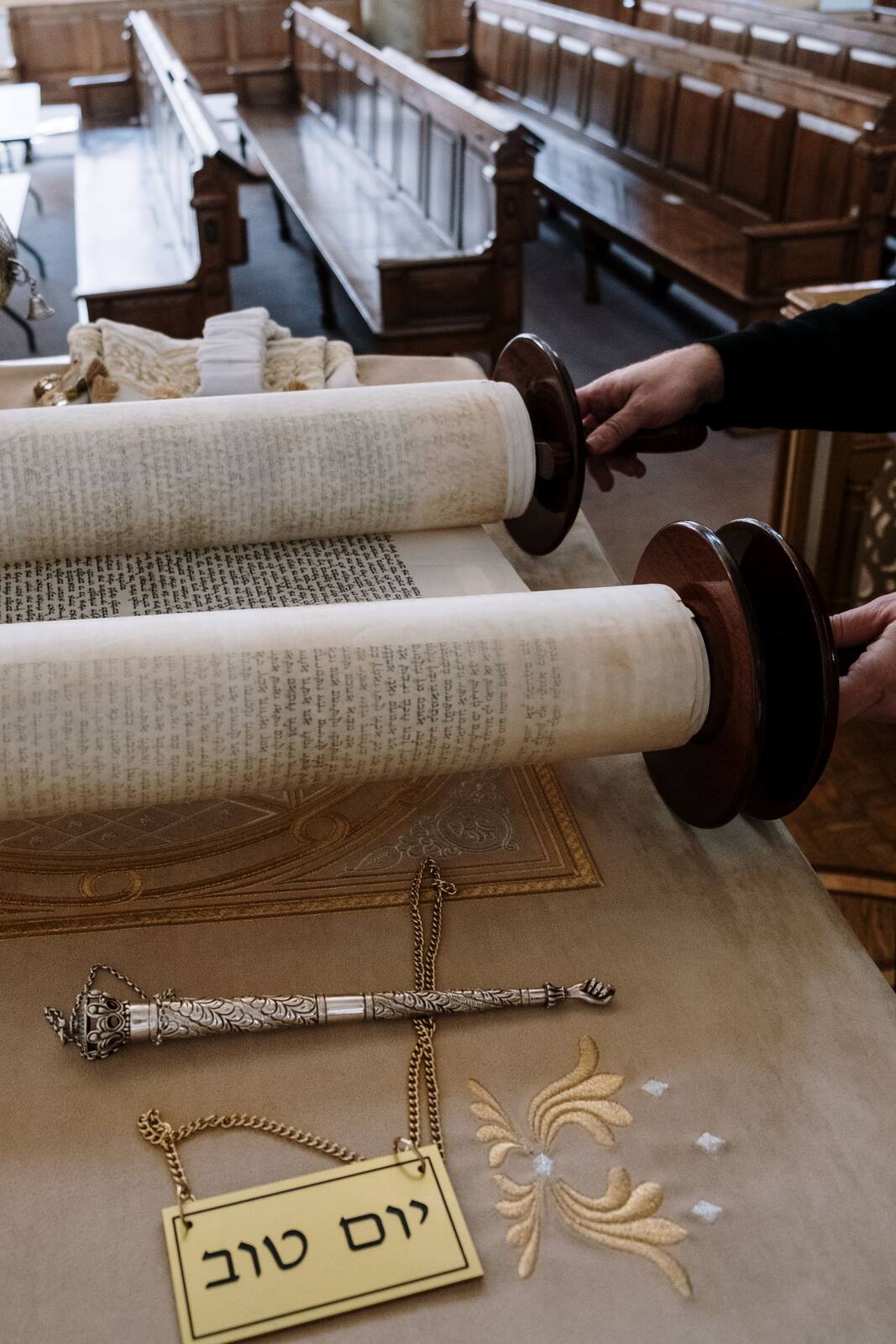
What Is Musaf? The Additional Prayer of Shabbat, Holidays and Rosh Chodesh
What Musaf means, when it is said, why we pray it, and where it fits in Shabbat morning services. Join us for Shabbat in Lafayette.
Part 14 of 27 · Learning to pray
On this page · 3 min read
What Musaf meansWhen Musaf is saidWhat happens during MusafTefillin on Rosh ChodeshMusaf in a communityMusaf (מוסף) means "additional": it is the extra Amidah prayer Jews say on Shabbat, festivals and Rosh Chodesh, after the morning service. It recalls the additional offerings that were brought in the Holy Temple on those special days and takes their place today.
What Musaf means
Every day has three prayers: morning, afternoon and evening. Jewish tradition explains that Musaf is a fourth service, added on days that are special. The daily prayers correspond to the daily Temple offerings, and Musaf corresponds to the extra offerings of Shabbat, the festivals and Rosh Chodesh. Since the Temple no longer stands, our prayer takes the place of those offerings and marks the day as set apart.
There is a teaching in this too: something added is greater than the base it is added to. Musaf is said after the regular service, reaching a higher level of connection.
When Musaf is said
- Shabbat, after the Torah reading and before the end of the morning
- Festivals such as Passover, Shavuot and Sukkot
- Rosh Chodesh, the beginning of the Jewish month
- Rosh Hashanah and Yom Kippur, when Musaf is the longest
It is said after the morning prayers and before the afternoon prayers. Ideally it is said before about the seventh hour of the day, and in practice it follows right after the morning service. On weekdays that are not special, there is no Musaf. See Shabbat day for the full flow of the morning.
What happens during Musaf
Musaf is its own Amidah, with its own middle blessings that are different from the other prayers of the day. Each one describes that day's additional offering. With a minyan, the Amidah is repeated aloud by the prayer leader.
The Kedushah (the part where the congregation declares G-d's holiness) is included. In Ashkenazic communities it begins "Kadosh," while Sefardic and Chassidic communities, including Chabad, begin "Keter." On Shabbat and holidays, the first verse of the Shema is part of the Kedushah in Musaf, a moving moment, when the whole room says "Hear, O Israel" together. Learn more in the Kedushah and in the Shema.
Musaf is usually fairly short, except on Rosh Hashanah and Yom Kippur, when it is one of the highlights of the day.
Tefillin on Rosh Chodesh
Tefillin are worn on Rosh Chodesh morning but taken off for Musaf. There are two reasons. First, the Kedushah of Musaf begins with "Keter," which means "crown," and wearing a crown (tefillin on the head) during it is not appropriate. Second, tefillin are a "sign," as are Shabbat and festivals. The Rosh Chodesh Musaf mentions the day's additional offering, which is also a sign, and a second sign is unnecessary. This holds even for those who do not say "Keter." Read about Rosh Chodesh.
Musaf in a community
On Shabbat, Musaf is often one of the last prayers before Kiddush and the Shabbat meal. It is a gift to families who come together: children are waiting for kiddush, adults are exchanging "Shabbat Shalom." If you are visiting for the first time, it is a good time to say hello. For service times at Chabad of Lamorinda in Lafayette, call Rabbi Labkowski at 925-384-7242. See also Shabbat in Lamorinda.
In Lamorinda: Come to Shabbat morning services and stay for Musaf and the Kiddush. Call Rabbi Labkowski at 925-384-7242.
Common questions
What is Musaf?
Musaf is the "additional" prayer said on Shabbat, festivals and Rosh Chodesh. It stands in place of the extra offerings brought in the Temple on those days.
When is Musaf said on Shabbat?
It is said after the morning service and the Torah reading, and before the afternoon prayers. It follows right after the morning prayers.
Why is there a Musaf?
The daily prayers correspond to the daily Temple offerings. On special days there were additional offerings, and Musaf takes their place.
Why do people take off tefillin for Musaf on Rosh Chodesh?
Tefillin are removed because the Kedushah begins with "Keter" (crown), and because tefillin are a sign like the Musaf offering. Ask the Rabbi if you have questions.
Is there Musaf every day?
No. There is Musaf only on Shabbat, festivals and Rosh Chodesh. Ordinary weekdays have the three regular prayers.
Do I have to stay for Musaf as a first-time visitor?
You are welcome to stay for as much as you like. Come, listen, and ask the Rabbi anything.
Take the next step
- Come to Shabbat morning in Lafayette and see Musaf in person. Call 925-384-7242 for what is planned.
- Read about the prayer that comes first: Hallel.
- Bring the family to a Shabbat meal after services.
Step by step · Part 14 of 27
Learning to pray
NextAleinu: The Closing Prayer, Its Meaning and Why We BowAleinu ends every Jewish service. Learn what it says, why we bow during it, when it is said, and why it has been loved for centuries.All 27 parts
- Jewish Prayer: How and When Jews Pray, a Beginner's Guide
- Modeh Ani: The Jewish Morning Prayer of Thanks
- Mah Tovu: Meaning of "How Goodly Are Your Tents" and the Prayer That Opens the Day
- Adon Olam: Meaning, Author and Why We Sing It Before Prayer
- The Morning Blessings: Starting the Day With Thanks
- The Morning Service (Shacharit): A First-Timer's Guide
- Ashrei (Psalm 145): Why We Say It Three Times a Day
- Barchu: The Call to Prayer and the Blessings Before the Shema
- The Shema Prayer: Meaning, Words and When to Say It
- The Amidah: The Central Jewish Prayer Explained
- Kedushah: Standing With the Angels in Prayer, Meaning and Responses
- What Is Tachanun? Why Jews Put Their Head Down in Prayer
- What Is Hallel? Full vs. Half Hallel on Holidays and Rosh Chodesh
- What Is Musaf? The Additional Prayer of Shabbat, Holidays and Rosh Chodesh
- Aleinu: The Closing Prayer, Its Meaning and Why We Bow
- The Siddur: A Guide to the Jewish Prayer Book
- How to Follow the Service: Finding Your Place in the Siddur
- Daily Prayers: Shacharit, Mincha and Maariv Made Simple
- Mincha and Maariv: The Afternoon and Evening Prayers
- Minyan: Why Jewish Prayer Needs Ten
- Leading the Prayers: Being a Chazzan for the First Time
- Talking to G-d in Your Own Words
- Praying for Others: For the Sick, for Family and for the World
- Why Pray If G-d Already Knows What We Need?
- How to Focus When You Pray: Kavanah and a Wandering Mind
- Can I Pray in English? Hebrew, Understanding and Heartfelt Prayer
- The Bedtime Shema: Jewish Prayers Before Sleep
Questions about this, or something on your mind? Message the Rabbi or the Rebbetzin privately, or call 925-384-7242. · Email
Read next
 Shabbat Day: From Morning Services to the Last LightWhat happens on Shabbat day: morning prayers and the Torah reading, Kiddush and lunch, a restful afternoon, the third meal and Havdalah.Read next →