

Parashat Shoftim
Deuteronomy · Deuteronomy 16:18-21:9
Parashat Shoftim שופטים
Moses commands Israel to appoint judges and officers in all their gates, to judge with righteousness and never accept a bribe: Justice, justice you shall pursue. Difficult cases are brought to the high court in the place G-d will choose, and its rulings must be followed. When the people appoint a king, he must not amass too many horses, wives or gold, and he must write a Torah scroll for himself and read it all his life. The priests and Levites receive their portions from the people. Israel must not turn to sorcerers or fortune tellers; G-d will send them prophets like Moses. The Torah gives the laws of the cities of refuge, forbids moving a neighbor's boundary marker, and requires at least two witnesses. Before battle a priest encourages the soldiers, and certain men are sent home. Peace must first be offered to a city, and fruit trees may not be cut down in a siege. The portion ends with the ceremony for an unsolved murder.
A lesson for today
Judges and officers you shall appoint in all your gates. Chassidic teaching explains that every person also has gates: the eyes, the ears and the mouth, through which the world enters us and we enter the world. We are asked to place a wise judge at each gate, deciding what is worth seeing, hearing and saying, and an officer to carry out that decision. This portion is read at the start of Elul, a fitting time to guard these gates with care.
The Rebbe's teachingA storyIdeas for the Shabbat tableAn essay
The Rebbe's teaching
The Rebbe taught that the command to appoint judges and officers at our gates is also a command to each of us: be the judge and the officer of your own life.
The portion begins, "Judges and officers you shall appoint in all your gates." The Rebbe asked how Torah standards can really govern a community, and a person's daily life. His answer has two parts. The officers are the ones who enforce: they make sure the judges' rulings are carried out. That produces correct conduct, but the person may stay unchanged inside, because he is only being compelled.
There is a deeper way. The prophet Isaiah promises, "I will return your judges as at first, and your counselors." A counselor explains a ruling the way a friend would, so that people accept it because they understand it is good for them. Then Torah changes not only what people do but who they are.
The Rebbe applied this to each person. The "gates" can be understood as our senses, the eyes, ears and mouth, the openings through which the world comes in and through which we go out into the world. Each of us should act as a judge, deciding what is right to see, hear and say, and as an officer, carrying out that decision even when our natural inclinations pull the other way.
And when we guide others, whether children, students or employees, the Rebbe's lesson is to explain the reason behind a request instead of relying on pressure. People who understand and agree take the lesson to heart.
Shoftim is read at the beginning of Elul, a fitting time to ask: what am I allowing through my gates this week? See our guide to Elul.
A story
A well-known story; its details cannot be confirmed.
A chassid of the Alter Rebbe, Rabbi Schneur Zalman of Liadi, was troubled by unwanted, negative thoughts that kept pushing into his mind. He went to the Rebbe for help. The Rebbe told him to go and visit an experienced woodcutter who lived in the forest nearby.
The chassid went to the woodcutter's house at night. The house was dark except for one light inside, and he knocked and called, but the door stayed shut. Cold, and with nowhere else to go, he lay down in a corner outside and fell asleep.
In the morning the woodcutter opened up and greeted him warmly, and asked why he had come. The chassid answered with a complaint: you left me outside all night without any hospitality! The woodcutter answered calmly: this is my house. I decide who comes in and when, and it does not matter how loudly someone knocks.
The chassid was delighted. This, he said, was the very answer he had come to find. The woodcutter, who did not know what he meant, was left puzzled.
The point: a person is the master of his own mind. Thoughts may knock loudly, but we decide whether to open the door. The Alter Rebbe's advice in the Tanya for unwanted thoughts is similar: do not argue with them for hours, but turn your attention to something good. See also unwanted thoughts in the Tanya.
Ideas for the Shabbat table
- Ask everyone: if you were the judge at the gate of your eyes this week, what would you let in and what would you keep out?
- For children: our mouth is a gate. What is a kind thing that went out through your gate this week, and what is something you decided not to say?
- Adults: Which is more effective with your children or colleagues, enforcing a rule or explaining the reason? Share an example.
- Discuss: The Torah says "justice, justice you shall pursue." Why do you think the word justice is repeated?
- Talk about it: the story of the woodcutter says we decide who enters the house of our mind. When is that easy, and when is it hard?
- Try this: before Shabbat ends, each person names one "gate" (eyes, ears or mouth) they will guard a little more carefully in the coming week. A good place to start is guarding our speech.
An essay
Every day, thousands of things try to enter us. Headlines, messages, opinions, advertisements, gossip, the worries of the day. And every day, things leave us: words, tone of voice, a look. We rarely stop to ask who is standing at those gates.
Shoftim speaks first about courts and police, the machinery of a just society. But the Rebbe, following Chassidic teaching, invites us to see that the same structure exists inside each of us. We need a judge, a calm part of ourselves that asks: is this good for me, for my family, for the world? And we need an officer, the discipline to follow the judge's decision when we are tired, angry or tempted.
What is most encouraging in the Rebbe's teaching is that it does not stop at discipline. Enforcement alone, he says, produces correct behavior but not a changed heart. The deeper goal is the counselor who explains and persuades. That means we should be gentle with ourselves: when we try to improve, we need more than a stern inner officer. We need an inner friend who explains why this change is good for us.
The same is true for parents. A child who is only ordered to behave may comply while we are looking. A child who understands why kindness matters carries it into the room where we are not.
The story of the woodcutter makes the idea concrete. The chassid thought his problem was the thoughts themselves. The woodcutter showed him that the real question is who decides. A thought that knocks is not a thought that must be admitted.
This Shabbat, you might choose one gate and put a wise judge there. Come celebrate Shabbat at Chabad of Lamorinda in Lafayette (call 925-384-7242 for the times), or join the Wednesday 1:00 PM Tanya class at the Rabbi's home (call for the address), where families from Lafayette, Moraga and Orinda explore exactly these inner questions.
Common questions
What is Parshat Shoftim about?
Parshat Shoftim (Deuteronomy 16:18-21:9) commands Israel to appoint judges and officers, pursue justice, follow the high court, and appoint a king who writes his own Torah scroll. It also gives the laws of prophets, cities of refuge, witnesses and war.
What does the Rebbe teach about Parshat Shoftim?
The Rebbe teaches that the "gates" are also our senses, and that each person should be both judge and officer, deciding what to see, hear and say and carrying it out. He also teaches that guiding others works best by explaining, not only by enforcing.
What is the main lesson of Parshat Shoftim?
Justice begins at home, at the gates of our own eyes, ears and mouth, and it works best when it comes from understanding and not only from pressure.
Learn more
 The Weekly Parsha: How the Torah Is Read Each WeekWhat the weekly Torah portion (parsha) is, how the 54 portions fit the Jewish year, and easy ways to study and discuss the parsha each week.
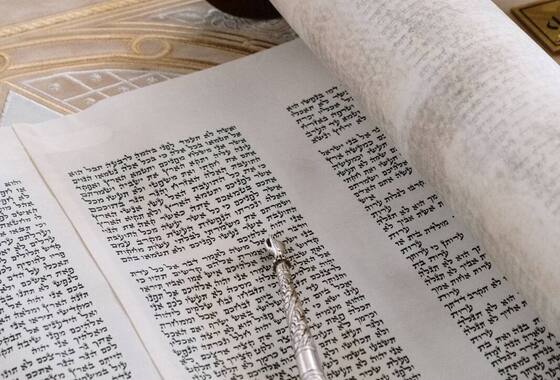 The Torah Reading in Synagogue: When, Why and HowWhen the Torah is read in synagogue, how the weekly cycle works, what happens during the reading, and what to do as it takes place.
 The Haftarah: What It Is and Why We Read ItWhat the Haftarah is, how it began, how it connects to the weekly Torah portion, who reads it, and what to know for a bar mitzvah.