

Parashat Re'eh
Deuteronomy · Deuteronomy 11:26-16:17
Parashat Re'eh ראה
Moses says: See, I set before you today a blessing and a curse; the blessing if you follow G-d's commandments. When Israel enters the land, the blessing is to be proclaimed on Mount Gerizim and the curse on Mount Ebal. Offerings may be brought only in the place G-d will choose, and the people must destroy all places of idol worship. Meat may be eaten anywhere, but not its blood. The Torah warns against a false prophet and anyone who entices others to serve idols. You are children of G-d your G-d, Moses says, and he repeats the laws of kosher animals, birds and fish. The portion teaches the laws of tithes, the cancellation of debts in the seventh year, and the mitzvah of charity: Open your hand to your brother, the poor person in your land. A Hebrew servant is freed with generous gifts. The portion ends with the three pilgrimage festivals, Passover, Shavuot and Sukkot, and the command to rejoice on them.
A lesson for today
This portion commands: Do not harden your heart or close your hand to your needy brother; open your hand to him. The Rebbe encouraged giving tzedakah every weekday, and placing a charity box in every home, office and even child's room. Our Sages teach that charity brings the redemption closer. Giving regularly, even a small coin, trains our hearts to be open, and reminds us that what we have is entrusted to us by G-d so that we can share it.
The Rebbe's teachingA storyIdeas for the Shabbat tableAn essay
The Rebbe's teaching
The Rebbe taught that the Torah reading and the calendar are connected: Re'eh is read at the start of Elul, so this is the season to give tzedakah first.
Parshat Re'eh opens with the words "See, I place before you today a blessing and a curse," and it contains the mitzvah to open our hand to a person in need. It is read on the Shabbat when we bless the new month of Elul, or on Rosh Chodesh Elul itself. Chabad teaching is that every Torah reading speaks to the time of year in which we read it. So the question is: why should tzedakah be the special message of Elul?
The answer draws on Maimonides. The shofar of Rosh Hashanah, he writes, is a call to wake up and improve. He also teaches that each of us should see ourselves, and the whole world, as evenly balanced between merit and fault, so that one good deed can tip the scale for ourselves and for everyone. That is why it is the custom to increase giving and good deeds as the new year approaches. We should strengthen all of Torah and mitzvot in this season, but the Rebbe's teaching is that tzedakah comes first.
What this means for us: Elul is a time for small, concrete resolutions, not only for big feelings. A weekday coin in the charity box, a check sent to a cause we trust, a family decision to give a regular amount: any of these is a deed that can tip the scale. We do not need to feel perfect before we begin. We simply give, and the giving itself changes us.
See also our guide to tzedakah and what Elul is.
A story
A well-known story, found in the classic book Pninim Yekarim; its details cannot be confirmed.
A man who had once been wealthy fell on hard times. Poverty and illness struck him and his family, and he went to a well-off member of his community to describe his suffering. The wealthy man was deeply moved and gave him a generous donation.
The poor man thanked him and left. But the wealthy man ran after him and handed him an additional sum. The man was puzzled. Why a second gift?
The wealthy man explained that tzedakah should be given happily and generously, because the money belongs to G-d, not to the giver. He admitted that his first gift had not been purely for the mitzvah. He had been moved by the man's plight and felt pain himself, and part of his motive was to relieve his own discomfort. The second gift, he said, was given purely for the sake of the mitzvah.
The story is told in connection with the verse in our portion that says, when you give to the needy person, "let your heart not feel bad when you give to him." If our heart feels pain, the story teaches, we can give a second time, purely for the sake of the mitzvah.
Ideas for the Shabbat table
- Ask each person: have you ever given because you felt uncomfortable, and later felt happier giving again? What was the difference?
- For children: if you had one coin to give today, who would you give it to and why? Let us put a coin in the tzedakah box together before Shabbat.
- Adults: The portion says "open your hand." What stops our hands from opening, and what helps?
- Discuss: Is it better to give a lot once, or a small amount every day? Why does the Rebbe encourage regular giving?
- Talk about it: Re'eh begins with "a blessing and a curse," and the choice is ours. Where in our week do we see a choice like that?
- Try this: decide as a family on a regular weekly amount for tzedakah, and let the children choose where it goes. See giving tzedakah as a family.
An essay
Giving is not as simple as it sounds. Most of us have felt both kinds of giving. One kind comes from discomfort: we see someone's need and it hurts us, and giving is a way to make the hurt stop. The other kind comes from clarity: we know that what we have is entrusted to us, and we give because that is the right thing to do with it.
Both kinds help the person who receives. But the story of the second gift suggests there is a higher level, and the Torah itself hints at it when it says our heart should not feel bad as we give. A mitzvah done only to ease our own feeling is real, but it is partly about us. A mitzvah done for its own sake lets the one who receives be the focus.
The Rebbe's teaching about Elul fits this thought. When we give regularly, even small amounts, we train ourselves to give without needing a dramatic moment of pain or pity. Giving becomes part of the day, like a meal or a prayer. A coin dropped into a tzedakah box on an ordinary Tuesday is a sign that giving has become a habit of the heart, not a reaction.
There is also a hopeful lesson in the Rambam's picture of the world balanced evenly between merit and fault. Nothing is too small. One generous act, one kind word, one decision to help, may be the deed that tips everything toward good. As the new year draws near, that is a powerful idea: we are never just bystanders.
If you would like to give in a way that helps our own community in Lafayette, Moraga and Orinda, or simply to talk about how to build a regular practice of giving, call 925-384-7242 and join us for Shabbat at Chabad of Lamorinda in Lafayette, or come to the Wednesday 1:00 PM Tanya class at the Rabbi's home (call for the address).
Common questions
What is Parshat Re'eh about?
Parshat Re'eh (Deuteronomy 11:26-16:17) sets before Israel a blessing and a curse, teaches the laws of kosher animals, tithes and the Sabbatical year, commands us to give tzedakah, and ends with the three pilgrimage festivals.
What does the Rebbe teach about Parshat Re'eh?
The Rebbe teaches that because Re'eh is read at the start of Elul, it is the season to give tzedakah first, since one good deed can tip the scale for ourselves and for the world.
What is the main lesson of Parshat Re'eh?
We are free to choose blessing, and a practical way to choose it is to open our hand to those in need, giving happily and regularly. See maaser for the classic way to give a tenth.
Learn more
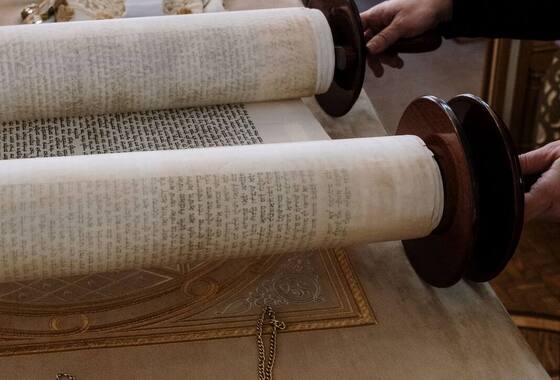 The Weekly Parsha: How the Torah Is Read Each WeekWhat the weekly Torah portion (parsha) is, how the 54 portions fit the Jewish year, and easy ways to study and discuss the parsha each week.
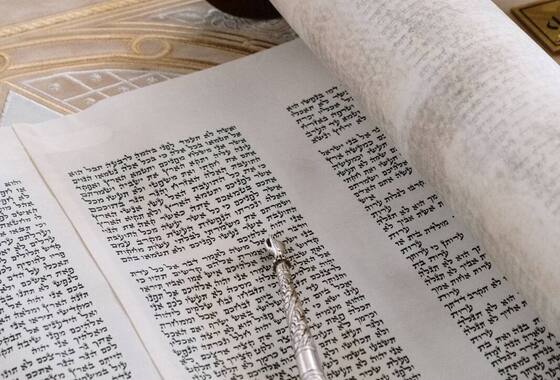 The Torah Reading in Synagogue: When, Why and HowWhen the Torah is read in synagogue, how the weekly cycle works, what happens during the reading, and what to do as it takes place.
 The Haftarah: What It Is and Why We Read ItWhat the Haftarah is, how it began, how it connects to the weekly Torah portion, who reads it, and what to know for a bar mitzvah.