
Learn › Life cycle › The Jewish wedding
Jewish Wedding Planning Checklist: From Engagement to Sheva Brachot
A Jewish wedding checklist: the rabbi, ketubah, witnesses, chuppah, ring, kosher wine, honors and the week after. Plan with Chabad of Lamorinda.
On this page · 3 min read
1. Start with the rabbi and the date2. Prepare yourselves3. The ceremony checklist4. Choose your honorees5. The wedding and the week afterTo plan a Jewish wedding, you need a rabbi, a date, a ketubah, two witnesses, a chuppah, a ring and a quiet room for yichud. A traditional wedding checklist covers the items needed for the religious parts of the ceremony, and this guide puts them in the order you will need them.
1. Start with the rabbi and the date
- Call the rabbi first. In Lafayette, Moraga or Orinda, call Rabbi Labkowski at 925-384-7242, ideally several months ahead.
- Choose the date together. The Jewish calendar matters when choosing a wedding date, so check with the rabbi before you book a hall. See Choosing a wedding date.
- Think about the engagement. Some families have the tenaim ceremony (see Tenaim), and others skip it.
2. Prepare yourselves
- Learning. Many couples take a few classes: kallah classes for the bride and chosson classes for the groom.
- Mikvah. The bride immerses in a mikvah before the wedding; the Rebbetzin can help arrange this privately. It is also proper for the groom to immerse on the wedding day.
- Questions of Jewish status. If either of you is unsure of Jewish status or has questions about paperwork, speak privately with the Rabbi.
3. The ceremony checklist
From a traditional wedding checklist:
- Chuppah. See What is a chuppah?.
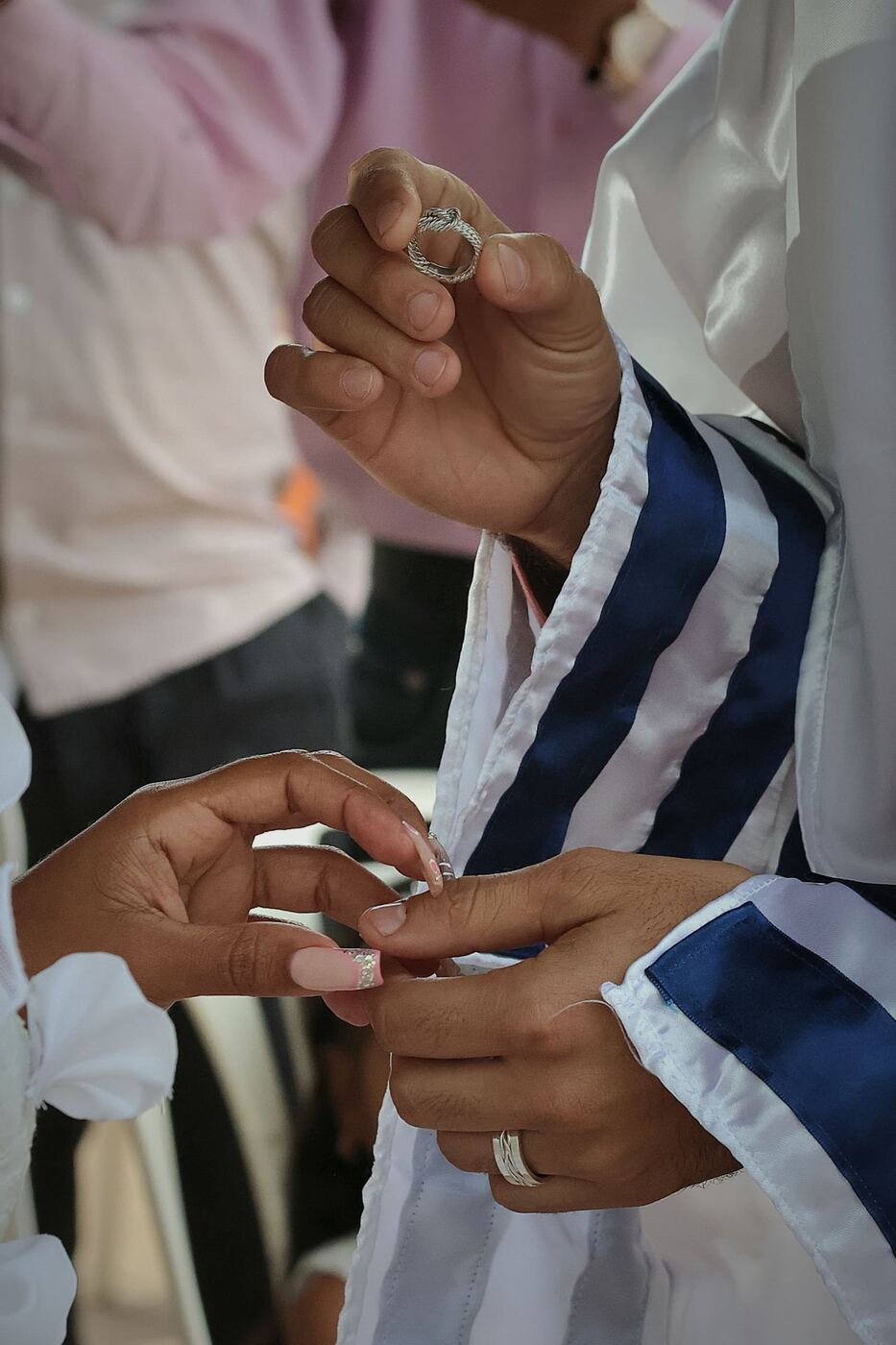
- Wedding ring. A plain band the groom owns; see The Jewish wedding ring.
- Ketubah. The officiating rabbi normally provides a standard one. If you want a designer ketubah, have the rabbi approve the text first. See The ketubah.
- Yichud room and refreshments. A private room, with food arranged with the caterer; see Yichud.
- Kosher wine and a cup. Preferably white, and best mevushal. By Chabad custom, the glass cup used for the wine is the same one the groom later breaks.
- Glass and cloth. A glass for the groom to break, with a cloth to wrap it.
- Veil. For the bride, lowered at the bedeken.
- Kittel. The white garment Ashkenazi grooms wear under the chuppah.
- Candles and matches. For those who escort the bride and groom to the chuppah.
- Mechitzah. A divider between the men's and women's dancing circles, if you follow that custom.
- Printed blessings and Grace after Meals booklets for guests.
- Chabad weddings: the text of the Rebbe's letter, which is read beneath the chuppah.
Only if you do the tenaim: the document, and a plate with a cloth.
4. Choose your honorees
The traditional honoree list suggests roles: an emcee, a cantor, two witnesses for the betrothal, a reader of the ketubah and six men to recite the seven blessings under the chuppah, plus a leader of Grace after Meals. The witnesses must be Torah-observant adult Jewish men who are not relatives of the couple or of each other. Ask the Rabbi how to match people to roles.
5. The wedding and the week after
The wedding day includes the fast, prayers, rejoicing with the bride and groom, and Grace after Meals with the seven blessings. For a week afterward, friends host sheva brachot meals in the couple's honor. For food, ask the Rabbi about kosher arrangements; see also Kosher catering for a simcha.
In Lamorinda: Planning a Jewish wedding in Lafayette, Moraga or Orinda? Call Rabbi Labkowski at 925-384-7242 as early as you can.
Common questions
What do you need for a Jewish wedding?
A rabbi, a chuppah, a plain ring owned by the groom, a ketubah, two kosher witnesses, wine and a glass to break. The Rabbi helps you arrange each one.
How far ahead should we start planning a Jewish wedding?
As early as you can; call Rabbi Labkowski at 925-384-7242, ideally several months ahead.
Who provides the ketubah?
The officiating rabbi normally provides a standard ketubah. If you want a designer ketubah, have the rabbi approve the text.
Who can be a witness at a Jewish wedding?
Torah-observant adult Jewish men who are not related to the couple or to each other.
Do we need classes before the wedding?
Many couples take kallah and chosson classes. Ask the Rabbi what he recommends.
Do we have to do tenaim?
No, it is a custom some families follow and others skip. Ask the Rabbi.
Take the next step
- Call Rabbi Labkowski at 925-384-7242 and read Getting married by a rabbi.
- Learn about the budget in Jewish wedding on a budget.
- Planning near Lafayette, Moraga or Orinda? See A Jewish wedding in Lamorinda.
Questions about this, or something on your mind? Message the Rabbi or the Rebbetzin privately, or call 925-384-7242. · Email
Read next
 A Jewish Wedding in Lafayette, Moraga or Orinda: Rabbi, Chuppah and PlanningPlanning a Jewish wedding near Lafayette, Moraga or Orinda? What you need: a rabbi, two witnesses, ketubah, ring and chuppah. Call Rabbi Labkowski.Read next →