
Learn › Life cycle › The Jewish wedding
Jewish Wedding on a Budget: The Essentials and What You Can Skip
What a Jewish wedding truly needs (ketubah, chuppah, ring, witnesses, minyan) versus the extras, the value of simplicity, and ways to save.
On this page · 2 min read
The essentialsThe extrasThe Torah value of simplicityHachnasat kallah: helping a brideWays to savePlanningA Jewish wedding does not need to be expensive to be beautiful and fully kosher. The essentials are few and simple. Everything else is a choice. Knowing the difference can take a lot of pressure off a couple and their families.
The essentials
Jewish law requires surprisingly little:
- A ketubah: the marriage contract, read under the chuppah and given to the bride.
- A chuppah: the wedding canopy. It can be a tallit held on four poles.
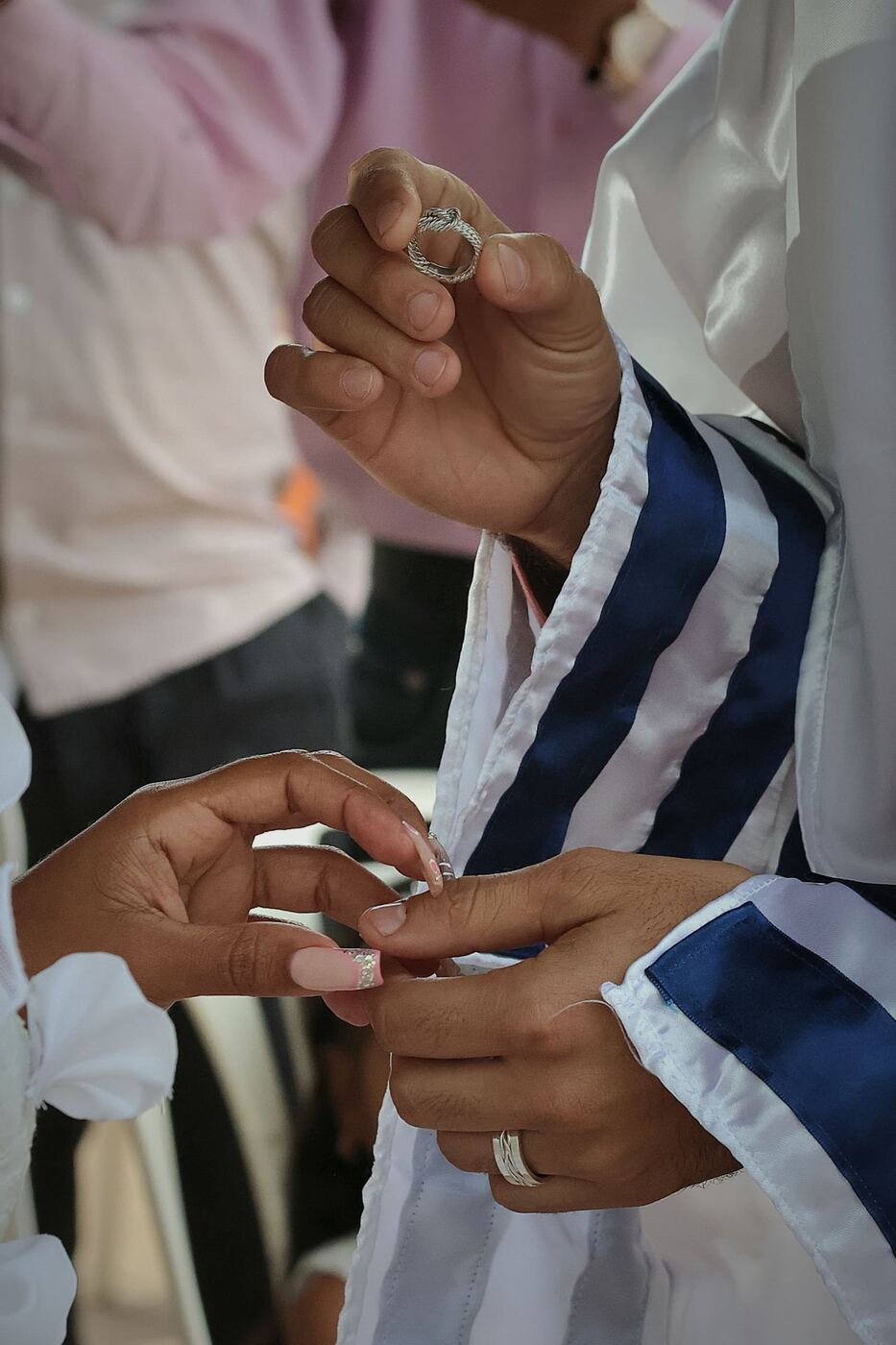
- A ring: the groom gives the bride a ring that belongs to him. The custom is a plain band without stones.
- Two kosher witnesses: observant Jewish men, not related to the couple or to each other.
- A minyan: ten Jewish men, for the seven blessings (sheva brachot) said under the chuppah.
- A rabbi to officiate and make sure everything is done properly.
That is the heart of a Jewish wedding. See The Jewish Wedding.
The extras
Many things that make weddings costly are not required at all: a large guest list, an expensive venue, elaborate flowers, a band, designer clothes, multiple courses. These can add joy, but they are not what makes a marriage holy.
The Torah value of simplicity
Jewish tradition has long warned against wedding spending that puts families under strain or makes others feel they must keep up. Historically, communities even set limits on lavish celebrations. What matters is the joy of the bride and groom and the home they are building.
Hachnasat kallah: helping a bride
Helping a bride and groom marry is a great mitzvah, called hachnasat kallah. Communities have always helped couples with the costs of a wedding and setting up a home. If you are able to give, it is a beautiful form of tzedakah. If you need help, there is no shame in asking.
Ways to save
- Keep the guest list close. Family and close friends make the warmest celebrations.
- Choose a simple venue: a home, a backyard or a community space.
- Hold the chuppah outdoors, as many communities do, under the sky.
- Choose a weekday. Many venues and vendors cost less than on a Sunday.
- Simple food, plenty of joy. A kosher buffet or family-style meal can be lovely.
- Ask friends to help with music, photos or decorations as their gift.
- Borrow a gown, a tallit for the chuppah or decorations from friends.
Planning
Talk to the Rabbi early, before you set a date, about the date, the ketubah, witnesses and the ceremony. See Choosing a Wedding Date and, for the bride, Kallah Classes.
In Lamorinda: Couples in Lafayette, Moraga, Orinda and the East Bay: Rabbi Yisroel Labkowski is glad to help plan a meaningful Jewish wedding, 925-384-7242.
Common questions
Can a Jewish wedding be small?
Yes. A wedding with only family is fully valid, as long as there are two kosher witnesses and, for the seven blessings, a minyan.
Does the ring have to be expensive?
No. It should be a simple band that belongs to the groom. Its value is not what matters.
Is a big party required?
No. A festive meal is a mitzvah, but it can be modest. The joy of the couple is what counts.
Can the Rabbi help us plan?
Yes. Rabbi Labkowski is glad to guide you through every step. Call 925-384-7242.
Talk privately with the Rabbi or the Rebbetzin
We help with every kind of dispute and family matter, with great success. Come early, before things spiral; and it is never too late. With the Torah's way and a positive outlook, there is a way forward from any situation. Reach out privately; no membership needed.
Read next
 The Jewish Wedding: Traditions and Ceremony Explained Step by StepA step-by-step guide to the Jewish wedding: the ketubah, chuppah, ring, seven blessings, breaking the glass, and what they mean.Read next →