
Learn › Mourning & remembrance › Yahrzeit and remembrance
Unveiling a Headstone: Jewish Customs and What to Expect
What a Jewish unveiling is, when the headstone is set, what to write on it, and how to hold a simple graveside ceremony.
Part 32 of 40 · When we lose someone, step by step
On this page · 2 min read
Why do we set a headstone?When is the unveiling held?What to write on the headstoneThe unveiling ceremonyPlacing a stoneAn unveiling is a short ceremony at the cemetery when a headstone is dedicated to a loved one, usually within the first year after their passing. Family and friends gather, recite Psalms, share memories, and remove a cloth covering the stone.
Why do we set a headstone?
Setting a headstone, called a matzeivah in Hebrew, is an ancient Jewish custom. The Torah tells how Jacob placed a pillar on the grave of his wife Rachel (Genesis 35:20). A headstone honors the person, marks the grave so it is not forgotten, and gives family a place to visit and pray.
The unveiling ceremony itself is a more recent custom, but it has become a meaningful way to gather the family once more.
When is the unveiling held?
Customs vary:
- Many families set the stone after the shloshim (30 days) or at around 11 or 12 months.
- Many hold the unveiling close to the first yahrzeit.
- There is no requirement to wait a full year. In many communities the stone is set as soon as it is ready.
Unveilings are generally not held on Shabbat, holidays, Rosh Chodesh or certain other days. Ask the Rabbi to help choose a date.
What to write on the headstone
A traditional Jewish headstone usually includes:
- The Hebrew letters פ"נ at the top, meaning "here lies."
- The person's Hebrew name and their father's Hebrew name. See our guide to Hebrew names.
- The Hebrew date of death, and often the English dates as well.
- The English name.
- The letters תנצב"ה at the bottom, an abbreviation for "May his or her soul be bound up in the bond of eternal life."
A short line describing the person, such as "beloved mother and grandmother," is common. Keep the design dignified and modest. We are glad to help check the Hebrew text before it is engraved, since mistakes are hard to fix.
The unveiling ceremony
The ceremony is simple and usually takes 15 to 30 minutes:
- Psalms. Family and friends recite selected Tehillim (Psalms).
- Words of remembrance. A Rabbi or family members share thoughts about the person.
- The unveiling. A cloth covering the stone is removed.
- El Malei Rachamim. A memorial prayer for the soul.
- Kaddish. If a minyan of ten Jewish men is present, mourners recite Kaddish.
Placing a stone
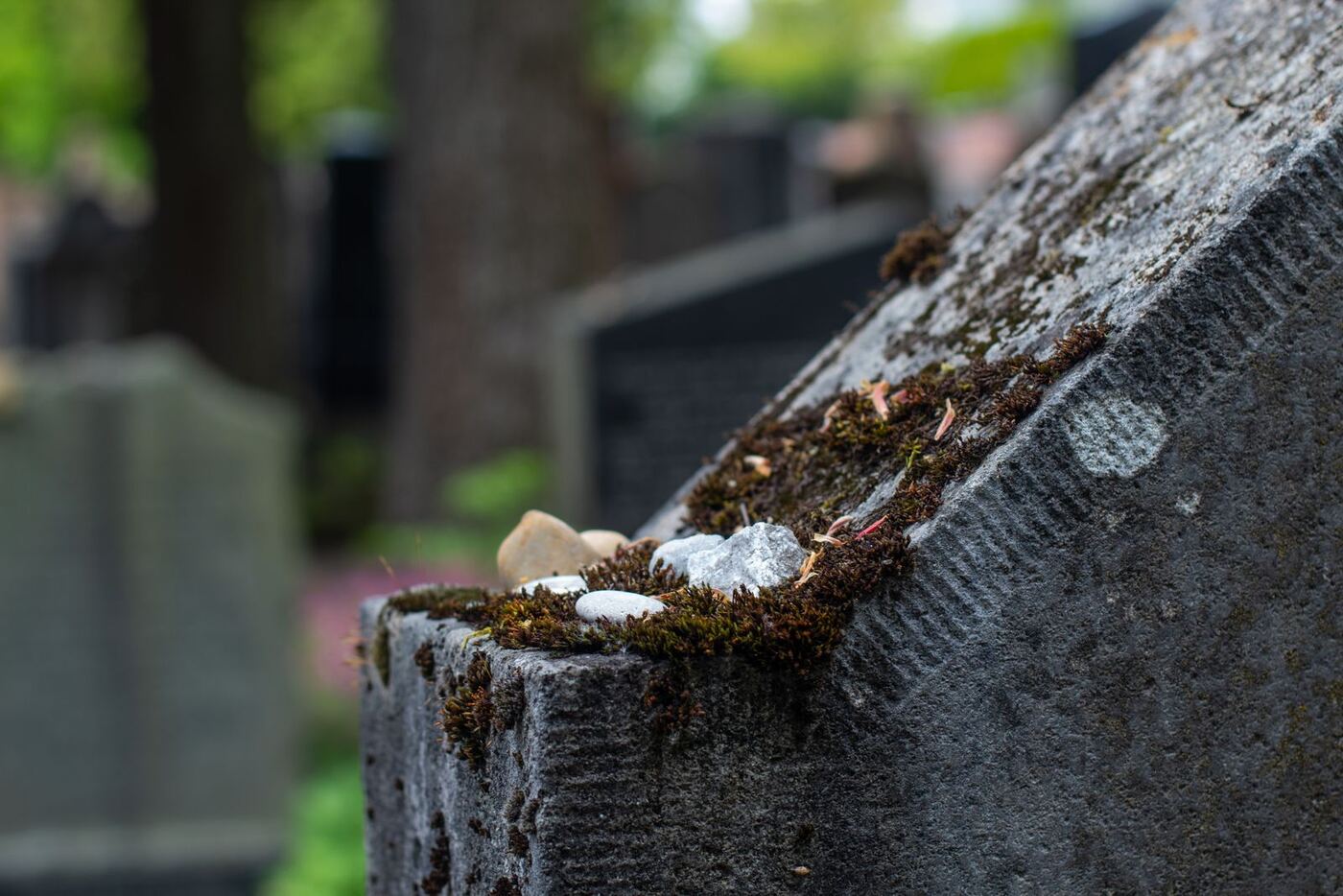
Before leaving, many people place a small pebble on the headstone. This custom shows that someone visited and that the person's memory endures, solid and lasting like a stone.
In Lamorinda: Planning an unveiling? Call Rabbi Labkowski at 925-384-7242 and we will help with the headstone text and lead a meaningful graveside ceremony.
Remember them: sponsor a Kiddush or give in their memory. Sponsor in honor or memory of a loved one →
Common questions
Is an unveiling required?
The headstone is the important custom. A formal ceremony is not required, but many families find it brings comfort and closure.
Can we hold an unveiling without a Rabbi?
Yes. Family members can recite Psalms and share memories. A Rabbi can help guide the ceremony and ensure the prayers are said properly, so we encourage you to reach out.
Who should attend?
Close family and friends usually attend. Unlike a funeral, an unveiling is typically small and invitations are personal.
What should I wear?
Respectful, modest clothing. Men usually wear a kippah.
Step by step · Part 32 of 40
When we lose someone, step by step
NextYahrzeit: How to Observe the Anniversary of a Loved One's PassingWhat a yahrzeit is, how to find the Hebrew date, lighting a yahrzeit candle, saying Kaddish, and other ways to honor a loved one.All 40 parts
- When a Loved One Is Dying: A Jewish Guide for the Last Days
- Someone Just Died: What to Do in the First Hours, Jewish Guide
- Can't Afford a Jewish Funeral? Help Is Available. Call the Rabbi
- Why Jewish Burial Is So Important: Meaning, Mitzvah and Dignity
- Aninut: The Time Between Death and Burial
- Why Jews Bury Quickly: Burial Within a Day and When a Delay Is Allowed
- Buying a Plot in a Jewish Cemetery: What Makes a Cemetery Jewish and What to Ask
- Autopsy and Jewish Law: What Families Should Know
- Embalming, Viewing and Open Caskets: The Jewish View, Explained Gently
- What Is Tahara? The Chevra Kadisha and Preparing a Jewish Body for Burial
- A Plain Wooden Casket and White Shrouds: Why Every Jew Is Buried the Same Way
- What to Wear to a Jewish Funeral, and What to Expect as a Guest
- Jewish Funeral Customs: What to Do When a Loved One Passes Away
- How to Write and Give a Eulogy at a Jewish Funeral
- Kriah: Tearing the Garment When a Loved One Passes Away
- The Meal of Condolence (Seudat Havraah): The Mourners' First Meal After the Funeral
- Who Sits Shiva? Who Is a Mourner in Jewish Law
- Sitting Shiva: A Simple Guide for Mourners and Visitors
- Setting Up a Shiva House: A Practical Checklist for Families
- Shiva and Holidays: What Happens When a Holiday or Shabbat Comes During Mourning
- Comforting Mourners: What to Say and Do After a Jewish Loss
- What to Bring to a Shiva House: Food, Kindness and Presence, Not Flowers
- Writing a Jewish Condolence Note: What to Say and What Not to Say
- The Mourner's Kaddish: Meaning, When to Say It and Who Says It
- Sheloshim: The 30 Days of Mourning After a Funeral
- The Year of Mourning for a Parent in Judaism
- Mourning and Simchas: Weddings, Parties and Music in the Year of Mourning
- Losing a Husband or Wife: A Jewish Guide for the Days and the Year After
- When a Child Dies: Jewish Comfort and Mourning for Parents
- Losing a Parent: Jewish Wisdom and Comfort for Sons and Daughters
- Writing a Jewish Headstone Inscription: Hebrew Name, Dates and Symbols
- Unveiling a Headstone: Jewish Customs and What to Expect
- Yahrzeit: How to Observe the Anniversary of a Loved One's Passing
- The First Yahrzeit: How to Mark One Year Since a Loss
- A Memorial Plaque in the Synagogue: Remembering a Loved One
- Learning Torah in Memory of a Loved One
- Giving in Memory: Tzedakah for a Yahrzeit and for the Soul of a Loved One
- Yizkor: The Jewish Memorial Prayer and When It Is Said
- El Malei Rachamim: The Jewish Memorial Prayer, Meaning and When It Is Said
- Visiting a Jewish Grave: When to Go and What to Say
Questions about this, or something on your mind? Message the Rabbi or the Rebbetzin privately, or call 925-384-7242. · Email
Read next
 Jewish Funeral Customs: What to Do When a Loved One Passes AwayA gentle guide to Jewish funeral customs: first steps, tahara, burial, the service, and how to support a grieving family.Read next →