
Learn › Prayer & Torah › Blessings (brachot)
Hamotzi: The Blessing Over Bread in Hebrew and English
The Hamotzi blessing over bread in Hebrew, transliteration and English, when to say it, how to do it step by step, and the custom of dipping in salt.
Part 14 of 23 · Shabbat, step by step
On this page · 2 min read
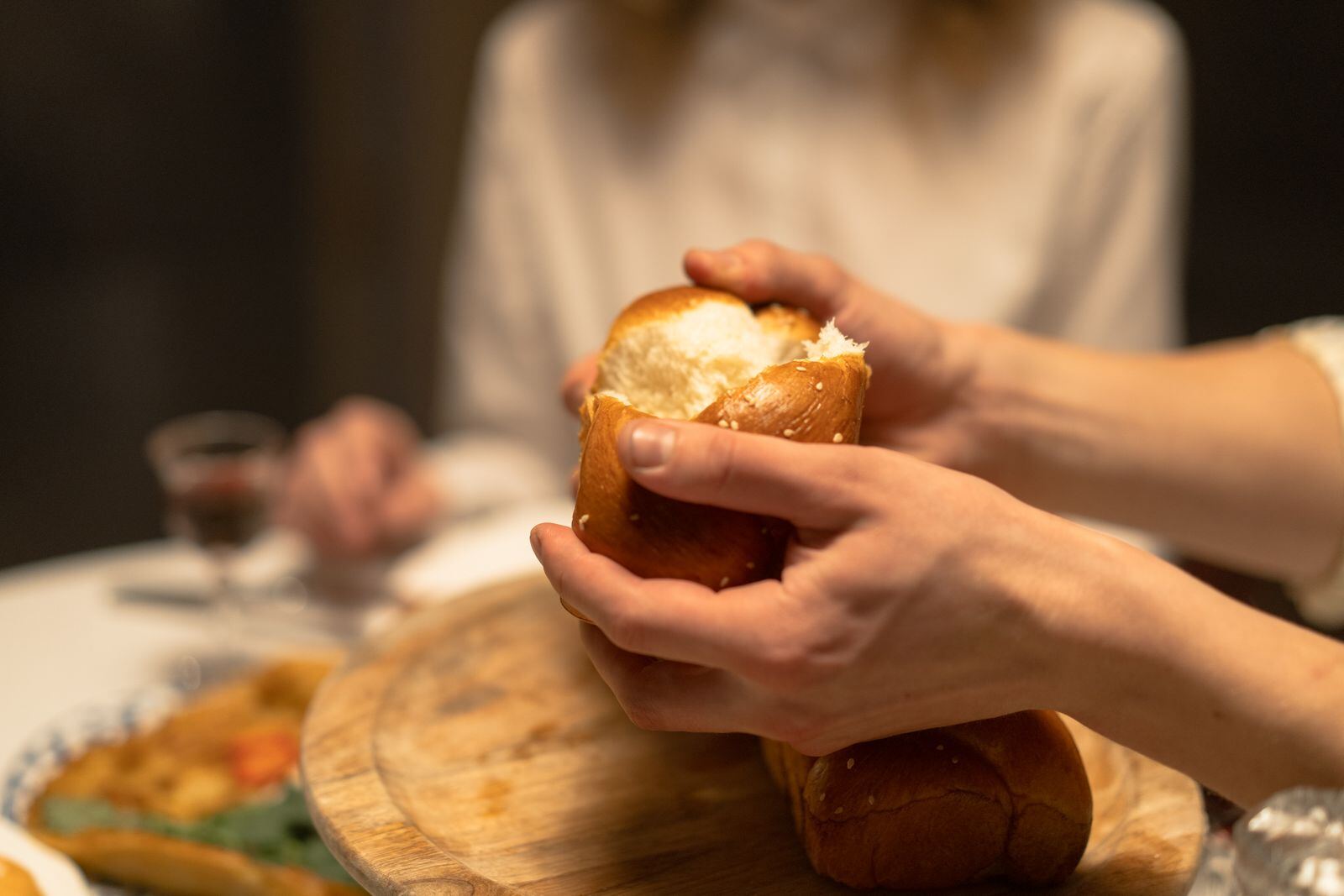
The blessingWhy bread has its own blessingWhen do you say Hamotzi?How to say Hamotzi, step by stepSalt on the tableAfter the mealHamotzi is the blessing Jews say before eating bread. It thanks G-d "who brings forth bread from the earth," and it begins every Shabbat and holiday meal, as well as any meal with bread.
The blessing
Hebrew: בָּרוּךְ אַתָּה ה' אֱלֹקֵינוּ מֶלֶךְ הָעוֹלָם, הַמּוֹצִיא לֶחֶם מִן הָאָרֶץ
Transliteration: Baruch atah Ado-nai, Elo-heinu melech ha'olam, hamotzi lechem min ha'aretz.
Translation: Blessed are You, L-rd our G-d, King of the universe, who brings forth bread from the earth.
Why bread has its own blessing
Bread is the most basic food, and it takes the most partnership between people and G-d: planting, harvesting, grinding, kneading and baking. Bread is so central that its blessing covers the whole meal. Once you say Hamotzi, you do not need separate blessings for most other foods eaten as part of that meal.
When do you say Hamotzi?
Say Hamotzi over bread made from any of the five grains: wheat, barley, rye, oats or spelt. This includes challah, bagels, pita, rolls and sandwich bread. Matzah also gets Hamotzi.
Cakes, cookies, crackers and pastries get a different blessing, mezonot, unless you make a full meal of them. Some foods fall in between, so ask the Rabbi about specific items. See our guide to blessings for other foods.
How to say Hamotzi, step by step
- Wash your hands with a cup and say the blessing for washing, al netilat yadayim.
- Do not speak between washing and eating the bread.
- Uncover the bread and place your hands on it. On Shabbat and holidays, use two whole loaves (lechem mishneh), recalling the double portion of manna.
- Say Hamotzi clearly, so others at the table can answer "Amen."
- Cut or tear a slice.
- Dip it in salt. The Chabad custom is to dip the bread in salt three times.
- Eat a piece right away, then share bread with everyone at the table.
Salt on the table
The table is compared to the altar of the Holy Temple, where every offering was salted. Salt also stands for an everlasting covenant with G-d. That is why bread is dipped in salt after Hamotzi.
After the meal
If you ate at least an olive-sized piece of bread (a kezayit, about one ounce), you say Grace After Meals, Birkat Hamazon, at the end of the meal.
In Lamorinda: Join Rabbi Yisroel and Tzipora Labkowski for Shabbat dinner in Lafayette and hear Hamotzi over fresh challah. Let us know you are coming at jewishlamorinda.com/forms/shabbat-meal.
Common questions
Does one person say Hamotzi for everyone?
At a Shabbat or family meal, the host often says Hamotzi for the whole table. Everyone listens, answers "Amen," and then eats from the bread he cut. Each person still washes his or her own hands first.
Do I need to wash my hands before Hamotzi?
Yes, when eating bread, Jewish law calls for washing hands with a cup and a blessing before the meal. If you cannot wash, ask the Rabbi what to do.
What if I forgot to say Hamotzi?
If you remember while still eating bread, say the blessing then and continue. If you already finished, simply say Birkat Hamazon at the end.
Why do we cover the challah on Shabbat?
On Friday night, Kiddush over wine comes before Hamotzi. Covering the challah keeps it from being "embarrassed" while it waits its turn, a beautiful lesson in sensitivity to others.
Step by step · Part 14 of 23
Shabbat, step by step
NextThe Three Shabbat Meals: Customs, Order and What to ServeWhat the three Shabbat meals are, the order of a Friday night dinner, the blessings over wine and challah, songs, and traditional Shabbat foods.All 23 parts
- Shabbat for Beginners: How to Start Keeping Shabbat
- Getting Ready for Shabbat: A Friday Checklist
- Setting the Shabbat Table: Candles, Two Challahs, Kiddush Cup and Salt
- What to Wear on Shabbat and to Synagogue: Dress for Shabbat Explained
- How to Keep Food Warm on Shabbat: The Blech, Hot Plate and Urn
- Shabbat Candles: How and When to Light, With the Blessing
- Early Shabbat in Summer: Why Kabbalat Shabbat Can Start Before Sunset
- Friday Night Dinner, Step by Step: Your First Shabbat Meal at Home
- Kabbalat Shabbat: Welcoming Shabbat on Friday Night
- Lecha Dodi: Meaning, Author and Why We Turn to Welcome Shabbat
- Shalom Aleichem: The Friday Night Song Welcoming the Angels
- Kiddush: How to Make Kiddush on Shabbat and Holidays
- Kiddush Without Wine: Grape Juice and Alcohol-Free Options
- Hamotzi: The Blessing Over Bread in Hebrew and English
- The Three Shabbat Meals: Customs, Order and What to Serve
- An Easy Shabbat Dinner Menu: Five Simple Courses You Can Make Friday
- How to Share a Short Torah Thought at Your Shabbat Table
- Shabbat Table Songs (Zemirot): Singing at the Shabbat Meal
- Shabbat Day: From Morning Services to the Last Light
- Seudah Shlishit: The Third Shabbat Meal
- The 39 Melachot: What Counts as Work on Shabbat
- Techum Shabbat: How Far May You Walk on Shabbat?
- Havdalah: How to End Shabbat With Wine, Spices and Flame
Questions about this, or something on your mind? Message the Rabbi or the Rebbetzin privately, or call 925-384-7242. · Email
Read next
 Jewish Blessings Over Food: Which Bracha to Say and WhenA simple guide to Jewish blessings (brachot): the six blessings before food, the blessings after eating, Shehecheyanu, and how to say them.Read next →