

Parashat Pinchas
Numbers · Numbers 25:10-30:1
Parashat Pinchas פינחס
G-d rewards Pinchas, grandson of Aaron, for his zeal in stopping the plague, giving him a covenant of peace and an eternal priesthood for his descendants. Israel is told to treat Midian as an enemy. A new census is taken on the plains of Moab, counting 601,730 men, and the land is to be divided among the tribes by lot, according to their size. The five daughters of Tzelofchad, who had no brothers, come before Moses and ask to inherit their father's portion in the land. G-d says that they speak rightly, and the laws of inheritance are given. G-d tells Moses to go up the mountain to see the land he will not enter. Moses asks G-d to appoint a leader so that the people will not be like sheep without a shepherd, and Joshua is chosen; Moses lays his hands on him before Elazar and the whole community. The portion ends with the offerings for every day, Shabbat, Rosh Chodesh and each festival.
A lesson for today
The daughters of Tzelofchad loved the Land of Israel and would not give up their share in it. Their sincere request led to a new section of Torah law. The Rebbe pointed to them as an example of the deep faith and initiative of Jewish women, and of how one sincere voice can bring blessing to the whole people. When we care about something holy, we should not stay quiet. Asking, learning and acting with conviction can open new doors for many others.
The Rebbe's teachingA storyIdeas for the Shabbat tableAn essay
The Rebbe's teaching
The Rebbe teaches that our bond with G-d is not only earned and not only given: it is an inheritance, because at the deepest level we are one with Him.
The Rebbe begins with a question about the Rambam. The Rambam ends his list of the positive commandments with the mitzvah to judge the laws of inheritance, from the verse in our portion, "When a man dies without a son." Why end there? Most mitzvot apply during life, and this one is a court's duty, not even the person's own. And the verse seems unrelated to the content.
The Rebbe's answer is about the relationship between the Jewish people and G-d. The Torah describes the division of the Land of Israel in three ways: as a portion, as a lot, and as an inheritance. Each describes a deeper bond.
- A portion is like something acquired. The bond is earned through our service, which draws G-d's goodness down "from below."
- A lot is like a gift or a lottery. G-d chose the Jewish people by His own will, "from above," not because of their merit, and our souls are "an actual part of G-d."
- An inheritance goes deeper still. An heir stands in the place of the one who passed away and is essentially one with him, so he naturally receives the estate. This describes a bond with G-d's very Essence, where the Jewish people and G-d are, so to speak, one.
The Rebbe notes that the three levels also match three eras: before the Torah was given, when service was measured by human ability; after the Torah, when our service carries G-d's own power; and the future, when the oneness will be revealed. This also explains the phrase "without a son": G-d's Essence is above even the relationship of father and son, which is the language of the first two levels.
For us the message is not a rule but a way of seeing. Our Jewish life is not only a list of tasks we earn credit for, and not only a gift we receive. It is who we are. The Rebbe teaches that our observance can flow from belonging, from a sense that this is our family's inheritance, and not only from reward. (Likkutei Sichos, vol. 28, Pinchas, first talk.)
A story
In 1979, about twenty women attended a Chabad women's convention in Detroit. It was inspiring, but at the airport, as the group waited to fly home, they learned that a snowstorm had canceled their flight.
They hurried to a pay phone and called Chabad headquarters in New York to report the delay. Their leader, Mrs. Miriam Popack, spoke with the Rebbe's secretary and explained that they were stuck in Detroit. The secretary put her on hold. When he came back, he said that the Rebbe did not understand the word "stuck." Mrs. Popack explained what it meant. The secretary replied that the Rebbe knows what stuck means, and that "The Rebbe says that a Jew is never stuck."
The message surprised the women, but they quickly understood. They did not sit in frustration. They spread out across the airport and offered Shabbat candles to the Jewish women they met. Miriam Swerdlov was one of the women in the group. The account says that families across the United States now light Shabbat candles because those women were grounded in Detroit.
The story ties into our portion. The daughters of Tzelofchad were five women who did not accept being left out of their father's share of the Land. They came forward and asked, and the Torah gave a whole section of law because of their request. The Rebbe held up their courage and initiative as an example for Jewish women. In both stories, women who found themselves stuck turned a closed door into a door for others.
Ideas for the Shabbat table
- Ask the children: the five sisters asked Moses for what they believed was fair. Is it brave to ask? When did you speak up for something you cared about?
- For everyone: when have you been "stuck," like in a delayed flight or a hard week? What might be waiting for you there?
- Ask: what is the difference between something you earn, something you are given, and something you inherit? Which one describes our Jewish life?
- For the children: the daughters loved the Land of Israel. What do you love so much that you would speak up for it?
- Discuss: the Rebbe said "a Jew is never stuck." How can this change the way we respond to a delay?
- Activity: if you light Shabbat candles, ask someone at the table to tell why. If you do not yet, invite someone to light with you this Friday. See Shabbat candles.
- Read together about Jewish women and girls lighting Shabbat candles.
An essay
When the daughters of Tzelofchad came before Moses, they had every reason to stay quiet. Their father had died without sons, and the law as they understood it left them out of the inheritance. They could have accepted this as "just how it is." Instead they said, "Why should our father's name be lost?" and they asked.
The Torah's answer is striking: "The daughters of Tzelofchad speak justly." A new section of law came into the world because a few people cared enough about something holy to say so out loud.
Most of us have felt, at one time or another, left out of something. Perhaps we felt that Judaism was "for other people," more educated, more observant, more at home in the synagogue. The Rebbe's teaching about inheritance speaks to that feeling directly. An inheritance is not given to the most qualified. It is given to a child, because he or she is the child. Our connection to G-d is not a prize for those who study the most. It belongs to every Jew, whatever their background, simply because we are part of the family.
And like the sisters, we are invited to ask. To ask a question about Shabbat, to ask where to begin, to ask for a seat at a class. The ones who ask often open a door for many others behind them. The women stuck in Detroit offered candles to the women they met, and a delay became a mitzvah.
If you have wondered whether Jewish life "has a place" for you, the answer is that it does. We would love to welcome you to a Shabbat at Chabad of Lamorinda in Lafayette (call 925-384-7242), or to the Wednesday 1:00 PM Tanya class at the Rabbi's home (call for the address).
Common questions
What is Parshat Pinchas about?
Parshat Pinchas (Numbers 25:10-30:1) tells how G-d rewarded Pinchas with a covenant of peace, how a new census was taken, how the daughters of Tzelofchad asked for their father's share in the Land, and how Joshua was appointed to succeed Moses. It ends with the offerings for the holidays.
What does the Rebbe teach about Parshat Pinchas?
The Rebbe teaches that the Land was divided as a portion, a lot and an inheritance, and that inheritance describes the deepest bond: the Jewish people are one with G-d's very Essence. We can serve G-d from a sense of belonging, not only from reward.
What is the main lesson of Parshat Pinchas?
The main lesson is that one sincere voice can bring blessing to the whole people, as the daughters of Tzelofchad did, and that every Jew has an inheritance in Torah. Read about Jewish women, and find this week's portion on the parsha page.
Learn more
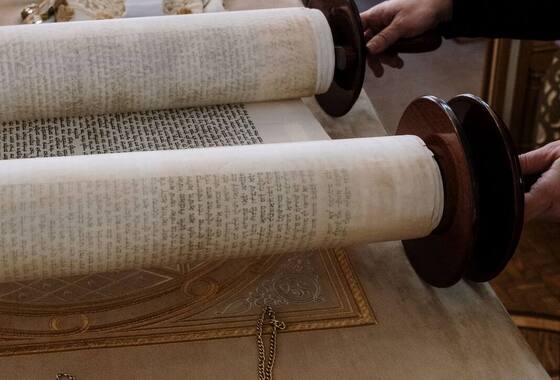 The Weekly Parsha: How the Torah Is Read Each WeekWhat the weekly Torah portion (parsha) is, how the 54 portions fit the Jewish year, and easy ways to study and discuss the parsha each week.
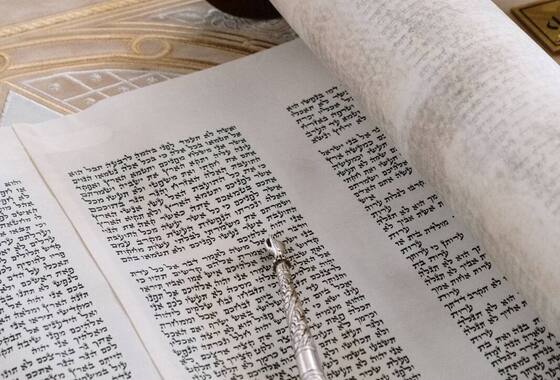 The Torah Reading in Synagogue: When, Why and HowWhen the Torah is read in synagogue, how the weekly cycle works, what happens during the reading, and what to do as it takes place.
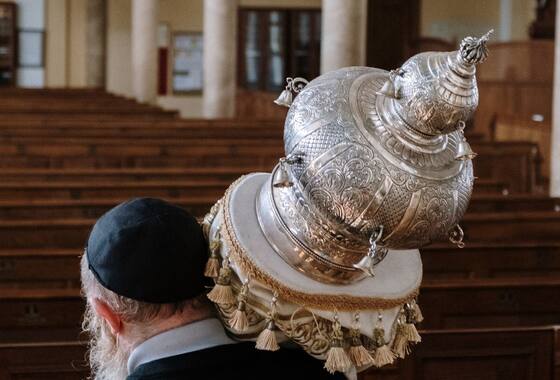 The Haftarah: What It Is and Why We Read ItWhat the Haftarah is, how it began, how it connects to the weekly Torah portion, who reads it, and what to know for a bar mitzvah.