

Parashat Matot
Numbers · Numbers 30:2-32:42
Parashat Matot מטות
Moses teaches the heads of the tribes the laws of vows: a person who makes a vow or an oath must not break his word, and the Torah explains when a father or husband may annul the vows of a daughter or wife. Israel goes to war against Midian, with a thousand men from each tribe and Pinchas accompanying them. They are victorious, and Balaam is killed. The spoils are counted and divided between the soldiers and the community, with a portion given to the priests and Levites. The Torah teaches how to make metal vessels taken from the Midianites fit for use, by fire or by immersion. The tribes of Reuben and Gad, who have large herds, ask to settle on the east side of the Jordan. Moses is concerned that they are avoiding the conquest, but they promise to cross over and fight at the front until the land is conquered. Moses agrees, and they, with half the tribe of Manasseh, receive land there.
A lesson for today
The tribes of Reuben and Gad said, We will build pens for our flocks here, and cities for our children. When Moses answered, he reversed the order: build cities for your children, and pens for your flocks. Rashi explains that they had put their property before their children, and Moses corrected them. The Rebbe stressed that a child's Jewish education and spiritual well being must come first, before business and possessions. Our priorities show in what we take care of first.
The Rebbe's teachingA storyIdeas for the Shabbat tableAn essay
The Rebbe's teaching
The Rebbe teaches that living in the material world is good when it is built on a spiritual purpose, and that we must "make the primary thing primary, and the secondary thing secondary."
The tribes of Reuben and Gad owned large herds, and they asked Moses to settle on the land east of the Jordan, where the pasture was rich. They said, "We will build sheepfolds for our flocks and cities for our children." Rashi notes that they mentioned their animals before their families, and Moses corrected them, reversing the order: first build cities for your children, then folds for your flocks.
The Rebbe asks a deeper question. Moses was troubled by the request, because it sounded like the sin of the spies, who did not want to enter the Land and preferred the desert, where G-d provided everything. Yet Moses agreed, and even added half of the tribe of Manasseh. What changed?
The Rebbe explains that the difference lay in what the two tribes promised. They agreed to cross the Jordan with the rest of the nation, to leave their wives, children and possessions on the east side, to march at the front of the army, and to return only when everyone else was settled. Their request was not an escape from their mission, but a way of serving that matched their gifts. Shepherding is calm and leaves time for prayer and study, and our patriarchs and Moses were shepherds. A Chassidic reading adds that they saw even the humblest part of creation as holding great potential for elevation, and wanted to engage with it for that reason.
The lesson is that involvement with the material world is right when it is grounded in a spiritual purpose, when a person separates what is necessary from what is superfluous, and when he first proves his commitment to the whole community. The nation also needs people who devote much of their time to peaceful study and prayer, and they too should help build the Land. When they support the others, they are partners in the work. (Likkutei Sichos, vol. 8, Parshat Matot.)
A story
This is a true chapter of history. In the Soviet Union, the Communist regime fought against teaching Judaism to children. The sixth Lubavitcher Rebbe, Rabbi Yosef Yitzchak Schneersohn, set up an extensive network of underground chadarim (children's schools) and yeshivot to educate Jewish youth.
The Soviet authorities opposed this work more fiercely than any other. The Rebbe was arrested several times for what the regime called counter-revolutionary activity, and once he was sentenced to death. The sentence was averted through international intervention and a series of miracles, as the sources describe it.
The people who taught the children risked even more. Teachers who were exiled to Siberia for teaching young children were replaced by others. The Rebbe had to send each replacement knowing the danger that awaited him, and each one went.
The network kept running for decades, until the days of glasnost, when the schools could finally open their doors.
Think about the order of priorities in this story. These were people who faced real danger. They put children's Jewish education ahead of comfort, ahead of their own security. They would have said what Moses said to Reuben and Gad: build cities for your children first.
It is a story from another time and place, but it asks a question that is easy to hear in Lafayette, Moraga or Orinda too: what do we put first?
Ideas for the Shabbat table
- Ask the children: Reuben and Gad said "flocks" before "children." Why did Moses fix the order? What would you want to be first on a list like this?
- For everyone: if someone looked at our calendar and our bank account, what would they say comes first in our family? Is that what we want?
- Ask: the tribes promised to fight in front of everyone else before settling down. Why did that make their request acceptable?
- For the children: what is your favorite thing about your Jewish school, camp or class? Why does it matter?
- Discuss: the teachers in Soviet schools risked everything to teach children. What do we do easily today that others once risked a lot for?
- Activity: ask each child to teach the family one thing they learned this week (a blessing, a story, a word in Hebrew).
- Read together about choosing Jewish education and learning Jewish things at home with kids.
An essay
Every family has a list of things we say we care about, and a very different list of what actually fills our days. The tribes of Reuben and Gad give us a small, honest window into that gap. When they spoke, the animals came out first, and the children second. Probably they did not mean anything by it. They were simply speaking in the order of what was on their minds. And Moses, with great care, said: turn it around.
It is a very gentle correction, and it has a lot to teach. What we mention first, what we plan first, what we pay for first, shows our priorities, even when we do not mean it to. Many of us would say that our children's character, values and sense of Jewish identity matter more than almost anything. And yet the activity schedule often tells a different story.
The Rebbe's teaching adds a second and more encouraging thought. Reuben and Gad were not wrong to care about their livelihood. Work, flocks, even comfort are fine, and they can be holy. The key is that they are in service of something. The tribes proved this by going first into battle, before enjoying their own land. Our work is meaningful when it is paying for a home where the family can learn, celebrate Shabbat and give to others.
You do not need to rearrange your life overnight. You might begin with a single hour: a Friday night dinner with candles, a story told at bedtime, a child brought to a Jewish class. These are the "cities for the children," and they are the first part of the plan.
If you would like to talk about how to begin, call Chabad of Lamorinda at 925-384-7242. You are invited to a Shabbat in Lafayette, or to the Wednesday 1:00 PM Tanya class at the Rabbi's home (call for the address).
Common questions
What is Parshat Matot about?
Parshat Matot (Numbers 30:2-32:42) teaches the laws of vows, tells of Israel's war against Midian and the division of the spoils, and describes how the tribes of Reuben and Gad asked to settle east of the Jordan. Moses agreed after they promised to fight together with their brothers first.
What does the Rebbe teach about Parshat Matot?
The Rebbe teaches that involvement in material matters is right when it is rooted in a spiritual purpose, and that we should "make the primary thing primary." The tribes of Reuben and Gad earned their request by first standing with the whole nation.
What is the main lesson of Parshat Matot?
The main lesson is to keep our priorities in order, with our children's Jewish education and the spiritual life of the family first. Learn more in choosing Jewish education, and find this week's portion on the parsha page.
Learn more
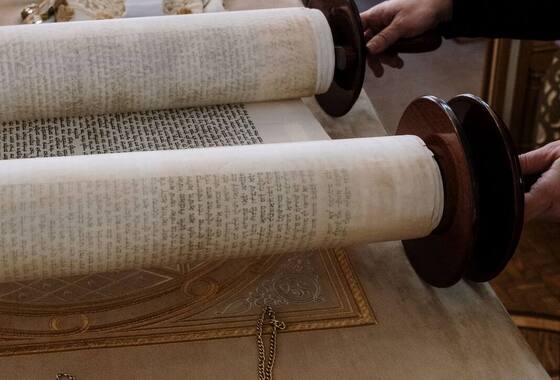 The Weekly Parsha: How the Torah Is Read Each WeekWhat the weekly Torah portion (parsha) is, how the 54 portions fit the Jewish year, and easy ways to study and discuss the parsha each week.
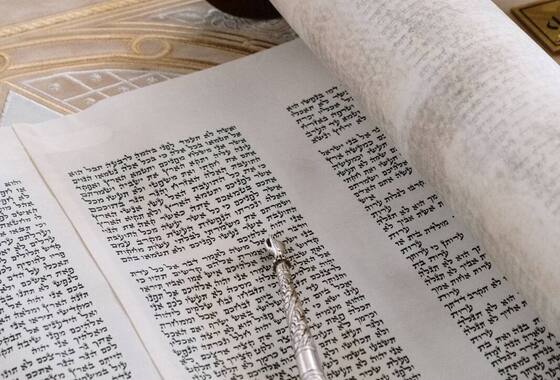 The Torah Reading in Synagogue: When, Why and HowWhen the Torah is read in synagogue, how the weekly cycle works, what happens during the reading, and what to do as it takes place.
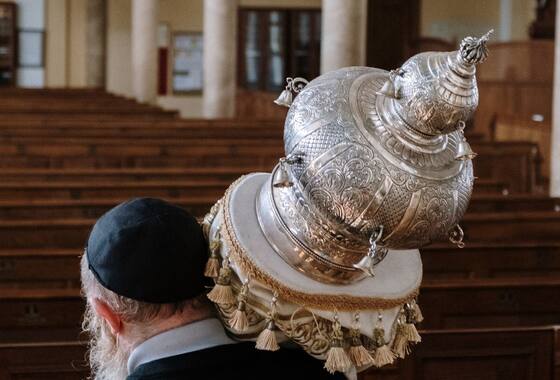 The Haftarah: What It Is and Why We Read ItWhat the Haftarah is, how it began, how it connects to the weekly Torah portion, who reads it, and what to know for a bar mitzvah.