

Parashat Nitzavim
Deuteronomy · Deuteronomy 29:9-30:20
Parashat Nitzavim נצבים
On the last day of his life, Moses gathers the entire people: You are standing today, all of you, before G-d your G-d: your leaders, your elders, your officers, every man of Israel, your children, your wives, the stranger in your camp, from the woodcutter to the water drawer. They enter into a covenant with G-d, and it includes not only those present but all future generations. Moses warns against a person who thinks he can follow his own heart and still be at peace, and describes the exile that would follow if the people abandon the covenant. But he promises that in the end Israel will return to G-d, and G-d will gather them from all the places they were scattered, even from the ends of the heavens. The commandment, Moses says, is not in heaven or across the sea; it is very near to you, in your mouth and in your heart, to do it. I have set before you life and death; choose life.
A lesson for today
The Torah is not in heaven; it is very near to you, in your mouth and in your heart, to do it. This verse is so central that the Alter Rebbe built his whole book, the Tanya, to explain how it is true for every person. Living as a Jew is not reserved for the great; it is within reach for each of us, in what we say, feel and do. Nitzavim is read just before Rosh Hashanah, reminding us that a fresh start is closer than we think.
The Rebbe's teachingA storyIdeas for the Shabbat tableAn essay
The Rebbe's teaching
The Rebbe taught that the power to choose good freely comes from the deepest level of the soul, which is one with G-d.
Nitzavim closes with Moses' plea: "I have placed before you life and death, the blessing and the curse; choose life." The Rebbe asked what really lets a person choose goodness freely. A choice based on reasoning is only as strong as the reasons behind it, and logic can even feel like a kind of compulsion: "I have no choice, it makes sense." But a choice that flows from the very essence of the soul has no such limit. It rules out anything but good, and yet it is entirely free, because it expresses who we truly are. That freedom then becomes conscious in the mind, which can weigh both paths and see that good was chosen freely.
The Rebbe connected this to the season. Nitzavim is always read just before Rosh Hashanah, the day on which we ask G-d to choose us. G-d's choice of the Jewish people is also rooted in essence, not in a calculation of merit. When we choose G-d on Rosh Hashanah, not only through logic but from our soul's core, He responds by choosing us.
This fits the portion's central verse, that the Torah "is very near to you, in your mouth and in your heart, to do it." The Alter Rebbe built the Tanya on this verse, to show that a Jewish life is within reach of every person, in what we say, feel and do. Living as a Jew is not reserved for the great.
What this means for us: the next time we face a choice between easy and right, we can remember that we are not only weighing pros and cons. We are tapping a deep inner strength that already wants to choose good. And a fresh start is closer than we think. See free will, the soul and the Tanya.
A story
In the 1940s the Previous Lubavitcher Rebbe, Rabbi Yosef Yitzchak Schneersohn, sent emissaries across America to bring the warmth of Judaism to Jews who had drifted away. One of them was Rabbi Shmuel Levitin, a former rabbi in Lithuania. The Rebbe asked him to visit Charles (Yechezkel) Lissner, a Chicago businessman whose ancestor had been a follower of the first Chabad Rebbe. Lissner had become fairly assimilated, and the Rebbe hoped that a visit might spark something.
The two men reminisced about Lissner's family and the chassidic home of his grandparents. When Rabbi Levitin rose to leave, Lissner reached for his checkbook. Rabbi Levitin declined any donation, and Lissner was puzzled. Rabbi Yitzchak Perlstein, who was also there, then offered an image: a Torah scroll's faded letters are restored by a scribe who checks it, and in the same way the Rebbe sends emissaries to refresh each Jew, who is like a Torah. Lissner was deeply moved.
When the emissaries reported back, the Rebbe said that the image was not entirely accurate. Ink on parchment can fade, but letters engraved in stone, like the Ten Commandments, cannot. A Jew, he explained, is a Torah whose letters are engraved, not merely written. They cannot fade. They can only be covered by the dust and grime of outside influences. The task is not to rewrite a Jew but to clear away the covering, so that the inner spark shows again. That is why the Jewish heart is always ready to respond.
The story was adapted from an account by Rabbi Yosef Wineberg, who was an eyewitness.
Ideas for the Shabbat table
- Ask everyone: when did you last make a choice that you could not fully explain with logic, but that felt completely right?
- For children: Moses says "choose life." What is a choice you made this week that was good, even though it was hard?
- Adults: Do we ever treat doing the right thing as a burden, "I have to," instead of "I want to"? What would it change to see it as who we are?
- Discuss: the Rebbe said every Jew is like an engraved letter that cannot fade. What helps clear away the "dust"?
- Talk about it: the Torah says it is "very near to you." Which mitzvah is the nearest to you, the one you could start tomorrow?
- Try this: before Rosh Hashanah, each person picks one small good choice to make daily. See Rosh Hashanah for beginners and teshuvah.
An essay
"It is not in heaven... it is very near to you." Few verses are as comforting. Moses speaks them on the last day of his life, to the entire people: leaders and water carriers, children and strangers. All of them, he says, stand together before G-d. And what he asks of them is not beyond their reach.
Many of us carry a quiet worry that Judaism is for other people, those who know more, who feel more, who are further along. Nitzavim answers that worry directly. The Alter Rebbe understood the verse as saying that closeness to G-d is not reserved for scholars. It is in our mouth, our heart and our actions.
The Rebbe added a second thought: that when we choose good, we are not suppressing ourselves. We are expressing the deepest part of who we are. That changes how we think about our struggles. A person who resists a temptation is not betraying "the real me." The real me is the one who wants to resist.
The story of Mr. Lissner shows both ideas. Here was a man who had drifted far from his family's tradition, yet a conversation remembering his grandparents' chassidic home moved him deeply. The Rebbe's correction made it clear why. Nothing in a Jew is erased. Whatever has settled on top, the letters beneath are intact.
This is also the message of Rosh Hashanah. We do not come as people who have earned a verdict. We come as people who can choose, and whom G-d chooses. A fresh start does not require a great leap, only a small, sincere turn, and the strength to make it is already ours.
If you would like to take one such step, you are warmly welcome at Shabbat at Chabad of Lamorinda in Lafayette (call 925-384-7242 for the times) or at the Wednesday 1:00 PM Tanya class at the Rabbi's home (call for the address), where the Tanya's message of nearness is the subject of study.
Common questions
What is Parshat Nitzavim about?
Parshat Nitzavim (Deuteronomy 29:9-30:20) records Moses gathering the whole people to enter the covenant, promising that they will return and be gathered even from the ends of the heavens, and urging "choose life."
What does the Rebbe teach about Parshat Nitzavim?
The Rebbe teaches that the freedom to choose good flows from the soul's essence, which is one with G-d, and that on Rosh Hashanah, when we choose G-d from the depth of our soul, He chooses us.
What is the main lesson of Parshat Nitzavim?
The Torah and a Jewish life are "very near," within reach of every person, and a fresh start is closer than we think. See the weekly parsha for how to study each portion.
Learn more
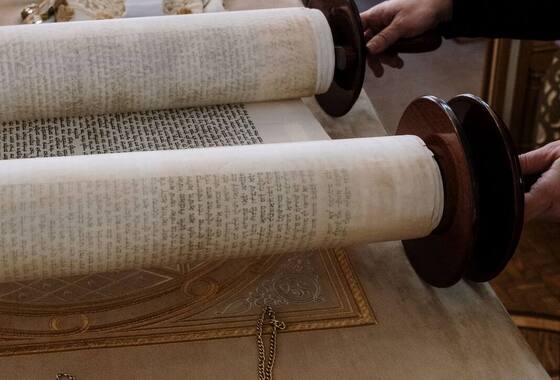 The Weekly Parsha: How the Torah Is Read Each WeekWhat the weekly Torah portion (parsha) is, how the 54 portions fit the Jewish year, and easy ways to study and discuss the parsha each week.
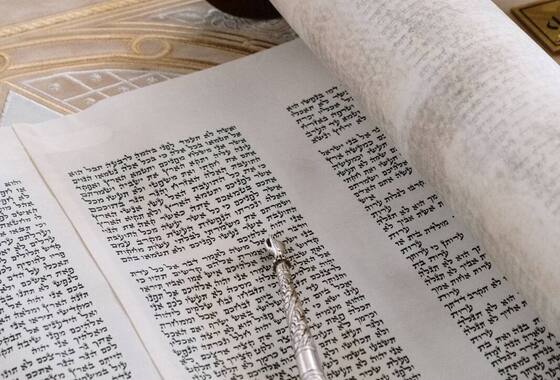 The Torah Reading in Synagogue: When, Why and HowWhen the Torah is read in synagogue, how the weekly cycle works, what happens during the reading, and what to do as it takes place.
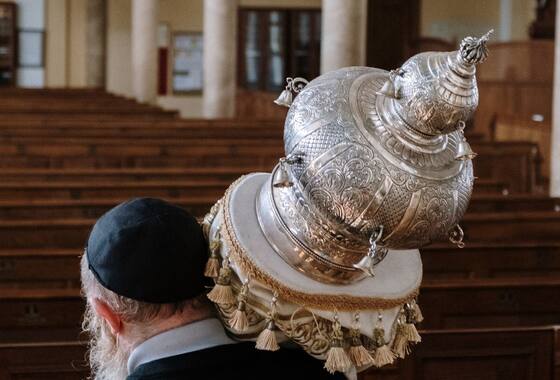 The Haftarah: What It Is and Why We Read ItWhat the Haftarah is, how it began, how it connects to the weekly Torah portion, who reads it, and what to know for a bar mitzvah.