

Parashat Ki Tisa
Exodus · Exodus 30:11-34:35
Parashat Ki Tisa כי תשא
Each person counted in the census gives a half shekel, rich and poor alike. G-d gives instructions for the copper washbasin, the anointing oil and the incense, and appoints Bezalel and Oholiab to lead the work. Shabbat is commanded as an eternal sign between G-d and Israel, and Moses receives the two Tablets. Meanwhile the people, thinking Moses is late in returning, make a Golden Calf. G-d tells Moses, who pleads for the people. Coming down and seeing the calf, Moses breaks the Tablets, destroys the calf, and the Levites rally to him. Moses prays again, even asking to be erased from G-d's book if the people are not forgiven. He asks to see G-d's glory, and G-d reveals to him the Thirteen Attributes of Mercy. Moses carves new Tablets and spends another forty days on the mountain. When he returns, his face shines with rays of light, and he covers it with a veil.
A lesson for today
Every person gave exactly half a shekel, no more and no less. The Rebbe explained that the half reminds each of us that we are not complete alone; we become whole together with others. And because everyone gave the same amount, it teaches that every Jew counts equally, regardless of wealth or learning. When we reach out to another person, we are not doing them a favor. We are completing ourselves, and together we form one people.
The Rebbe's teachingA storyIdeas for the Shabbat tableAn essay
The Rebbe's teaching
We are each only half, and we become whole together with others: that is the Rebbe's lesson of the half-shekel.
The Torah tells us that every Jew gave a half-shekel for the Sanctuary. The Rebbe notices something odd. The Torah explains that a shekel is twenty gerahs, and then says to give half of it. Why not simply say "give ten gerahs"? His answer is that the ten gerahs are not an independent amount. They are half of a whole, and that is the point. A person is only half of a whole. A single half-shekel buys nothing; each of us needs others to become complete. This is the commandment to love our fellow as ourselves, put into a coin.
The rich could not give more and the poor could not give less, so every Jew counted equally. Every person was part of the whole.
The Rebbe finds three kinds of unity in the half-shekel:
- Between a Jew and another Jew, because no one is complete alone.
- Between a Jew and G-d, because we recognize that we are incomplete without Him and give ourselves to Him.
- Within ourselves, because each of us has a G-dly soul and a more physical side, and giving the physical side to holiness lets the soul shine.
The half-shekel also atoned for the Golden Calf, which appears in this same portion. Today, the Rebbe explains, tzedakah takes the place of the half-shekel. And the practical lesson: a person should not take more for himself than he gives to holiness. Giving charity keeps our livelihood sanctified.
A story
In the 1980s, according to the story told by Rabbi Mendy Kaminker about his friend Rabbi Moshe Kotlarsky, Rabbi Kotlarsky received a call from the Rebbe's office and was sent at once to the island of Curacao. In a small neighborhood synagogue, he met a man named Chaim Groisman, who had come that very day because his family was in trouble. Chaim's son Eli had refused to take part in the religious classes of the island's only school, because he was a proud Jew, and the family was under pressure. The night before, Chaim had dreamed of his late grandmother, who told him to go to the Lubavitcher Rebbe if he was in trouble. Then, on the morning he prayed for a miracle, a stranger who said he was an emissary of the Rebbe appeared.
Rabbi Kotlarsky spent hours with the family and suggested that Eli attend a Jewish school in New York. Afterward Chaim wrote a thank-you letter to the Rebbe, signing it "a small Jew from Curacao."
The Rebbe thanked him, and then wrote that he must take exception to that description. Every Jew has a part of G-dliness above, as the Tanya teaches, and "there is no such thing as a 'small Jew,' and a Jew must never underestimate his or her tremendous potential."
Ideas for the Shabbat table
- Why did every person give exactly half a shekel? What does it teach us about being "half"?
- Children: break a cookie in two. Who has the other half? What do you each need to make a whole?
- When did you feel incomplete until someone else joined in?
- The Rebbe said there are no "small Jews." Is there a time you felt small? What would you say to someone who feels that way?
- Adults: how do we remember that everyone in a community counts equally, no matter their wealth or learning?
- What is one way to share what you have this week?
An essay
It is easy to think of generosity as a one-way street: someone has something, and gives it away. The half-shekel turns that picture around. Everyone gave the same half, rich and poor alike, and no one could buy a thing with it. The coin only made sense once it was added to someone else's.
There is something deeply relieving in this. We live in a world that tells us to become complete by ourselves: to be self-made, independent, to need no one. The Torah says the opposite. We are built to be part of something. Needing others is not a weakness, it is the design.
It also changes how we see each other. When one person reaches out to another, they are not doing a favor from above. They are completing themselves. The one who invites a lonely neighbor to the table is receiving as much as giving. The family who joins a community gets a new half, and the community gets theirs.
And then there is the Rebbe's answer to the man who called himself small. If every Jew carries a part of G-d, then no half is worth less than another. The same coin from the wealthy and the struggling: that is the Torah's picture of dignity.
For families in Lafayette, Moraga and Orinda, who may feel they are managing alone, this is an invitation. Come bring your half. We would love to welcome you to Shabbat at Chabad of Lamorinda in Lafayette (call 925-384-7242), or to the Wednesday 1:00 PM Tanya class at the Rabbi's home (call for the address).
Common questions
What is Parshat Ki Tisa about?
Parshat Ki Tisa is about the half-shekel census, the Golden Calf, Moses' prayers for the people and the second set of tablets. It also includes the commandment to keep Shabbat. See Moses for more.
What does the Rebbe teach about the half-shekel in Parshat Ki Tisa?
The Rebbe teaches that the half-shekel shows that each person is only half and becomes whole together with others. Since everyone gave the same amount, it also shows that every Jew counts equally. Read more about loving every Jew.
What is the main lesson of Parshat Ki Tisa?
The main lesson is that we are incomplete alone and complete together, so reaching out to others completes ourselves. Why Jewish community matters explains more.
Learn more
 The Weekly Parsha: How the Torah Is Read Each WeekWhat the weekly Torah portion (parsha) is, how the 54 portions fit the Jewish year, and easy ways to study and discuss the parsha each week.
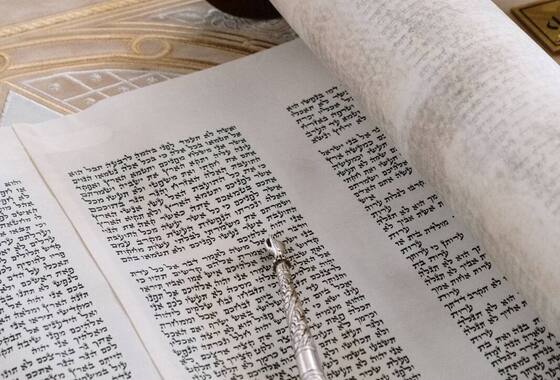 The Torah Reading in Synagogue: When, Why and HowWhen the Torah is read in synagogue, how the weekly cycle works, what happens during the reading, and what to do as it takes place.
 The Haftarah: What It Is and Why We Read ItWhat the Haftarah is, how it began, how it connects to the weekly Torah portion, who reads it, and what to know for a bar mitzvah.