

Parashat Vayakhel
Exodus · Exodus 35:1-38:20
Parashat Vayakhel ויקהל
Moses gathers the entire community of Israel. He first reminds them to keep Shabbat, a day of complete rest on which no fire may be kindled in their dwellings. Then he invites everyone with a willing heart to bring gifts for the Sanctuary. Men and women come with gold jewelry, wool, linen, skins, wood, oil and spices. Skilled women spin the goat hair, and the leaders bring precious stones for the High Priest's garments. So much is brought that the craftsmen tell Moses the people are giving more than enough, and Moses announces that no one should bring any more. Under the direction of Bezalel and Oholiab, the skilled workers make the tapestries, the coverings, the wall panels and the curtain. Bezalel makes the Ark with its cherubim, the table, the Menorah, the incense altar, the anointing oil and incense, the copper altar, and the copper washbasin made from the mirrors of the women. The courtyard hangings are also prepared.
A lesson for today
The copper washbasin was made from the mirrors that the women donated. Rashi relates that Moses hesitated to accept them, but G-d told him these were most precious of all, since in Egypt the women had used them to keep their families strong and hopeful. The Rebbe taught that nothing in our lives is too ordinary to be used for holiness. Our talents, our time, even our possessions that seem simply practical, can become a vessel for G-d when used with the right intention.
The Rebbe's teachingA storyIdeas for the Shabbat tableAn essay
The Rebbe's teaching
Ordinary things become holy when they are used with a pure and selfless purpose: this is the Rebbe's teaching about the women's mirrors.
The Jewish women donated copper mirrors for the Sanctuary, and Moses hesitated to accept them. He did not doubt their value. He wondered how objects connected with physical appearance and desire could belong in a place meant to reveal G-d's presence. G-d told him to accept them, because they were "more cherished by Me than everything else."
The Rebbe retells the reason. In Egypt, after exhausting days of slavery, the women went out to the fields to greet their husbands, brought them food, and used their mirrors to show their husbands their reflections together. The husbands were renewed and encouraged, and through them a generation was born that left Egypt. The mirrors might seem to serve self-interest, but the women used them with completely selfless intent: to build a family and a nation in the harshest conditions.
The lesson is that G-d looks at intent. Purity of motive can transform any object into something holy. The Rebbe adds a second point about the washbasin made from the mirrors. The priests washed their hands and feet before serving, marking the step from worldly concerns to holiness. The effort to cleanse ourselves of negative influences is itself cherished by G-d.
Finally, the Rebbe connects the portion's first word, Vayakhel, "and he gathered," with unity. Moses gathered the people into a single community, and unity is not only a source of strength but a way to draw G-d's presence into the world.
In practice:
- Our talents, time and possessions can be vessels for holiness when used with sincere intention.
- It matters why we do things, not only what.
- Preparing ourselves before a holy moment is valuable in its own right.
A story
Rebbetzin Chana Schneerson (1880-1964), the mother of the Lubavitcher Rebbe, was born in Nikolayev, Ukraine, into a rabbinical family and married Rabbi Levi Yitzchak Schneerson in 1900. When her husband was arrested in 1939 by the Soviet authorities for strengthening Judaism, he was exiled to the remote village of Chi'ili in Kazakhstan.
She followed him there, and endured hunger, illness and extreme poverty. Rabbi Levi Yitzchak was still writing his Torah thoughts, but there was no ink. So Rebbetzin Chana made ink with her own hands from plants. His commentary was written with that ink.
Nothing in the picture looks holy: a hut, hardship, a woman gathering plants on a dry plain. Yet from plants and determination, she made a vessel for Torah. Like the women with their mirrors, she took what was ordinary and put it into the service of something greater.
After her husband passed away in 1944, she eventually escaped the Soviet Union and reached Paris in 1947, where she was reunited with her son Menachem Mendel, later the Rebbe. She lived in Brooklyn until her passing in 1964, and wrote memoirs that were published as A Mother in Israel.
Ideas for the Shabbat table
- Moses hesitated to accept the mirrors, but G-d said they were the most precious. Why might something we think is "ordinary" be precious to G-d?
- Children: what is something at home, a toy, a spoon, a bike, that could be used to help another person?
- What does it mean that G-d looks at why we do something, not only at what we do?
- The women's mirrors were used to build a family. How do everyday acts of caring build something larger?
- Adults: what talent do you have that you have never thought of as "holy"?
- The portion begins with Moses gathering everyone together. What is one way we could gather our neighbors this month?
An essay
If you walked through a typical Jewish home on Friday afternoon, nearly everything you saw would be ordinary: pots, tablecloths, a loaf of challah, candlesticks bought on sale. And yet by sunset all of it is part of something sacred. How?
Vayakhel gives an answer. The mirrors were not special. They were the same mirrors that women everywhere used. What made them holy was the purpose the women had put them to, a hidden, selfless, loving purpose, long before anyone thought of a Sanctuary. G-d saw that purpose and said: these are the most precious.
This is a deeply encouraging teaching for people who think their lives are too practical to matter. Most of what fills our days is practical: errands, cooking, driving, answering email, paying bills. The Rebbe says these things are not obstacles to holiness. They are raw material, if we use them with the right intention. A meal made for a sick neighbor, a ride offered to a friend, a talent used to help a cause, are mirrors in our hands.
Rebbetzin Chana's ink makes the point again. When there was nothing, she took what the land offered and turned it into a way for Torah to live. She did not wait for ideal conditions.
We do not have to build a new Sanctuary to find holiness. We have to look at the ordinary things in our hands, and ask what they could become. This Shabbat, try one small change: do one ordinary thing for the sake of someone else.
You are warmly invited to a Shabbat at Chabad of Lamorinda in Lafayette (call 925-384-7242), or to the Wednesday 1:00 PM Tanya class at the Rabbi's home (call for the address).
Common questions
What is Parshat Vayakhel about?
Parshat Vayakhel is about Moses gathering the people, the commandment to keep Shabbat, and the donations and craftsmanship for building the Sanctuary. You can learn more in The Mishkan.
What does the Rebbe teach about the women's mirrors in Parshat Vayakhel?
The Rebbe teaches that G-d looks at intent: the women used their mirrors with selfless purpose to build families and a nation, so even ordinary objects became holy. Our talents and possessions can be holy in the same way.
What is the main lesson of Parshat Vayakhel?
The main lesson is that unity and sincere intention make ordinary things holy. Read about loving every Jew and about Shabbat, which opens this portion.
Learn more
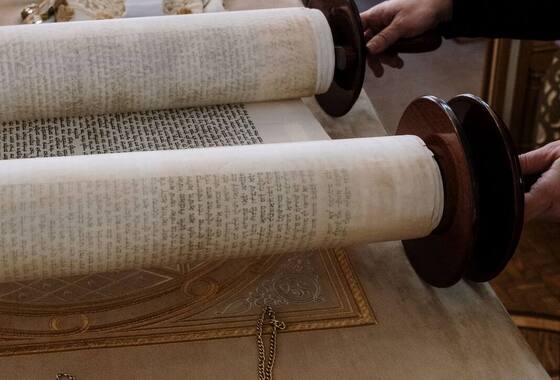 The Weekly Parsha: How the Torah Is Read Each WeekWhat the weekly Torah portion (parsha) is, how the 54 portions fit the Jewish year, and easy ways to study and discuss the parsha each week.
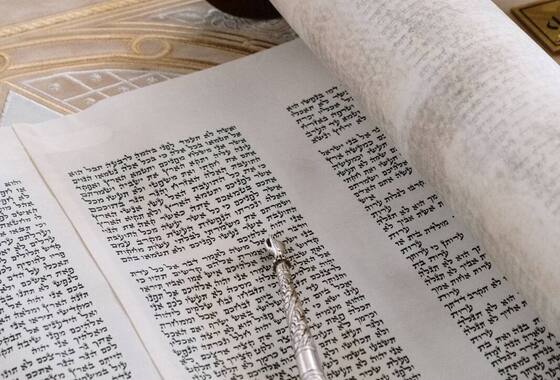 The Torah Reading in Synagogue: When, Why and HowWhen the Torah is read in synagogue, how the weekly cycle works, what happens during the reading, and what to do as it takes place.
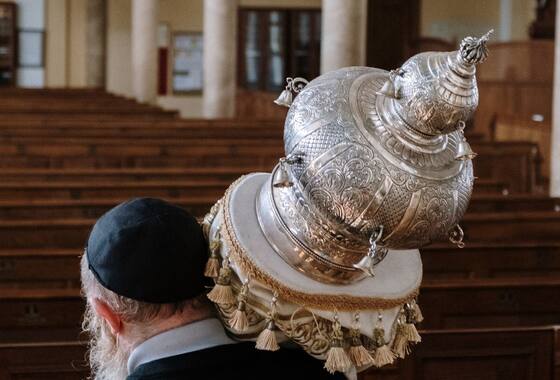 The Haftarah: What It Is and Why We Read ItWhat the Haftarah is, how it began, how it connects to the weekly Torah portion, who reads it, and what to know for a bar mitzvah.