

Parashat Chayei Sara
Genesis · Genesis 23:1-25:18
Parashat Chayei Sara חיי שרה
Sarah passes away at the age of one hundred and twenty seven in Hebron. Abraham mourns for her and buys the Cave of Machpelah from Ephron the Hittite for four hundred silver shekels, and buries her there. Abraham then sends his faithful servant Eliezer to his family in Aram to find a wife for Isaac. At the well, Eliezer prays for a sign: the right young woman will offer water to him and to his camels. Rebecca does exactly that. Eliezer meets her family, tells the whole story again, and Rebecca agrees to go with him. Isaac goes out to the field to pray, sees the camels coming, marries Rebecca and loves her, and is comforted after his mother's passing. Abraham marries Keturah and has more children. He passes away at one hundred and seventy five, and Isaac and Ishmael bury him in the Cave of Machpelah.
A lesson for today
This portion is called The Life of Sarah, even though it begins with her passing. The Rebbe pointed out that a righteous person's true life is the goodness that continues after them. Sarah's way of life lived on when Rebecca entered her tent and the same blessings returned there. Each of us is building a life whose influence goes far beyond our own days. When we honor our parents and grandparents by continuing their good deeds, their lives continue through us.
The Rebbe's teachingA storyIdeas for the Shabbat tableAn essay
The Rebbe's teaching
The Rebbe teaches that the three signs in Sarah's tent, the Shabbat light, the blessing in the dough and the cloud, came back when Rebecca arrived, and that every Jewish girl can kindle Shabbat candles from a young age and fill her home with light.
The Rebbe starts with Rashi's comment on the verse "Isaac brought her to the tent of Sarah his mother." Rashi explains that while Sarah lived, a light burned in her tent from one Shabbat eve to the next, there was blessing in the dough, and a cloud was attached to the tent. When Sarah died these stopped, and when Rebecca came, they returned. The Rebbe asks why Rashi needs the miracles at all, and why he quotes the three words "to the tent," "Sarah" and "his mother."
His answer is that the verse tells us what convinced Isaac. Eliezer had already told of his miraculous journey, but Isaac wanted to be sure that Rebecca matched his family's righteousness. Each word points to one sign. "To the tent" suggests the cloud over the tent. "Sarah" recalls her special work with the dough. "His mother" brings to mind how a child sees his mother kindle the Shabbat lights every Friday. The Rebbe notes that the order matches the way a girl grows into these mitzvot: Shabbat candles first, when she is old enough to learn, then challah, and later the laws of family purity after marriage.
The practical lesson is for every family. The Rebbe asks that every Jewish girl begin lighting Shabbat and festival candles once she reaches an age of learning. Rebecca did so as a small girl, although she was not yet obligated. The home's care, the Rebbe explains, is the special mission of Jewish women, and their lights can brighten the home all week. He adds that children's hands are untainted, which gives their mitzvot special value.
For a simple guide to the mitzvah itself, see Shabbat candles and girls lighting Shabbat candles. If you are unsure about your own family's custom, ask the Rabbi.
A story
Esther Sternberg directs the Shabbos Candle Campaign. She told her story in an oral-history interview recorded at her home in July 2012, as part of the My Encounter with the Rebbe project.
She grew up in Crown Heights, Brooklyn, where her father, Rabbi Shneur Zalman Gourary, was close to the Rebbe. On September 11, 1974, a week before Rosh Hashanah, the Rebbe spoke to a gathering of Chabad women. He said that the times were spiritually dark, and announced a campaign to reach every Jewish girl, starting at age three, and inspire her to light Shabbat candles. Many women, he noted, had never been taught, or believed the mitzvah did not apply in America.
The next day the Rebbe's office asked her to place an ad in a Yiddish newspaper. On the second day of Rosh Hashanah, the Rebbe announced that he would give two dimes of his own money to every girl who began lighting candles. Teachers and youth leaders were to record the girls' names. Because she had handled the ad, her home became the distribution center, with people coming day and night with their lists.
Before Yom Kippur, she went to receive the traditional honey cake and blessing. The Rebbe had been standing since ten in the morning with pockets heavy with dimes. He asked her, "Do you have enough dimes?" She said she had only a few left. He took out packages of coins and gave them to her, worried that some girls might not light before Yom Kippur without them.
The campaign grew. Her team produced a brochure with candle-lighting times and distributed candleholders the Rebbe designed. She recalled that the manufacturer estimated he made about eight million.
Ideas for the Shabbat table
- Ask the children: what do you think a "light that burns all week" would look like? How can one candle change the feeling in a room?
- Rashi says there were three signs in Sarah's tent. Can the children guess what they were before you tell them: a light, a blessing in the dough, a cloud?
- Invite everyone, young and old, to say one thing that makes your home feel warm.
- Girls: would you like to light your own candle one Friday, with a parent beside you? Parents, this guide can help.
- The Rebbe gave dimes to encourage girls. What small reward or surprise could make a good habit more fun in our home?
- For adults: who taught you the customs you keep? How could you pass one to a child or a younger friend this month?
An essay
The name of this portion, "The Life of Sarah," seems strange. It begins with her passing. Yet the Torah calls it her life. The Rebbe's teaching about Rebecca helps us see why: a life is measured by what keeps burning after the person is gone.
In Sarah's tent, the Sages say, the light burned all week. When she died it stopped. And when Rebecca stepped into the tent, it burned again. What we are being told is that holiness in the home is not an accident. It is passed from person to person, from mother to daughter, from grandparent to grandchild, and every generation has to light it again.
The Rebbe's candle campaign of 1974 took that ancient story and made it practical. He did not give a lecture on theory. He asked that a three-year-old light one candle, and he gave her a coin. Then, standing for hours before Yom Kippur, he made sure there were still enough dimes. That is a picture of how a Jewish leader thinks: the great things begin with a small child and a small flame.
You do not need to be a scholar to do this. A candle on Friday afternoon before sunset is a way of saying that this home has a Shabbat. Families in Lafayette, Moraga and Orinda who have never lit may find it surprisingly moving. Families who light every week may find that the newest member of the family, the one who can barely reach the table, is the one who reminds everyone what the candle is about.
If you would like help beginning, or simply a place to sit with others on Friday night, come for Shabbat at Chabad of Lamorinda in Lafayette (call 925-384-7242), or join the Wednesday 1:00 PM Tanya class at the Rabbi's home (call for the address).
Common questions
What is Parshat Chayei Sara about?
Parshat Chayei Sara tells of Sarah's passing and Abraham's purchase of the Cave of Machpelah, and how Abraham's servant Eliezer finds Rebecca as a wife for Isaac. It ends with Abraham's passing and the descendants of Ishmael. See Abraham and Sarah.
What does the Rebbe teach about Parshat Chayei Sara?
The Rebbe teaches that the three signs in Sarah's tent returned with Rebecca, and that every Jewish girl can begin lighting Shabbat candles from a young age. He taught that these lights fill the home with light throughout the week.
What is the main lesson of Parshat Chayei Sara?
A righteous person's true life is the goodness that continues after them, and we carry it on when we continue their good deeds. Sarah's way of life lived on when Rebecca entered her tent. Learn more about the Matriarchs.
Learn more
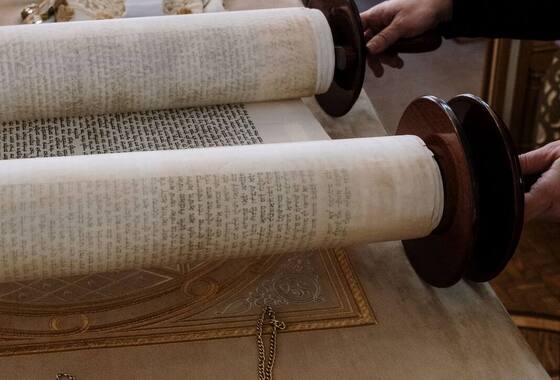 The Weekly Parsha: How the Torah Is Read Each WeekWhat the weekly Torah portion (parsha) is, how the 54 portions fit the Jewish year, and easy ways to study and discuss the parsha each week.
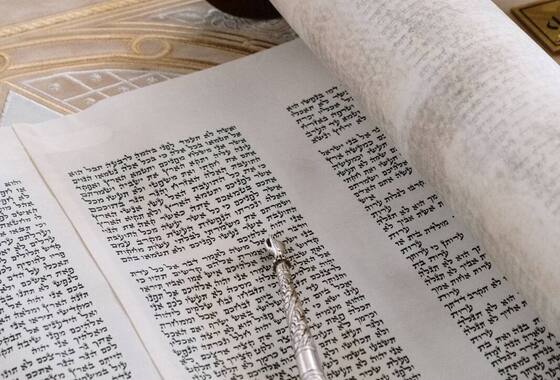 The Torah Reading in Synagogue: When, Why and HowWhen the Torah is read in synagogue, how the weekly cycle works, what happens during the reading, and what to do as it takes place.
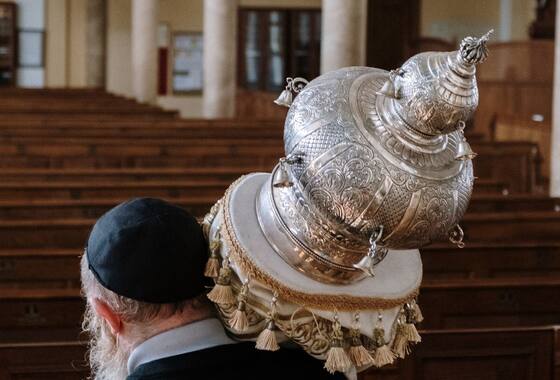 The Haftarah: What It Is and Why We Read ItWhat the Haftarah is, how it began, how it connects to the weekly Torah portion, who reads it, and what to know for a bar mitzvah.