

Parashat Toldot
Genesis · Genesis 25:19-28:9
Parashat Toldot תולדות
After twenty years without children, Isaac and Rebecca pray, and Rebecca conceives twins who struggle within her. G-d tells her that two nations are in her womb and the elder will serve the younger. Esau is born first, a hunter and man of the field, and Jacob is a wholesome man who dwells in tents. Esau sells his birthright to Jacob for a bowl of lentil stew. During a famine Isaac stays in Gerar, where G-d blesses him and he reaps a hundredfold. He reopens the wells his father dug, which the Philistines had stopped up, and digs new ones. When Isaac is old and his eyes are dim, he plans to bless Esau. Rebecca has Jacob dress in Esau's clothing and bring his father food, and Isaac blesses Jacob with the dew of heaven and the fat of the earth. Esau is furious, and Jacob is sent to Rebecca's family in Haran.
A lesson for today
Isaac spent much of his life digging wells, uncovering water that was already there under the ground. The Rebbe taught that this is our work too. Inside every person, and inside every part of the world, there is a hidden wellspring of goodness and G-dliness, sometimes covered by layers of dust. Our job is to dig patiently, to look past the surface and help that inner goodness flow out, in ourselves, in our families, and in every person we meet.
The Rebbe's teachingA storyIdeas for the Shabbat tableAn essay
The Rebbe's teaching
The Rebbe teaches that digging a well is a picture of our inner work: we dig through the layers on the surface to uncover the G-dly goodness that already lies within every person.
This week's portion tells of Isaac and the wells he dug. The Torah says little about the details of our Patriarchs' lives, so when it records an activity, the Rebbe explains, that activity carries a meaning beyond the physical act. To dig a well is to remove layers of earth to reach the water beneath. Spiritually, this is the effort to break through to our inner, G-dly core and to bring it out as a source of strength. Every person has a soul that is "an actual part of G-d," and everything in the world is sustained by a G-dly spark. Isaac's work was to reach these hidden resources and use them to make a positive change.
This helps with a famous puzzle: why did Isaac want to bless Esau and not Jacob? The Rebbe explains that Isaac was not fooled by Esau. But he was still digging wells. He was engaged in an ongoing effort to help his son reach his potential. He knew that results in education need real investment, and he believed the blessings would help Esau discover who he truly was. His mistake was that he did not realize the blessings were meant for Jacob. The refinement of Esau's descendants, the Rebbe says, will come through the hard work of Jacob's descendants, who dedicate themselves to teaching spiritual truth.
The Rebbe draws two lessons for daily life. First, growth begins within. We need to make a conscious effort to uncover strength that already exists in the soul. Second, helping others grow takes real investment, and it also takes discernment, meaning effort directed to the right outcomes. Those who devote themselves to teaching spiritual truth play a vital role, even with people who seem far away.
For us, the practical message is to dig patiently, in ourselves and in those we love, and not to give up on goodness that is simply waiting to be uncovered.
A story
The Talmud (Bava Kama 50a) tells of Rabbi Nechunya, known as "the Well Digger."
In Jerusalem, when crowds of pilgrims came for the festivals, Rabbi Nechunya volunteered to make sure they had enough water. He dug many wells and pits so that the supply would never run short.
One day his daughter fell into one of the pits. The news spread fast, and people despaired. The community prayed for her. After the first hour, they went to Rabbi Chanina ben Dosa, the sage of that generation, and he calmly told them that all would be well. After the second hour, with no sign of rescue, they returned in fear, and he said the same. After the third hour, they came back in desperation. This time he told them she had already come out of the pit.
And so she had. The girl said she had been led out by an old man leading a ram. People called Rabbi Chanina a prophet, but he refused the title. He explained that he had reasoned that the work of a righteous man who digs wells for others could not bring suffering to his own children.
The Talmud then adds, briefly, that Rabbi Nechunya's son later died of thirst, and it teaches that G-d holds the righteous to the very highest standard. It is a hard line, and we do not have to pretend we fully understand it. We can accept what we cannot understand and still honor a life of giving. If you are carrying a hard question like this, you are welcome to call the Rabbi.
Ideas for the Shabbat table
- Ask the children: if you had to dig a very deep well, what tools would you need? What do you think you would find at the bottom?
- Isaac re-dug the wells his father had dug. Is there something your parents or grandparents did that you would like to "dig up" again?
- The Rebbe says every person has hidden goodness. Can each person at the table share something good about the person on their right?
- Isaac believed in helping Esau reach his potential. Is there someone in your life, a child, a friend or a coworker, in whom you could invest more patience?
- For adults: when you feel stuck, what is one way you could dig a little deeper, with prayer, Torah or an honest conversation?
- Read together about Isaac and talk about his quiet way of leading.
An essay
Think of the last time you misjudged someone. Maybe a colleague seemed difficult, a teenager seemed uninterested, a relative seemed hard. Then, one day, something happened and you saw a different person, warm, funny or capable of kindness you had not noticed. What changed? Probably not them. Probably what changed was what we dug through to reach them.
That is the image of Isaac's wells. Beneath the dry ground there is water, and it takes patience, effort and sometimes disputes to reach it. Isaac dug his father's wells again, and when people quarreled over them, he moved on and dug another. The Rebbe's teaching tells us that this is not just a story about water. It is a way of seeing ourselves and others: under the dust, there is a spring.
The same is true of ourselves. Many of us carry an idea that we are "not a spiritual person" or "not the type." Chassidic teaching says gently that this is only the surface. Everyone has a soul, and a soul is, in the words of the Tanya, an actual part of G-d. The work is not to become someone else. It is to dig.
The Rebbe also reminds us that digging for others takes both love and wisdom. Isaac gave real effort to his son, and the Rebbe respects that, while teaching that effort must find the right path. As parents, teachers and friends, we are called to believe in people and to be clear-eyed about how best to help them.
If you would like to dig a little deeper this week, you are welcome at Shabbat at Chabad of Lamorinda in Lafayette (call 925-384-7242), or join the Wednesday 1:00 PM Tanya class at the Rabbi's home (call for the address).
Common questions
What is Parshat Toldot about?
Parshat Toldot tells of the birth of Jacob and Esau to Isaac and Rebecca, the sale of the birthright, Isaac's wells and the blessings that Jacob receives. It ends with Jacob being sent to Haran. See Isaac our father and Jacob our father.
What does the Rebbe teach about Parshat Toldot?
The Rebbe teaches that Isaac's digging of wells shows our work of uncovering the hidden, G-dly goodness within every person. He explains that Isaac wanted to bless Esau as part of a long effort to help him reach his potential.
What is the main lesson of Parshat Toldot?
The main lesson is to dig patiently for the goodness inside yourself and others. Inside every person there is a hidden wellspring, sometimes covered by layers of dust. For more on seeing our own worth, read self-worth.
Learn more
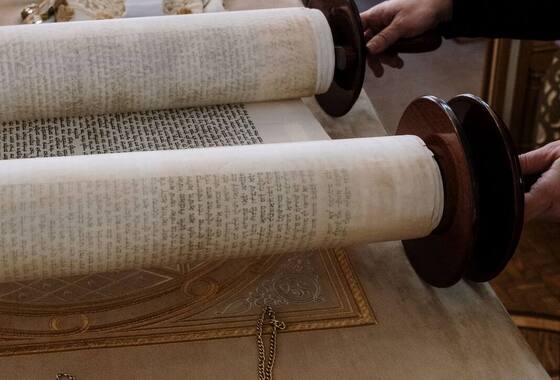 The Weekly Parsha: How the Torah Is Read Each WeekWhat the weekly Torah portion (parsha) is, how the 54 portions fit the Jewish year, and easy ways to study and discuss the parsha each week.
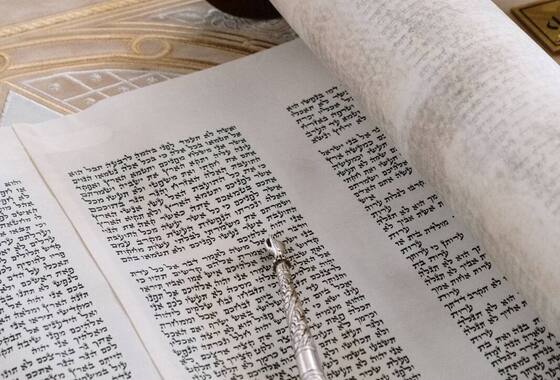 The Torah Reading in Synagogue: When, Why and HowWhen the Torah is read in synagogue, how the weekly cycle works, what happens during the reading, and what to do as it takes place.
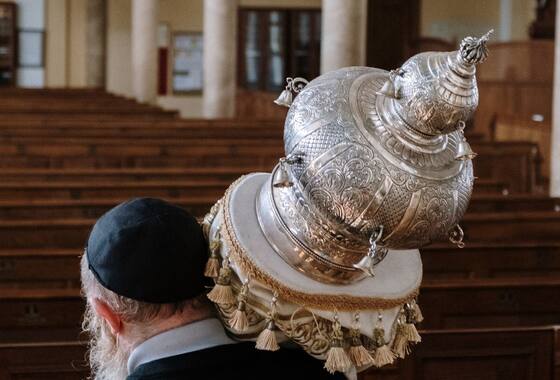 The Haftarah: What It Is and Why We Read ItWhat the Haftarah is, how it began, how it connects to the weekly Torah portion, who reads it, and what to know for a bar mitzvah.