
Learn › Shabbat & holidays › Elul and Rosh Hashanah
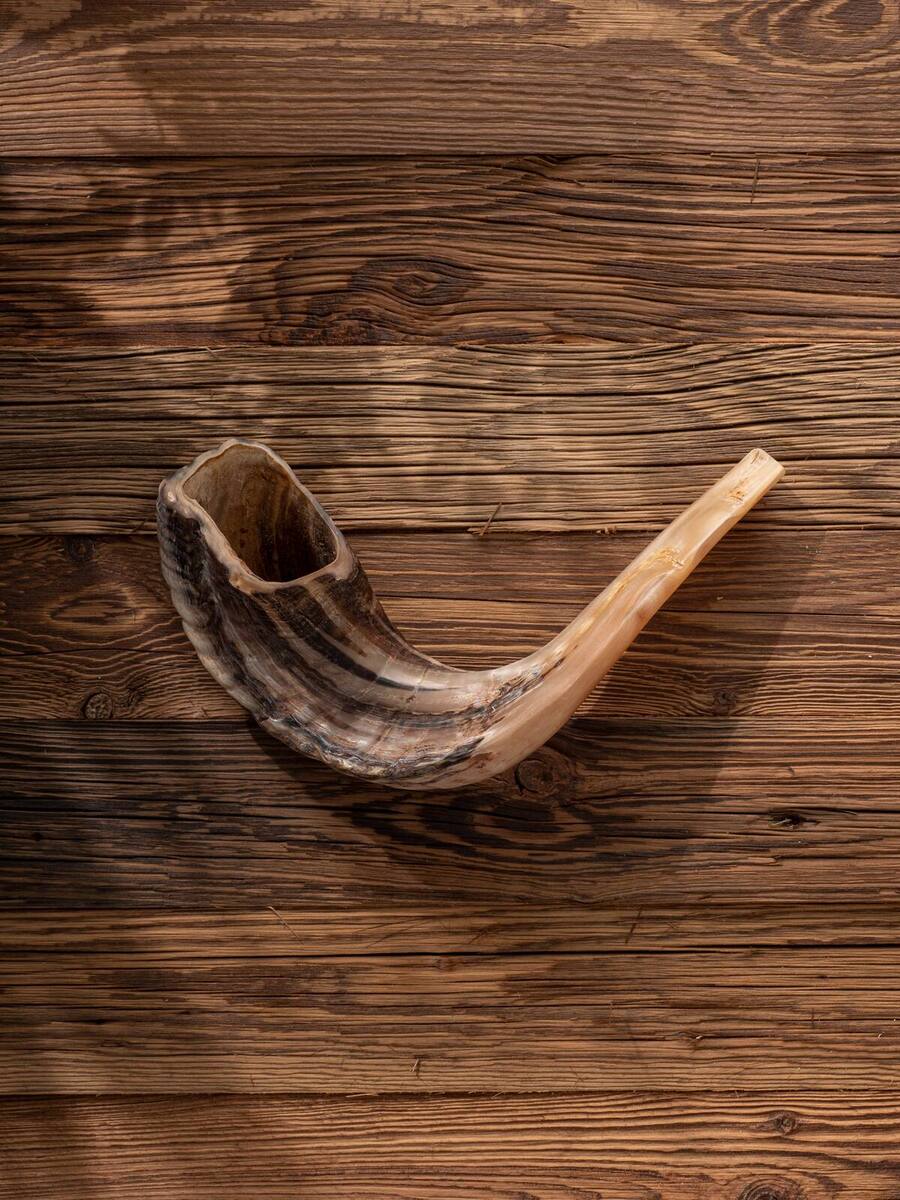
The Shofar: Why We Blow It on Rosh Hashanah and How to Hear It
What the shofar is, why it is blown on Rosh Hashanah, the meaning of its sounds, the blessing, and how to make sure you hear it.
Part 6 of 20 · The High Holidays, step by step
On this page · 3 min read
What is a shofar?Why we blow the shofarThe sounds of the shofarWhen the shofar is blownThe blessingsHow to hear the shofar properlyThe shofar is a ram's horn blown on Rosh Hashanah, and hearing its sound is the main mitzvah of the day. Its piercing, simple cry is a call to wake up, return to G-d and crown Him as King of the world for the new year.
What is a shofar?
A shofar is a natural animal horn, usually from a ram, hollowed out and shaped so it can be blown like a trumpet. A cow's horn may not be used. Many shofars are short and curved, while others, often from a kudu or Yemenite ram, are long and spiraled. All are kosher if made properly from a permitted animal.
The Torah calls Rosh Hashanah "a day of sounding" (Numbers 29:1). The mitzvah is to hear the shofar, not to blow it yourself, so everyone who listens fulfills the commandment.
Why we blow the shofar
The Sages and later teachers gave many reasons. Among them:
- Crowning the King. Trumpets are sounded at a coronation. On Rosh Hashanah we accept G-d as our King anew.
- A wake-up call. Maimonides writes that the shofar says: "Sleepers, wake from your slumber," look at your deeds and return to G-d.
- The binding of Isaac. The ram's horn recalls the ram Abraham offered in place of Isaac, and his complete devotion.
- A wordless cry. Chassidic teaching describes the shofar as the cry of the soul, deeper than words can express.
The sounds of the shofar
There are three basic sounds:
- Tekiah: one long, straight blast.
- Shevarim: three medium, broken sounds, like sighing.
- Teruah: a series of short, rapid blasts, like sobbing.
These are combined in set patterns. The full order includes 100 sounds on each day of Rosh Hashanah, spread through the morning prayers.
When the shofar is blown
The shofar is blown on both days of Rosh Hashanah during the daytime. When the first day falls on Shabbat, the shofar is not blown that day, and it is heard only on the second day.
Many communities also blow the shofar every weekday morning during the month of Elul to prepare for the High Holidays, and a single long blast is sounded at the end of Yom Kippur.
The blessings
Before the blowing, the person blowing the shofar says two blessings on behalf of everyone listening, who answer "Amen."
Hebrew: בָּרוּךְ אַתָּה ה' אֱלֹקֵינוּ מֶלֶךְ הָעוֹלָם, אֲשֶׁר קִדְּשָׁנוּ בְּמִצְוֹתָיו, וְצִוָּנוּ לִשְׁמוֹעַ קוֹל שׁוֹפָר
Transliteration: Baruch atah Ado-nai, Elo-heinu melech ha'olam, asher kid'shanu b'mitzvotav, v'tzivanu lishmo'a kol shofar.
Translation: Blessed are You, L-rd our G-d, King of the universe, who has made us holy with His commandments, and commanded us to hear the sound of the shofar.
The second blessing is Shehecheyanu, thanking G-d for bringing us to this time. On the second day, the custom varies, so follow your synagogue.
How to hear the shofar properly
- Listen to every sound from beginning to end, and do not talk until the blowing is finished.
- Have in mind that you are fulfilling the mitzvah, and the blower has you in mind too.
- Hear the actual shofar, not a recording, livestream or phone call.
In Lamorinda: Hear the shofar with us on Rosh Hashanah, or call 925-384-7242 if you need it blown for you at home. Details at jewishlamorinda.com/holidays/rosh-hashanah.
Common questions
Can I hear the shofar if I cannot get to synagogue?
Yes. Many communities arrange short shofar blowings at homes, parks and hospitals so that everyone can hear it. If you are homebound, contact us and we will try to help.
Do women and children need to hear the shofar?
Men are obligated. Women are not strictly obligated, since it is tied to a set time, but women have accepted it as a near-universal practice. Children are brought to hear it as part of their education.
Can I blow the shofar for practice on Rosh Hashanah?
Outside of the mitzvah itself, blowing for practice on the holiday is not permitted. Practice in Elul instead.
Why is the shofar not blown on Shabbat?
The Sages were concerned that someone might carry a shofar in a public area to learn how to blow it, which is forbidden on Shabbat. So when Rosh Hashanah falls on Shabbat, the shofar waits until the second day.
Step by step · Part 6 of 20
The High Holidays, step by step
NextUnetaneh Tokef: "Who Will Live and Who Will Die" ExplainedWhat the Unetaneh Tokef prayer says, the story of Rabbi Amnon, and its hopeful message of teshuvah, tefillah and tzedakah. Join us this season.All 20 parts
- The Month of Elul: How to Prepare for the High Holidays
- Selichot: The Prayers for Forgiveness Before Rosh Hashanah
- Rosh Hashanah for Beginners: Your First Jewish New Year
- The Binding of Isaac (Akeidah): The Story We Read on Rosh Hashanah
- Rosh Hashanah Simanim: Apple and Honey and the Symbolic Foods
- The Shofar: Why We Blow It on Rosh Hashanah and How to Hear It
- Unetaneh Tokef: "Who Will Live and Who Will Die" Explained
- Tashlich: The Rosh Hashanah Prayer by the Water
- The Ten Days of Repentance: Between Rosh Hashanah and Yom Kippur
- Avinu Malkeinu: Meaning of "Our Father, Our King" and When We Say It
- Shabbat Shuva: The Shabbat Between Rosh Hashanah and Yom Kippur
- Yom Kippur for Beginners: Your First Day of Atonement
- Yom Kippur With Kids: When Children Fast and How to Make the Day Meaningful
- Teshuvah: Repentance and Returning to G-d in Judaism
- Kapparot: The Custom Before Yom Kippur
- Erev Yom Kippur: Customs for the Day Before Yom Kippur
- Kol Nidre: Meaning, Time and What Happens
- The Book of Jonah: Story, Meaning and Why We Read It on Yom Kippur
- The Yom Kippur Fast: Rules, Tips and Who Is Exempt
- Neilah: The Closing Prayer of Yom Kippur and What Happens at Sunset
Questions about this, or something on your mind? Message the Rabbi or the Rebbetzin privately, or call 925-384-7242. · Email
Read next
 The Month of Elul: How to Prepare for the High HolidaysWhat the Jewish month of Elul is, why it is a time of preparation before Rosh Hashanah, and its customs: shofar, Psalm 27, Selichot and checking mezuzahs.Read next →