
Learn › Prayer & Torah › The synagogue and its services
Why Do Men and Women Sit Separately in Synagogue? The Mechitzah Explained
Why do men and women sit separately in synagogue? The mechitzah, a partition rooted in the Temple, helps prayer stay focused. A warm, honest explanation.
On this page · 3 min read
What a mechitzah isWhere it comes fromThe reason: closeness in prayerWhat it feels like to a visitorMen and women sit separately in a traditional synagogue, divided by a partition called a mechitzah (מְחִיצָה, "partition"), so that no one is distracted during prayer. The practice follows the pattern of the Holy Temple in Jerusalem, and the Rebbe explained that it is about the closeness of prayer, not about lowering anyone's worth.
What a mechitzah is
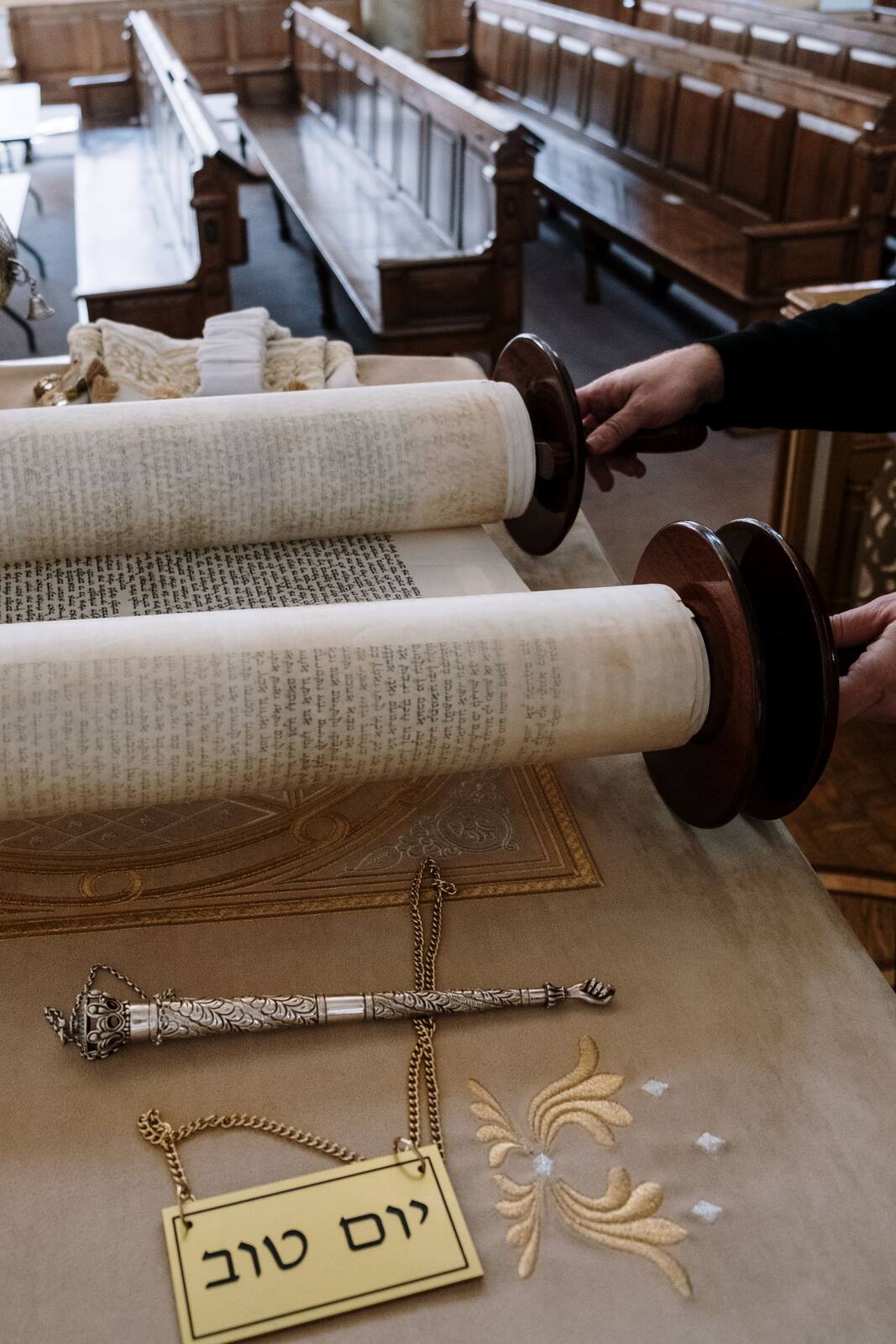
A mechitzah is a divider between the men's and the women's sections. In many older synagogues, women sit in a balcony overlooking the men below. Today it is more common for both sections to share one floor, with a partition between them. The partition can be made of latticed wood, frosted glass, curtains, plants or other materials, according to the taste of the community. What matters is that it is opaque enough that a person cannot make out the faces of those on the other side.
Where it comes from
The model is the Holy Temple, where, when large crowds gathered, men and women had separate areas. It cites the Talmud (Sukkah 51b), which describes women above and men below, and a prophecy of Zechariah in which families mourn apart, each family by itself and the wives by themselves. The Talmud (Sukkah 52a) reasons that if men and women are to be separate at a time of sadness, then at a time of joy they should be even more so. Since a synagogue is called a "miniature sanctuary," it keeps the Temple's pattern.
The reason: closeness in prayer
The Rebbe, Rabbi Menachem M. Schneerson, answered a letter asking about this in 1961. Some of his points, in our own words:
- It is not about dignity. He calls the idea that the mechitzah degrades women a misconception. Torah teaches respect for every person, made in G-d's image. As an example, he notes that Jewish law even rules against a parent kissing a small child in synagogue. Love between parent and child is holy, yet the rule applies anyway, so it cannot be about disrespect.
- Prayer is union. Prayer is not only asking G-d for things. It is a moment when a person connects with G-d. Our Sages tell us to "know before Whom you stand," and in Chassidic thought "knowing" means attachment. That bond is deepest when nothing, even a good and holy thing, stands in between.
- So the partition must truly separate. A low barrier that only marks a boundary would not achieve this. The mechitzah is meant to give everyone full focus.
One woman wrote a first-person essay about why she appreciates praying in the women's section. She writes about the focus it gives her.
What it feels like to a visitor
- You are still part of the service. Both sections hear the same prayers and the Torah reading, and everyone can answer "Amen."
- Families sit apart for the prayers. If you have little ones, ask the Rabbi how families manage it; see Bringing Children to Synagogue.
- Questions are welcome. If this is new or uncomfortable, say so. The Rabbi and Rebbetzin would rather talk than have you wonder.
See also Jewish Women for women's place in Jewish life.
In Lamorinda: Curious or have a hard question about this? Talk it over with Rabbi or Rebbetzin Labkowski: call 925-384-7242 or visit /help/talk-to-the-rabbi.
Common questions
Why do men and women sit separately in synagogue?
In a traditional synagogue, men and women sit apart so that attention stays on prayer. This follows the Temple, where large crowds had separate areas.
What is a mechitzah?
A mechitzah is the partition between the men's and women's sections. It can be wood, glass, a curtain or plants, but it must be opaque enough that faces on the other side cannot be made out.
Does the mechitzah mean women are less important?
No. The Rebbe called that a misconception. He taught that respect for every person, made in the image of G-d, is the Torah's view, and that the separation is about the spirit of prayer.
Can a family sit together at Chabad?
Chabad follows the traditional separate seating. Ask the Rabbi at 925-384-7242 how families with young children manage.
Where does the mechitzah come from?
Its sources are the Holy Temple, the Talmud (Sukkah 51b and 52a) and the prophet Zechariah.
Do all synagogues have a mechitzah?
Traditional synagogues do. Other communities do it differently. Ask the Rabbi for questions about specific cases.
Take the next step
- Read Synagogue Etiquette and Shabbat Morning Services Explained before your first visit.
- Women in Lafayette, Moraga and Orinda can also see the Women's Circle.
- Have a personal question? Talk to the Rabbi.
Questions about this, or something on your mind? Message the Rabbi or the Rebbetzin privately, or call 925-384-7242. · Email
Read next
 What Is a Synagogue (Shul)? A Simple GuideWhat a synagogue or shul is, what happens there, what you will see inside, and how to feel at home on your first visit.Read next →