
Learn › Shabbat & holidays › The Chanukah story and its meaning
Chanukah in the Talmud: The Short Passage That Tells the Story
What does the Talmud say about Chanukah? The short passage in Shabbat 21b: the oil, the eight days and the lights of Hillel and Shammai.
On this page · 3 min read
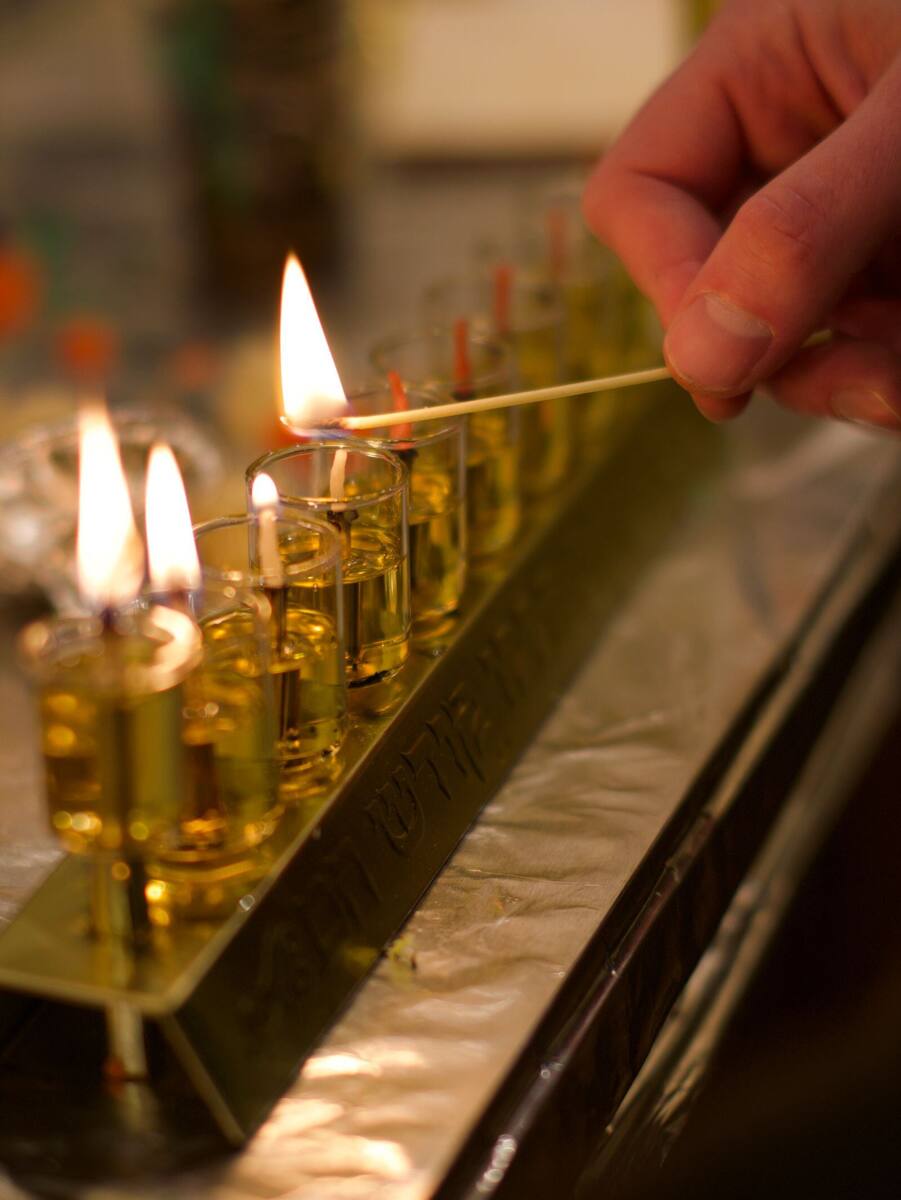
What does the Talmud actually say?Why did the Greeks defile the oil instead of destroying it?Why is the seal important?The question of eight daysThe lights of Beit Shammai and Beit HillelThe Talmud tells the story of Chanukah in just a few lines, on page 21b of the tractate Shabbat. It asks "What is Chanukah?" ("מאי חנוכה") and answers that when the Greeks entered the Sanctuary they defiled the oil, and when the Hasmoneans defeated them, only one flask of pure oil was found. It held enough for one day, but it burned for eight.
What does the Talmud actually say?
The passage, called the Gemara, begins with a question rather than a date: "What is Chanukah?" It then answers, in four short steps:
- The Greeks entered the Sanctuary and defiled all the oil in it.
- The Hasmonean kingdom prevailed and defeated them. The Jews then searched and found only one flask of oil, which still bore the seal of the High Priest (Kohen Gadol).
- A miracle happened. There was enough oil for one day, and they lit from it for eight days.
- The next year, the Sages established these days as festivals, with Hallel and thanksgiving.
The Talmud also says what is forbidden on these days: eulogies and fasting. This is why Chanukah is a time of joy.
You can read the full story with its history in the story of Chanukah, and more about the Talmud itself in the Talmud.
Why did the Greeks defile the oil instead of destroying it?
This is a question that teachers raise. The Greeks were not trying to stop the Menorah from being lit. They wanted it lit with defiled oil. According to this explanation, they were ready to admire the Torah as a work of human wisdom, but they could not accept that it comes from G-d, that it cannot be changed, or that it includes commandments, the chukim, which go beyond human logic. Defiling the oil, which was a mitzvah done only because G-d commanded it, struck at that point.
Why is the seal important?
The Gemara notes that the flask had the seal of the Kohen Gadol. One teaching reads the wording closely: the flask was found with the High Priest's ring, and since an enemy would have taken a ring, the Hasmoneans could trust that the place had not been touched. Another reading sees the sealed flask as a sign that a part of the Jewish people always remains connected to G-d, even when much is lost.
The question of eight days
If the oil was enough for one day, why do we celebrate eight days and not seven? The great authority Rabbi Yosef Caro asked this in his Beit Yosef, and several answers are given: the oil was divided into eight portions, or the jug stayed full after the first night, or the Menorah was still full the next morning. Rabbi Yehuda Shurpin lists thirteen possible answers in all. A fuller discussion is in Why is Chanukah eight days? and in Which Chanukah miracle?.
The lights of Beit Shammai and Beit Hillel
The same page of Talmud records an argument between two schools of Sages. Beit Shammai said to light eight candles on the first night and one fewer each night. Beit Hillel said to light one and add one each night. We follow Beit Hillel. A Chassidic teaching explains the argument: Beit Shammai looked at the potential, the full oil of the first night shrinking day by day, while Beit Hillel looked at the miracle becoming greater each night, "for we go up in holiness and not down."
The word Chanukah (חנוכה) can even be read as a hint. The first two letters, ches and nun, suggest "eight candles," and the rest, the words "and the halachah is like Beit Hillel."
In Lamorinda: Curious to learn Talmud with a friendly teacher? Call Rabbi Labkowski at 925-384-7242 or see /programs/adult-education.
Common questions
What does the Talmud say about Hanukkah?
The Talmud, in Shabbat 21b, says that the Greeks defiled the oil in the Sanctuary, that the Hasmoneans found one flask that lasted eight days, and that the Sages then established the days for Hallel and thanksgiving.
Where in the Talmud is Chanukah discussed?
The main passage is in the tractate Shabbat, page 21b. The same page records the argument of Beit Shammai and Beit Hillel about the number of candles.
Is the Chanukah story in the Torah or the Bible?
The miracle happened long after the Five Books of Moses. The Talmud's passage in Shabbat 21b is where the story of the oil and the days of the holiday are explained.
What is forbidden on Chanukah according to the Talmud?
Eulogies and fasting. For the question of working during these days, see Is work allowed on Chanukah?.
Do we follow Hillel or Shammai in lighting the Menorah?
We follow Beit Hillel: one candle on the first night and one more each night until eight.
Can I learn Talmud near Lafayette, Moraga or Orinda?
Call Chabad of Lamorinda in Lafayette at 925-384-7242 to hear what classes are planned, or look at adult education.
Take the next step
- Read the whole story in the story of Chanukah and the prayers that thank G-d for it in Al HaNissim and Hallel.
- Try a page of Talmud with a teacher. Call Rabbi Labkowski at 925-384-7242 for families and adults in Lafayette, Moraga and Orinda.
- Light the Menorah with the whole community at Light Up Lafayette.
Questions about this, or something on your mind? Message the Rabbi or the Rebbetzin privately, or call 925-384-7242. · Email
Read next
 The Chanukah Story: The Maccabees and the Miracle of the OilThe story of Chanukah in plain English: the Greek decrees, the Maccabees' revolt, the miracle of the oil, and what it means today.Read next →