
Learn › Shabbat & holidays › The Chanukah story and its meaning
Was the Chanukah Miracle the Oil or the Victory? What Chanukah Really Celebrates
Does Chanukah celebrate the oil or the battle? The Talmud tells of the oil, while Al Hanissim thanks G-d for the victory. Here is the Chabad answer.
On this page · 3 min read
What the Talmud saysWhat Al Hanissim saysThe Chabad answer: it was a spiritual warWhy each source speaks the way it doesWhat this means for usChanukah celebrates both miracles, but Chabad teaching explains that the heart of the holiday is the spiritual one: the Jewish people were freed to live by the Torah, and the oil that burned for eight days is the sign of it. The war was fought for the sake of the light, not the other way around.
This is a real question, because our own sources seem to answer it in two different ways.
What the Talmud says
When the Talmud (Shabbat 21b) asks "What is Chanukah?", the answer is about oil. The Greeks entered the Sanctuary and made the oils there impure. After the Hasmoneans overcame them, they searched and found one flask that still carried the seal of the High Priest. It held enough for one day, yet it lit the menorah for eight. The following year the Sages set these eight days as days of praise and thanksgiving.
The military victory gets only a passing mention: the Hasmonean family "overpowered them and was victorious." There is no story of a few against many. The oil takes center stage.
What Al Hanissim says
Now look at the prayer we add to our prayers and to the Grace after Meals on Chanukah, Al Hanissim ("for the miracles"). It thanks G-d for delivering the strong into the hands of the weak, the many into the hands of the few, and the wicked into the hands of the righteous. It is all about the battle. It does not mention the oil at all.
So which one are we celebrating? You can read more in Al Hanissim and Hallel.
The Chabad answer: it was a spiritual war
Chabad teaching explains that the two accounts do not argue. They look at the same event from two sides.
The Greeks did not mainly want to destroy the Jewish people. They wanted to blend Judaism into Greek culture, and make the Torah just another piece of human wisdom, to be studied and judged like any other. The Maccabees refused. They fought for the Torah as G-d's word, and for the mitzvot as His will, even where we do not fully understand them. In that sense the Hasmonean war was one of the most spiritual wars in Jewish history. (To see what the Greeks actually banned, read The Greek Decrees.)
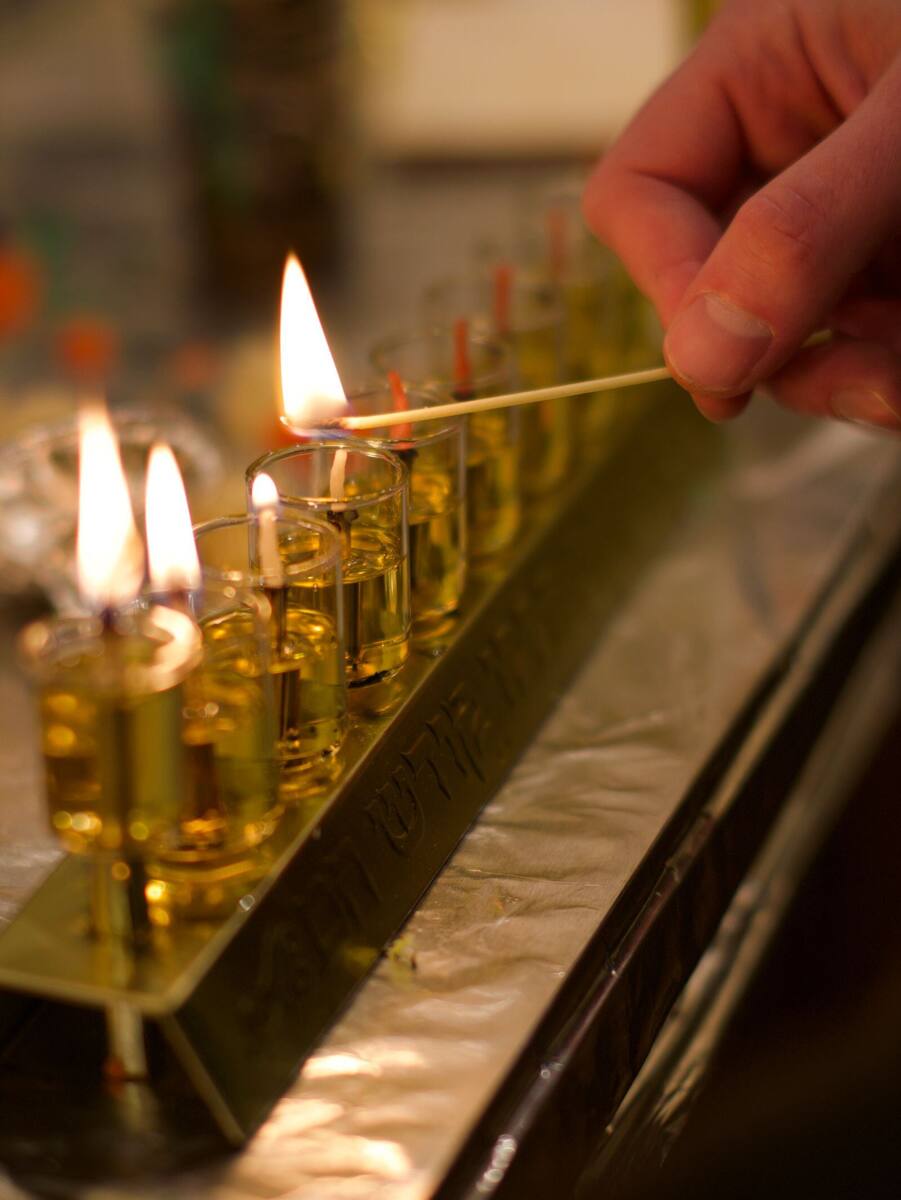
And notice the central mitzvah of the holiday. It is not a feast or a parade. It is lighting a flame, because light is the most spiritual thing in the physical world. The holiday itself shows that its heart is spiritual.
Why each source speaks the way it does
According to this explanation, the Talmud, which tells the story of the holiday, gives the spiritual miracle because that is what makes Chanukah what it is. Al Hanissim, on the other hand, thanks G-d for the physical rescue, which was also real and also a miracle. The prayer leaves out the oil, because placing the victory next to the oil miracle would make it look small.
Seen this way, we do not have to choose. The soldiers won, and the oil shows what they were really fighting for. For the story step by step, see the Chanukah story and Who Were the Maccabees?.
What this means for us
Every person has a body and a soul, and the body is meant to serve the soul. Chanukah gives us a picture of a moment when the soul's purpose is so strong that everything else fades into the background. Most of us cannot live like that all day. But anyone can have such moments: a Shabbat dinner with the phone off, a few minutes of prayer, a candle lit with family. A moment like that is Chanukah in a small size.
In Lamorinda: Ask Rabbi Labkowski your questions about Chanukah, or join us for the celebrations: call 925-384-7242 or see /events.
Common questions
What miracle does Chanukah celebrate?
Chanukah celebrates two miracles: the military victory of the few over the many, and the single jar of oil that burned for eight days. According to Chabad teaching the spiritual miracle is the heart of the holiday.
Why does the Talmud talk about the oil and not the war?
The Talmud answers "What is Chanukah?" with the oil, because the oil shows that the Temple's holiness was restored. The Maccabees' victory is mentioned only briefly.
Why doesn't Al Hanissim mention the oil?
Al Hanissim thanks G-d for the victories in battle. Chabad teaching explains that it leaves out the oil so that the military miracle is not made to seem minor next to it.
Was Chanukah really about a war?
Yes, there was a real war, but it was a war over whether Jews could live by the Torah. The Maccabees fought for the Torah and for the right to keep the mitzvot.
Why did the oil last eight days?
The Talmud says one jar with the High Priest's seal had enough for one day and lasted eight. Some explain the eight days as one for the victory and seven for the oil, but ask the Rabbi if you would like to explore the different views.
Where can I celebrate Chanukah in Lafayette, Moraga and Orinda?
Chabad of Lamorinda in Lafayette welcomes everyone. Call 925-384-7242 or see events for what is planned.
Take the next step
- Read the next guide, The Greek Decrees, to see what the Maccabees were fighting for.
- Light tonight's candles with the menorah guide, and see all the holiday dates at Jewish holidays.
- Join families from Lafayette, Moraga and Orinda: see events or call 925-384-7242.
Questions about this, or something on your mind? Message the Rabbi or the Rebbetzin privately, or call 925-384-7242. · Email
Read next
 Why We Add a Candle Each Night: Hillel, Shammai and Growing in GoodnessWhy do we add a candle each night of Chanukah? Beit Hillel and Beit Shammai disagreed, and the answer is a lesson in how people truly change.Read next →