

Parashat Vayechi
Genesis · Genesis 47:28-50:26
Parashat Vayechi ויחי
Jacob lives his last seventeen years in Egypt. As his end approaches, he asks Joseph to swear to bury him in the land of Canaan with his fathers. When Joseph brings his sons Manasseh and Ephraim, Jacob blesses them, crossing his hands to place his right hand on the younger Ephraim, and says that Israel will bless their children by saying, May G-d make you like Ephraim and Manasseh. Jacob gathers his twelve sons and gives each one a blessing suited to his character, including the promise that kingship will come from Judah. He passes away at one hundred and forty seven. Joseph and his brothers, together with a great Egyptian procession, bring him to the Cave of Machpelah. Afterward the brothers fear that Joseph will take revenge, but he reassures them that what they meant for harm, G-d meant for good. Joseph lives to one hundred and ten and makes the family promise to bring his bones to the Promised Land.
A lesson for today
Every Friday night, Jewish parents bless their sons with the words, May G-d make you like Ephraim and Manasseh, and their daughters, like Sarah, Rebecca, Rachel and Leah. Ephraim and Manasseh were the first of Jacob's grandchildren to grow up in Egypt, surrounded by a foreign culture, yet they remained proud and faithful. The Rebbe noted that this is the blessing every parent wants: children who stay strong in their identity wherever they live. A hand on a child's head and a heartfelt blessing each Shabbat builds that strength.
The Rebbe's teachingA storyIdeas for the Shabbat tableAn essay
The Rebbe's teaching
The Rebbe teaches that every Jew needs two strengths in order to live well in a world that is not always Jewish: to remember where we come from, and to make light right where we are.
The Rebbe begins with the blessing Jacob gives Joseph's sons. Jacob crosses his hands and puts his right hand on Ephraim, the younger. Joseph objects, because Menasheh is the firstborn. Jacob answers that Ephraim will become greater. The Rebbe asks: if Ephraim's level was higher, why was Menasheh the firstborn at all? And why does the verse stress that the boys were "born to you in the land of Egypt before I came to you"?
His answer is that Joseph and Jacob were both right, each from his own point of view. Joseph named Menasheh for "G-d made me forget" the hardship of his father's house, which expresses a longing to stay connected to his roots. He named Ephraim for "G-d made me fruitful in the land of my affliction," which celebrates achievement within exile. The Rebbe explains that these are two ways of serving G-d in exile. The way of Menasheh guards against being absorbed by our surroundings, by remembering where we come from. The way of Ephraim goes further and works to turn the darkness itself into light. The purpose of the descent into exile is the ascent, so the greater goal is Ephraim's, and this is why Jacob gave him precedence.
The Rebbe also notes something remarkable about the two boys. Ephraim and Menasheh were born in Egypt and grew up among the Egyptians, with no outward connection to Jacob, and yet they showed that they were truly his grandchildren.
What it means for us: begin by yearning for "your father's house," and refuse to be shaped only by the culture around you. But do not stop there. The purpose is to light up the world around us with the lamp of a mitzvah and the light of Torah, until even the darkness shines.
A story
Rabbi Bentzion Vishedsky, who later led a school in Kfar Chabad in Israel, tells this account of his own family in the Soviet Union. After their wedding in the 1930s, his parents, Rabbi Moshe and Chasha Vishedsky, were sent by the sixth Lubavitcher Rebbe to the city of Gorky to support Jewish life under Soviet repression. They worked in secret, with Torah classes, schools, kosher meat and mikvaot. After the war the family moved to Czernowitz, where Moshe continued.
Years later the secret police arrested Moshe and Chasha for helping young Jews who were trying to cross the border. Agents searched the family home while the young Bentzion watched. Moshe had tried to hide a note to the Rebbe asking for a blessing, and Bentzion's older sister swallowed it before the agents could read it. Moshe was sentenced to five years of hard labor. In the camp he kept kosher, avoided working on Shabbat by giving an overseer cigarettes, and was forcibly shaved when he would not shave his beard. He was released in 1955.
Later, Moshe sent coded notes addressed to "Grandfather" to ask the new Rebbe, Rabbi Menachem Mendel Schneerson, whether he should apply to leave the Soviet Union. The Rebbe advised him to apply for exit visas for the whole family. They were granted, and the family reached Israel in December 1965. The following year Bentzion and his brother were invited to spend the High Holidays with the Rebbe.
This was a family that kept its faith in a place where that was dangerous, and kept building Jewish life there.
Ideas for the Shabbat table
- Ask: what do we do in our family that comes from our parents or grandparents? What do we want to keep forever?
- Ask: where in our week do we bring a little light to a place that is not Jewish, such as work, school or the neighborhood?
- For children: Menasheh remembers, Ephraim builds. Which one are you today? Can you be both?
- Talk about the Friday night blessing for children: what would you want for your child, or for yourself?
- Discuss: is it harder to hold on to who we are, or to share it with others? Why?
- Adults: name one tradition from your family's past you would like to bring back to your home.
An essay
Every Friday night, Jewish parents bless their sons: "May G-d make you like Ephraim and Menasheh." It is a surprising choice. Jacob blessed twelve sons of his own. Why do we choose these two grandsons as our model?
The Rebbe's answer is that they were the first Jewish children to grow up fully in exile, and they stayed Jewish. That is the hope of every parent in Lafayette, Moraga, Orinda and around the world: that our children will live comfortably in the wider world and still be proud of who they are.
The Rebbe's teaching gives this hope two shapes. One is Menasheh's, remembering. A child who knows the stories, the songs and the holidays has roots. A home with Shabbat candles and a few words of Hebrew is a quiet way of saying "this is where we come from." The other is Ephraim's, bringing light into the surroundings. A grown Jew who works with kindness, gives to those in need and speaks gently is turning a workplace or a neighborhood into a place where G-d is more present.
The Rebbe teaches that both are needed, and that Menasheh comes first. Before we can shine, we have to be rooted. But a root that never grows toward the sun does not fulfill its purpose.
There is something freeing in this. We do not have to choose between being Jewish and being part of the world. The Rebbe's teaching says that our purpose in the world is to make it shine, and we do that by being exactly who we are.
If you would like your children, or yourself, to feel rooted in Jewish life, you are welcome to join a Shabbat at Chabad of Lamorinda in Lafayette (call 925-384-7242), or the Wednesday 1:00 PM Tanya class at the Rabbi's home (call for the address).
Common questions
What is Parshat Vayechi about?
Parshat Vayechi (Genesis 47:28-50:26) tells how Jacob blesses Joseph's sons, Ephraim and Menasheh, and then his own twelve sons, and how Jacob and later Joseph pass away. It completes the Book of Genesis. See Jacob our father for more.
What does the Rebbe teach about Parshat Vayechi?
The Rebbe teaches that Menasheh and Ephraim are two ways of living in exile: remembering our roots, and turning the darkness around us into light. Read more about blessing your children.
Why do we bless our sons to be like Ephraim and Menasheh?
We bless them this way because they were the first of Jacob's grandchildren to grow up in Egypt, in a foreign culture, and they stayed faithful, a blessing every parent wants for their children. Daughters are blessed to be like Sarah, Rebecca, Rachel and Leah. See Shabbat with kids for ways to bring the blessing home.
Learn more
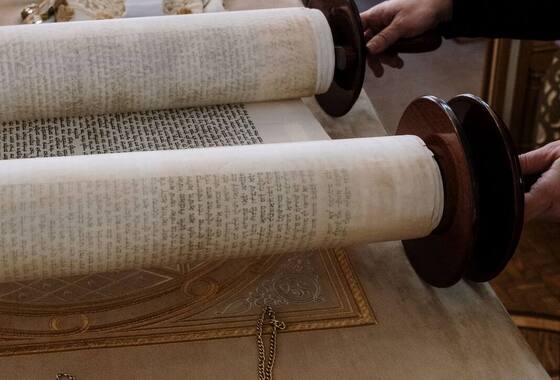 The Weekly Parsha: How the Torah Is Read Each WeekWhat the weekly Torah portion (parsha) is, how the 54 portions fit the Jewish year, and easy ways to study and discuss the parsha each week.
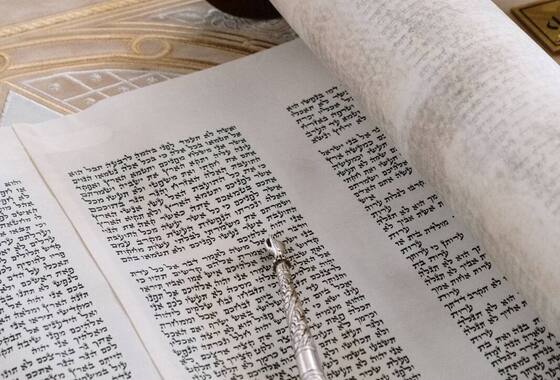 The Torah Reading in Synagogue: When, Why and HowWhen the Torah is read in synagogue, how the weekly cycle works, what happens during the reading, and what to do as it takes place.
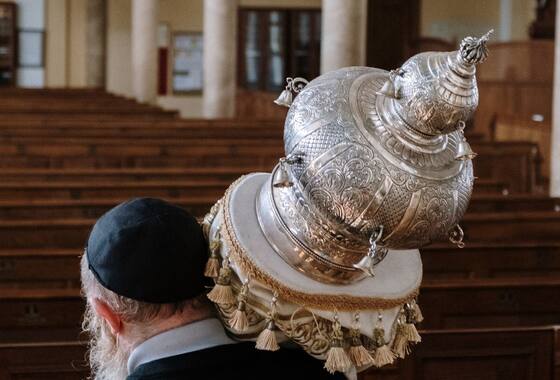 The Haftarah: What It Is and Why We Read ItWhat the Haftarah is, how it began, how it connects to the weekly Torah portion, who reads it, and what to know for a bar mitzvah.