

Parashat Shemot
Exodus · Exodus 1:1-6:1
Parashat Shemot שמות
The children of Israel multiply in Egypt. A new Pharaoh who did not know Joseph enslaves them with hard labor, and orders the Hebrew midwives Shifra and Puah to kill every newborn boy. The midwives fear G-d and keep the babies alive, so Pharaoh commands that every boy be thrown into the Nile. A woman of the tribe of Levi hides her baby for three months, then places him in a basket among the reeds. Pharaoh's daughter finds him, names him Moses, and his sister arranges for his own mother to nurse him. As a grown man, Moses kills an Egyptian who was beating a Hebrew, and flees to Midian, where he marries Zipporah, daughter of Jethro. G-d appears to Moses in a burning bush that is not consumed and sends him to bring Israel out of Egypt, with his brother Aaron as his spokesman. Pharaoh refuses and makes the work even harder, and Moses cries out to G-d.
A lesson for today
Our Sages teach that Israel was redeemed from Egypt in the merit of the righteous women. The midwives risked their lives to save children, and the women of Israel kept faith and hope alive in the darkest times. The Rebbe often highlighted the central role of Jewish women in building faith in the home and in raising the next generation. Their courage and quiet strength, then and now, are what carry our people toward redemption.
The Rebbe's teachingA storyIdeas for the Shabbat tableAn essay
The Rebbe's teaching
The Rebbe teaches that real trust in G-d is not passive calm but a confident expectation that G-d will bring visible good, and that this trust itself helps bring it about.
The Rebbe begins with a small verse. After Moses kills the Egyptian who was beating a Hebrew, the Torah says that Moses "became frightened." Rashi gives the simple meaning: Moses feared for his life now that the deed was known. Rashi then adds a Midrash, that Moses was also worried that among the Jewish people there were informers, and so perhaps they did not deserve to be redeemed. The Rebbe asks: why does Rashi need the Midrash, if the simple meaning explains the fear? And since "a verse never leaves its plain meaning," even the simple reading must teach something.
The Rebbe finds the lesson in bitachon, trust. He turns to a Midrash that says both Jacob and Moses became frightened even after G-d had promised them help, and follows the view that fear was not a virtue here. True trust, the Rebbe says, is more than inner calm that everything comes from G-d. It means actively expecting that G-d will bring good that we can see. It is a spiritual effort, a "casting of our burden" upon G-d, and it calls forth a matching response from Above, even for someone who may not feel worthy. This is what the Tzemach Tzedek, the third Chabad Rebbe, meant by his saying, "Think good, and it will be good."
So Moses' fear, which he even voiced aloud, shows a small gap in trust. Had his trust been complete, the matter would have been forgotten. Instead, it reached Pharaoh and Moses had to flee. The Torah tells us this so that we learn how much trust matters.
What it means for us: when an obstacle appears in our Jewish life, our work or our family, part of removing it depends on our own trust. Do everything natural within your power, and at the same time trust that G-d will help, until you feel at peace. Trust is a force, not resignation.
A story
This story is told by Rabbi Yerachmiel Tilles, adapted from an account by Rabbi Benyamin Adilman. It is about Rabbi Avrohom Yehoshua Heschel, the Rebbe of Kopycznitz (1888-1967), who lived in New York after leaving Vienna and was known for his compassion for every Jew.
After the Second World War, a man who had survived the Nazi horrors came to the rebbe's door, hoping to settle in America. His wife had been denied entry because of her poor health and was being held on Ellis Island, facing deportation. The man was in despair and said that if she were sent back, he would not hesitate to take his own life.
The rebbe tried to calm him. "I promise you," he said, "that by next week your wife will be here together with you!" The man left much more at peace.
One of the rebbe's students, Rabbi Morgenshtern, had seen the conversation. He asked how the rebbe could make such a bold promise. The rebbe explained that his first goal was to ease the man's despair. If the woman were deported, the man might call him a liar, but for at least a week he would have peace.
Then the rebbe took out his Psalms and prayed with great emotion late into the night, pleading that he not be proven wrong and that the woman be allowed into the country. According to the account, she was granted permission to stay in America and was reunited with her husband.
A well-known story; its details cannot be confirmed.
Ideas for the Shabbat table
- Ask: what is the difference between feeling calm and really expecting that things will turn out well? Which is harder?
- Share the saying "Think good, and it will be good." Can you remember a time when a hopeful attitude helped?
- For children: Moses was afraid even though G-d was with him. What helps you when you are afraid?
- Discuss: the rebbe promised comfort to a frightened man and then prayed all night. What does that teach us about helping someone who is hurting?
- Talk about taking a "natural step" and trusting G-d together: what is one thing we can do this week, and what do we leave in G-d's hands?
- Adults: where in your life could a little more active trust help?
An essay
It is natural to worry. We plan, we prepare, we check twice, and still the night before something important we find ourselves awake. Worry feels responsible. It feels like caring.
The Rebbe's teaching on Shemot gently offers a different way. It does not tell us to stop caring or to do nothing. We are asked to take every natural step within our power, to make the call, to study for the exam, to see the doctor. But alongside that effort, the Rebbe asks us to bring something more: a confident trust that G-d, who runs the world, will bring good that we can actually see.
Trust, the Rebbe says, is not passive. It is something we do, like lifting a weight. And it matters. The Torah records Moses' small fear to teach us that a gap in trust can let trouble in, while the Tzemach Tzedek's famous saying, "Think good, and it will be good," reminds us that how we think is part of how things turn out.
This is not a promise that nothing will ever go wrong, and it is never a reason to blame anyone who is struggling. Hard things happen to the best of people, and for a personal situation it is right to speak with the Rabbi. The Rebbe is describing an inner posture: facing life with confidence that we are not alone.
A practical way to begin: at the end of the day, write down one worry and one concrete step you can take about it. Then say, quietly, "I will do my part, and I trust G-d with the rest." You may find that the worry shrinks, and that your next step is clearer.
Families in Lafayette, Moraga and Orinda carry many worries. We do not have to carry them alone. You are welcome to join a Shabbat at Chabad of Lamorinda in Lafayette (call 925-384-7242), or the Wednesday 1:00 PM Tanya class at the Rabbi's home (call for the address).
Common questions
What is Parshat Shemot about?
Parshat Shemot (Exodus 1:1-6:1) opens the Book of Exodus: the Israelites are enslaved in Egypt, baby Moses is saved, he flees to Midian, and G-d speaks to him from the burning bush. See the story of the Exodus and Moses.
What does the Rebbe teach about Parshat Shemot?
The Rebbe teaches that Moses' fear, described in the verse, shows how important true trust (bitachon) is: confidently expecting G-d to bring visible good, together with every natural effort. Read more in bitachon.
What is the main lesson of Parshat Shemot?
The main lesson is that G-d redeems, and that our trust and our courageous effort are part of the redemption. Our Sages teach that Israel was redeemed from Egypt in the merit of righteous women, and our guide on Jewish women explores their strength. You can find this week's portion on the parsha page.
Learn more
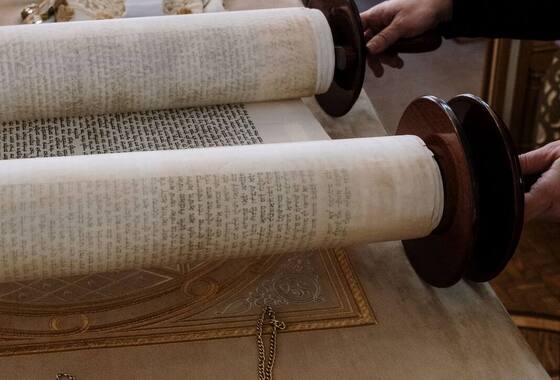 The Weekly Parsha: How the Torah Is Read Each WeekWhat the weekly Torah portion (parsha) is, how the 54 portions fit the Jewish year, and easy ways to study and discuss the parsha each week.
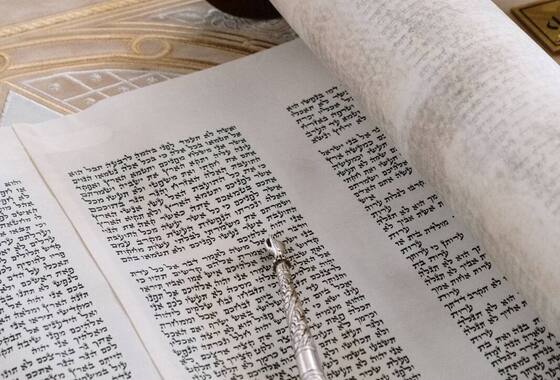 The Torah Reading in Synagogue: When, Why and HowWhen the Torah is read in synagogue, how the weekly cycle works, what happens during the reading, and what to do as it takes place.
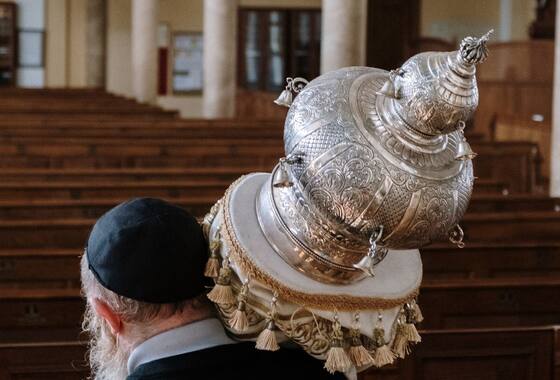 The Haftarah: What It Is and Why We Read ItWhat the Haftarah is, how it began, how it connects to the weekly Torah portion, who reads it, and what to know for a bar mitzvah.