

Parashat Behar
Leviticus · Leviticus 25:1-26:2
Parashat Behar בהר
On Mount Sinai, G-d gives Moses the laws of the Sabbatical year, Shemitah. Every seventh year the land of Israel must rest: fields are not sown and vineyards are not pruned, and what grows on its own is shared by all. After seven cycles of seven years comes the fiftieth year, the Jubilee, announced by the sound of the shofar on Yom Kippur. Liberty is proclaimed throughout the land, Hebrew servants go free, and fields return to their original family owners, for G-d says, The land is Mine. The portion teaches how land and houses may be redeemed, with special rules for houses in walled cities and for the cities of the Levites. The Torah commands us to support a fellow Jew who falls into poverty, to lend to him without interest, and to treat a servant with dignity, not harshly. A Jew sold to a non-Jew must be redeemed. The portion ends with commands against idolatry and to keep Shabbat.
A lesson for today
The Torah anticipates the farmer's worry: what will we eat in the seventh year if we do not plant? G-d answers, I will command My blessing for you in the sixth year. The Shemitah year is a lesson in bitachon, trust in G-d. The Rebbe taught that the same applies to our own rhythm of work and rest: keeping Shabbat, giving charity, or taking time to learn Torah never truly costs us. We do our part honestly, and trust that our livelihood comes from G-d.
The Rebbe's teachingA storyIdeas for the Shabbat tableAn essay
The Rebbe's teaching
When we cannot feel why a mitzvah matters, we can still serve with steady effort, and that effort keeps the inner light alive. Parshat Behar speaks about two special years: Shemittah, the seventh year when the land rests, and the Jubilee, the fiftieth year. The Rebbe notices a puzzle: some passages of the Talmud tie Shemittah to the Jubilee, while others treat it as complete on its own. And after the Jubilee lapsed, the Jews still counted the seventh year. Why?
The Rebbe explains that the two years express two ways of setting ego aside. Shemittah is the way of effort: a deliberate decision to quiet the self, when our ego keeps asking "What shall we eat?" This is a real inner struggle, and the Torah names the question out loud (Leviticus 25:20). The Jubilee is the way of understanding: a self-nullification that comes from seeing clearly, spreading through the whole person and breaking through self-deception.
While the Temple stood, both ways were joined. Afterward, in exile, what remained was the way of effort. The Rebbe compares it to two kinds of servants. One serves out of understanding and love. The other serves by discipline and commitment. The first is the ideal. But the second keeps the inner light of the Jubilee alive until it is revealed again.
What it means for us: there will be days when the mitzvah feels dry and we do not understand it. We do not have to wait for the feeling before we begin. We keep Shabbat, we give tzedakah, we say the prayer, and we gently answer the nagging voice of our ego. The effort itself is precious, and understanding grows from it.
A story
This true story is told in the first person by Dov Weiss, one of about thirty young men who founded the village of Komemiyut in southern Israel in 1950. It is the story of their first Shemittah year, the year 5712.
The settlers observed Shemittah. Instead of farming, they built permanent housing. When the year ended, they needed seed to sow, and every source they approached refused them. The only grain on offer was old, wormy seed from a neighboring kibbutz, Gat, whose members handed it over with mockery.
Their rabbi, Rabbi Binyamin Mendelson, advised them to take it. G-d, he said, can make even poor seed grow.
They planted late, in November, two or three months after other farmers, just after the first rains arrived. Their wheat gave an unusually large crop, while neighboring fields planted earlier turned out weak.
Gat later asked for payment, and the matter was heard before a rabbinical court. Rabbi Mendelson ruled that the settlers should pay, since the seed had real value for planting, even though Gat had thought it worthless. Dov Weiss tells it as testimony of what he lived through; it is a personal account, not an independently documented record.
Ideas for the Shabbat table
- Ask everyone: what is something you were afraid to give up, time, money, a habit, and it turned out fine?
- For children: if a farm rests for a whole year, what would the farmers do instead? What would you do with a year off?
- Discuss: the Torah says the question out loud, "What will we eat?" Why do you think it does not pretend we will never worry?
- Ask the adults: what does Shabbat cost us each week, and what does it give back?
- Talk about the Rebbe's two servants: one serves from understanding, one from discipline. Which are you on a hard day? What helps?
- Read about Shemittah, Shabbat, and Tanya on money.
An essay
Most of us know the quiet voice that asks, "What if there isn't enough?" Enough time, enough money, enough energy. It speaks most loudly when we are about to do something generous or restful: leave work on Friday afternoon, write a larger check, say no to one more commitment.
Parshat Behar does not pretend that voice does not exist. The Torah quotes it: "What shall we eat in the seventh year?" And then it answers with a promise of blessing. The Rebbe adds a second layer: the question is the ego speaking, and the Shemittah year is practice in setting it aside. Not by understanding everything first, but by choosing.
There is great respect in that. The Torah does not demand that we feel confident before we act. It asks us to act, honestly and with effort, and trust that the feeling will follow. Anyone who has kept their first Shabbat, or given their first real gift to charity, knows how this works. The first time it feels unnatural. The tenth time it feels like home.
At the same time, the Rebbe's teaching is kind. Disciplined effort is not second-rate. In a time when the inner light is hidden, it is the way the light keeps burning. If you cannot feel it today, do it anyway, and be patient with yourself.
So here is a small exercise for this week. Choose one thing you give up for the sake of something higher, perhaps one hour of Friday-night email. Notice the voice that asks "What if?" Answer it calmly, and see what happens.
If you would like a Shabbat table to join in Lafayette, call Chabad of Lamorinda at 925-384-7242, or come to the Wednesday 1:00 PM Tanya class at the Rabbi's home (call for the address).
Common questions
What is Parshat Behar about?
Parshat Behar (Leviticus 25:1-26:2) gives the laws of Shemittah, the seventh year when the land of Israel rests, and the Jubilee in the fiftieth year, along with laws about freeing servants, returning land and helping a person who has fallen on hard times.
What does the Rebbe teach about Parshat Behar?
The Rebbe teaches that Shemittah is a lesson in setting the ego aside through steady effort, even when we do not feel the meaning. He explains that the Jubilee is the deeper form, setting the ego aside through understanding.
What is Shemittah?
Shemittah is the sabbatical year, the seventh year in which the land of Israel rests. Read more in our guide to Shemittah and see this week's parsha.
Learn more
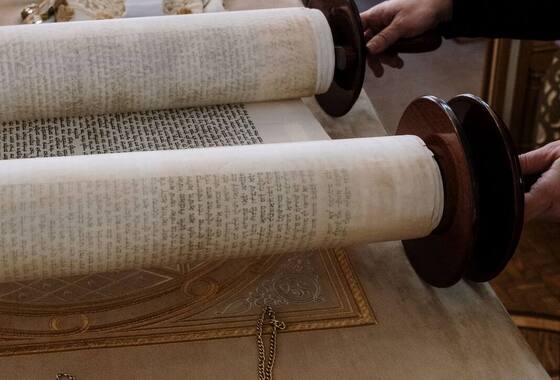 The Weekly Parsha: How the Torah Is Read Each WeekWhat the weekly Torah portion (parsha) is, how the 54 portions fit the Jewish year, and easy ways to study and discuss the parsha each week.
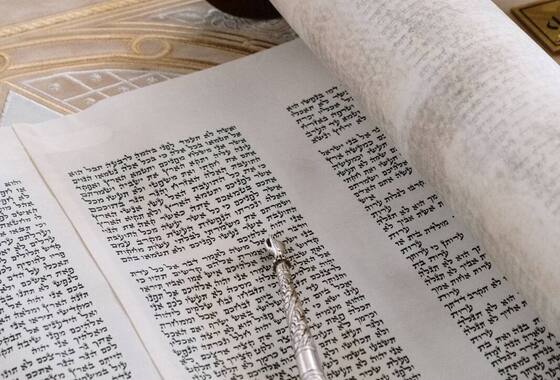 The Torah Reading in Synagogue: When, Why and HowWhen the Torah is read in synagogue, how the weekly cycle works, what happens during the reading, and what to do as it takes place.
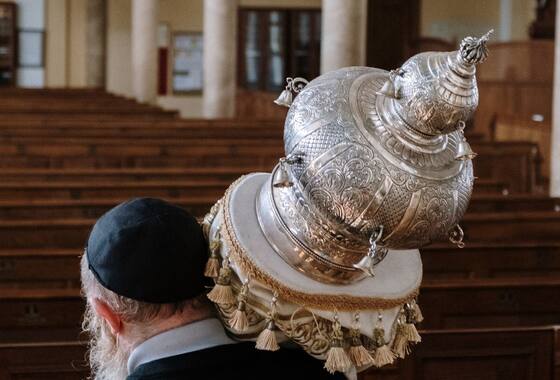 The Haftarah: What It Is and Why We Read ItWhat the Haftarah is, how it began, how it connects to the weekly Torah portion, who reads it, and what to know for a bar mitzvah.