

Parashat Bechukotai
Leviticus · Leviticus 26:3-27:34
Parashat Bechukotai בחוקותי
G-d promises: If you walk in My statutes and keep My commandments, I will give you rain in its season, the land will yield its produce, and you will eat your bread to satisfaction and dwell securely. There will be peace in the land, and G-d will walk among them and be their G-d. The Torah then warns of the hardships that will come if the people reject G-d's commandments: disease, famine, defeat, and finally exile from the land. Yet even then, G-d promises, He will not reject them or break His covenant, and He will remember His covenant with Jacob, Isaac and Abraham. The final chapter of Leviticus teaches the laws of pledging to the Sanctuary the fixed value of a person, and of consecrating animals, houses and fields, as well as the tithe of the flocks and herds. With this the book of Leviticus is completed.
A lesson for today
The portion opens, If you walk in My statutes. Rashi explains that this means toiling in Torah study, putting real effort into learning. The Rebbe emphasized that Torah study is not only for scholars. Every person can set fixed times for learning, even a few minutes a day, and grow from there. The effort itself is precious to G-d. Just as walking means steady movement forward, the Torah invites us to keep learning and growing, step by step.
The Rebbe's teachingA storyIdeas for the Shabbat tableAn essay
The Rebbe's teaching
Torah study is meant to be engraved into us, so that the learner and the learning become one. Parshat Bechukotai opens: "If you walk in My statutes." Rashi, following the Sifra, says this means to toil in Torah study. The Rebbe asks why the Torah uses the word "statutes," chukim, a term for commandments whose reasons are beyond our understanding, when it speaks of an activity that is mostly intellectual.
The Rebbe answers with a teaching of the Alter Rebbe. The word chok, statute, is related to chakikah, engraving. Writing sits on the surface of the page, and can be erased. Engraving becomes part of the stone itself. When we study Torah the right way, we are not collecting information. We let the words be carved into us until our ego quiets and we and the Torah are one.
That is why study must begin with commitment. The right attitude is not "I will do it when I understand," but "I will do it, because I am commanded, and I will try to understand." Understanding is still the goal, but it grows out of commitment, not before it.
The word "walk," the Alter Rebbe explains, points to progress. It describes the reward: a climb that never ends. And as our understanding grows, what was once only faith turns into knowledge, and something that was a mystery becomes clearer. Even Moses reached a higher threshold of understanding than the people around him. But faith begins wherever understanding ends, so there is always a next step.
What it means for us: we begin to learn with commitment first, even when it is not easy. We give it a fixed time each day. And every small gain moves our threshold of "I don't understand" a little further.
A story
This story comes from the Rebbe's calendar of Chassidic teachings, HaYom Yom, in the month of Elul. The Alter Rebbe, Rabbi Shneur Zalman of Liadi, usually read the Torah portion himself in the synagogue. One Shabbat, the portion was Ki Tavo, which includes the Tochachah, the long passage of rebuke and warnings that the Torah also places in Bechukotai. That week, the Alter Rebbe was away.
His son, the Mitteler Rebbe, who was not yet bar mitzvah, heard the passage read by someone else. The words upset him so deeply that when Yom Kippur came, the Alter Rebbe was concerned that his son would not be able to fast.
When someone asked the boy why he had reacted so strongly to a passage that is read every year, he gave a short answer. When my father reads it, he said, the words do not sound like curses.
The same words can sound like threats or like blessings, depending on who reads them, and with what love. The Chassidic masters teach that the harsh words of the Tochachah are hidden blessings, and that someone who reads with love can hear them.
Ideas for the Shabbat table
- Ask: what is something you studied or practiced for years until it became part of you, such as a language, an instrument or a skill? How did it feel at the start?
- For children: if you write your name in sand, and then carve it in a tree, what is the difference? Which stays?
- Discuss: "I will do and then I will understand." Is that easier or harder than "I will understand and then do"? When have you needed each?
- Ask the adults: can we choose a fixed time to learn something Jewish, even five minutes a day? Pick a time at the table.
- Talk about the Mitteler Rebbe's words: when has the same sentence sounded different depending on who said it?
- Read how to begin in how to start learning Torah and daily Torah study.
An essay
There is a difference between knowing something and being changed by it. Most of us have read a book that we agreed with and forgot by the following week. And most of us have a few lines, from a parent or teacher or a song, that have stayed with us for decades. They have been engraved.
The Rebbe's teaching on Bechukotai suggests how that happens. It does not happen on the first reading, and not by cleverness alone. It happens through steady return, a fixed time, effort that goes on even when it is dry, and a commitment that does not wait to be convinced. The word "walk" reminds us that we are never done. A person who walks is not worried about the whole road. He puts one foot in front of the other.
There is great relief in this. We do not have to be scholars. We do not have to understand everything today. We have to show up, take our small piece, and let it settle in.
And the story of the Mitteler Rebbe adds a quiet note. How we learn matters as much as what we learn. The same words, read with love, can sound like blessings. A parent, a teacher or a friend who learns and speaks with warmth can help us hear the Torah the way it is meant to be heard.
This week, choose five minutes a day. Take one page, one paragraph or one verse. Read it slowly and ask yourself: what does this ask of me today?
If you would like to learn together, join the Wednesday 1:00 PM Tanya class at the Rabbi's home (call 925-384-7242 for the address), or come to a Shabbat at Chabad of Lamorinda in Lafayette.
Common questions
What is Parshat Bechukotai about?
Parshat Bechukotai (Leviticus 26:3-27:34) describes the blessings that come from following the Torah's path, warns of the consequences of turning away, and ends with laws about pledges and gifts to the Temple.
What does the Rebbe teach about Parshat Bechukotai?
The Rebbe teaches that "walking in My statutes" means studying Torah with such commitment that the words become engraved in the soul. He emphasizes starting with commitment and growing in understanding step by step.
What does "If you walk in My statutes" mean?
Rashi explains that it means toiling in Torah study. You can begin with our guide to how to start learning Torah and see this week's parsha.
Learn more
 The Weekly Parsha: How the Torah Is Read Each WeekWhat the weekly Torah portion (parsha) is, how the 54 portions fit the Jewish year, and easy ways to study and discuss the parsha each week.
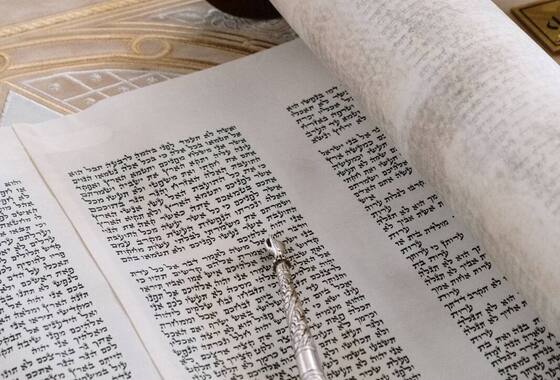 The Torah Reading in Synagogue: When, Why and HowWhen the Torah is read in synagogue, how the weekly cycle works, what happens during the reading, and what to do as it takes place.
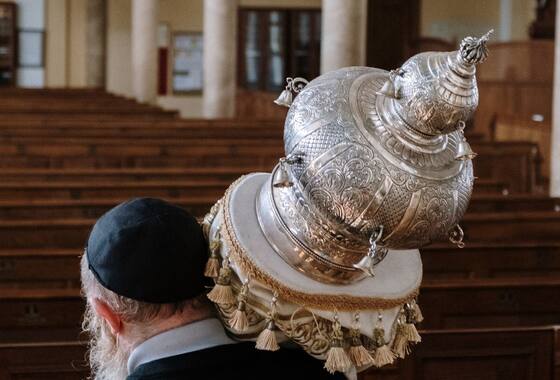 The Haftarah: What It Is and Why We Read ItWhat the Haftarah is, how it began, how it connects to the weekly Torah portion, who reads it, and what to know for a bar mitzvah.