

Parashat Emor
Leviticus · Leviticus 21:1-24:23
Parashat Emor אמור
G-d gives special laws of holiness for the priests. A Kohen may not become impure through contact with the dead, except for his closest relatives, and there are restrictions on whom he may marry. A priest with certain physical blemishes may not perform the service, and holy food may be eaten only by priests and their households. Animals offered must be without blemish; a newborn animal stays with its mother at least seven days, and an animal and its young may not be slaughtered on the same day. Israel is commanded to sanctify G-d's name. The portion then lists the holy days of the year: Shabbat, Passover, the bringing of the Omer and the counting of forty nine days, Shavuot, Rosh Hashanah with the sounding of the shofar, Yom Kippur, Sukkot with the four kinds and dwelling in the sukkah, and Shemini Atzeret. It describes the oil for the Menorah and the showbread, and ends with the story of a man who cursed G-d's name and with laws of damages.
A lesson for today
The portion commands us to count the days of the Omer, from Passover to Shavuot. Chassidic teaching explains that this counting is a time of personal refinement, working on one quality of the heart each day. The very act of counting teaches that every single day matters. A day is not just something to get through; it is a precious opportunity that will not return. When we treat each day as one that counts, our lives fill with purpose.
The Rebbe's teachingA storyIdeas for the Shabbat tableAn essay
The Rebbe's teaching
The counting of the Omer is a pattern for how every single day can lift us higher. In Parshat Emor the Torah commands us to count from "the day after the Shabbat" of Passover until Shavuot. The Rebbe asks why the Torah uses an expression that others misread, and why the Omer offering was of barley, while on Passover leavened bread is forbidden and on Shavuot leavened loaves are brought.
The Rebbe answers by connecting three stages: the Exodus, the Omer and the giving of the Torah. The Chassidic masters linked them to three phrases in the Song of Songs: "Draw me" (the Exodus), "We will run after you" (the Omer), and "the King has brought me into His chambers" (Sinai). In Egypt, G-d lifted Israel out; the people were redeemed, but their inner nature had not yet changed. The Omer is the time of inner work. The barley stands for raw energy and desire, and our task is to refine it, through thought and through feeling, so that it can serve something higher. Leaven, which is a symbol of pride, is removed completely on Passover. During the Omer we work on it with understanding. On Shavuot it is brought into holiness.
Then the Rebbe shows that this is not only about the calendar. Every day repeats the journey. When we wake and say Modeh Ani, "I am thankful," we surrender before we understand anything: that is a small Exodus. The Shema and its blessings are the Omer: reflection that awakens love and awe. The Amidah, said with humility, is a small Sinai.
What it means for us: growth has an order. First we put aside our pride, then we redirect our energies, and finally every part of us, even our drive and ambition, can be used for good. The Sages said that in every generation a person should see himself as if he left Egypt today. We can begin today.
A story
Parshat Emor begins with the special laws of holiness for the kohanim, including limits on contact with the dead, with an exception for close relatives. The true story that follows comes from the Rebbe's own sensitivity toward people who mourn.
After the mother of Rabbi Herbert Weiner passed away, the Rebbe wrote him a letter of condolence. Then he added a postscript on a separate page. In it he suggested that, in addition to saying Kaddish, Rabbi Weiner publicly study a section of practical Jewish law, such as the Kitzur Shulchan Aruch. He said this would bring merit to many people and a special merit to the soul of the departed.
And then the Rebbe explained why he had put it on a separate sheet. It was not because it mattered less than the letter. The Sages teach that allowances should be made for someone in distress, he wrote, and someone might suspect that a person who is not a relative is using a painful loss to promote his own ideas. So he separated the suggestion from the words of comfort.
Even for someone who cared so deeply about Jewish life, the first question was not "What do I want?" but "What would the grieving person want?"
Ideas for the Shabbat table
- Ask: what is one thing you want to grow in between now and Shavuot? Name it out loud.
- For children: let us count one good deed each day this week. Who can tell us tonight's number?
- Discuss: why do you think the Omer offering was made of barley?
- Ask the adults: when someone is grieving, what helped you when you were in that place? What did not help?
- Talk about Modeh Ani: how would your morning change if you really felt that you were being given a new day?
- Read about counting the Omer and about comforting mourners.
An essay
We live in a culture that celebrates the big moment: the dramatic life change, the major breakthrough. The Torah has a quieter idea. Between Passover and Shavuot there are forty-nine days, and each one is counted by name. We do not skip ahead. We do not lump them together. Each evening we say the number out loud, as if to say: this day counts.
The Rebbe's teaching adds something encouraging. The journey from freedom to meaning is not only an annual one. It happens inside a single morning. You begin with a simple "thank you" before your feet touch the floor. You pray with some focus, and let it soften you. And then you walk out into your day, to a meeting, a classroom, a car pool, carrying a little of that light.
It also teaches patience. In the Rebbe's teaching barley stands for raw energy, not yet refined. Our energy, ambition and even our temper are not enemies. They are raw material. The work of growing is to give them direction, and that takes time.
And the story of the Rebbe's postscript reminds us what growth is for. A person who is spiritually refined is not only someone who knows more. He is someone who notices another person's pain, and chooses words and moments with care.
So, here is a way to use this week. Pick one day, and treat it as if it counts. Say thank you early. Do one thing with focus. And be gentle with one person who is carrying something heavy.
If you would like to share a Shabbat in Lafayette, call Chabad of Lamorinda at 925-384-7242, or join the Wednesday 1:00 PM Tanya class at the Rabbi's home (call for the address).
Common questions
What is Parshat Emor about?
Parshat Emor (Leviticus 21:1-24:23) gives laws of holiness for the kohanim, then lists the festivals of the year (Shabbat, Passover, the counting of the Omer, Shavuot, Rosh Hashanah, Yom Kippur and Sukkot), and also teaches about the Temple menorah and the bread on the Temple table.
What does the Rebbe teach about Parshat Emor?
The Rebbe teaches that the Omer count is a journey from the Exodus to Sinai that every person repeats each day, through gratitude, reflection and prayer. He explains how our raw energy is refined step by step until it serves holiness.
Why do we count the Omer?
It is a commandment in this portion to count each day from Passover to Shavuot. You can read more in our guide to counting the Omer, and see this week's parsha.
Learn more
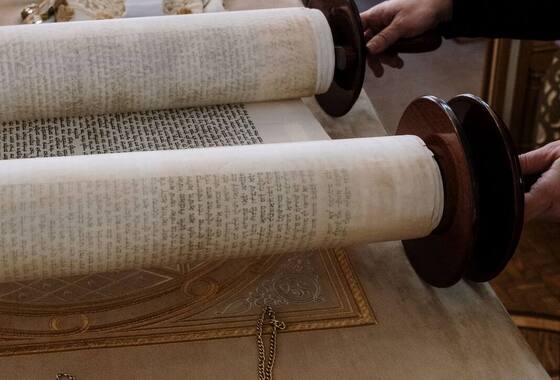 The Weekly Parsha: How the Torah Is Read Each WeekWhat the weekly Torah portion (parsha) is, how the 54 portions fit the Jewish year, and easy ways to study and discuss the parsha each week.
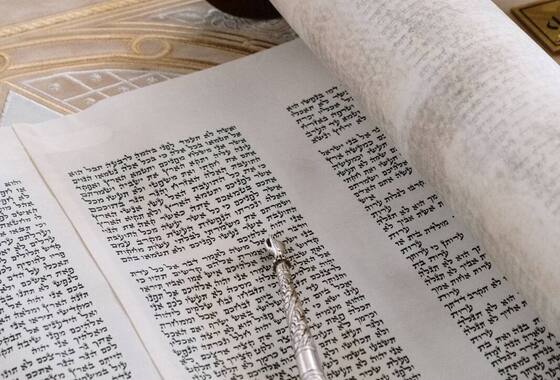 The Torah Reading in Synagogue: When, Why and HowWhen the Torah is read in synagogue, how the weekly cycle works, what happens during the reading, and what to do as it takes place.
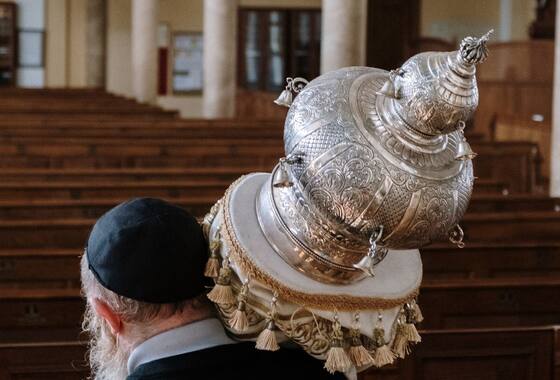 The Haftarah: What It Is and Why We Read ItWhat the Haftarah is, how it began, how it connects to the weekly Torah portion, who reads it, and what to know for a bar mitzvah.