
Learn › Jewish ideas › G-d, faith and holiness
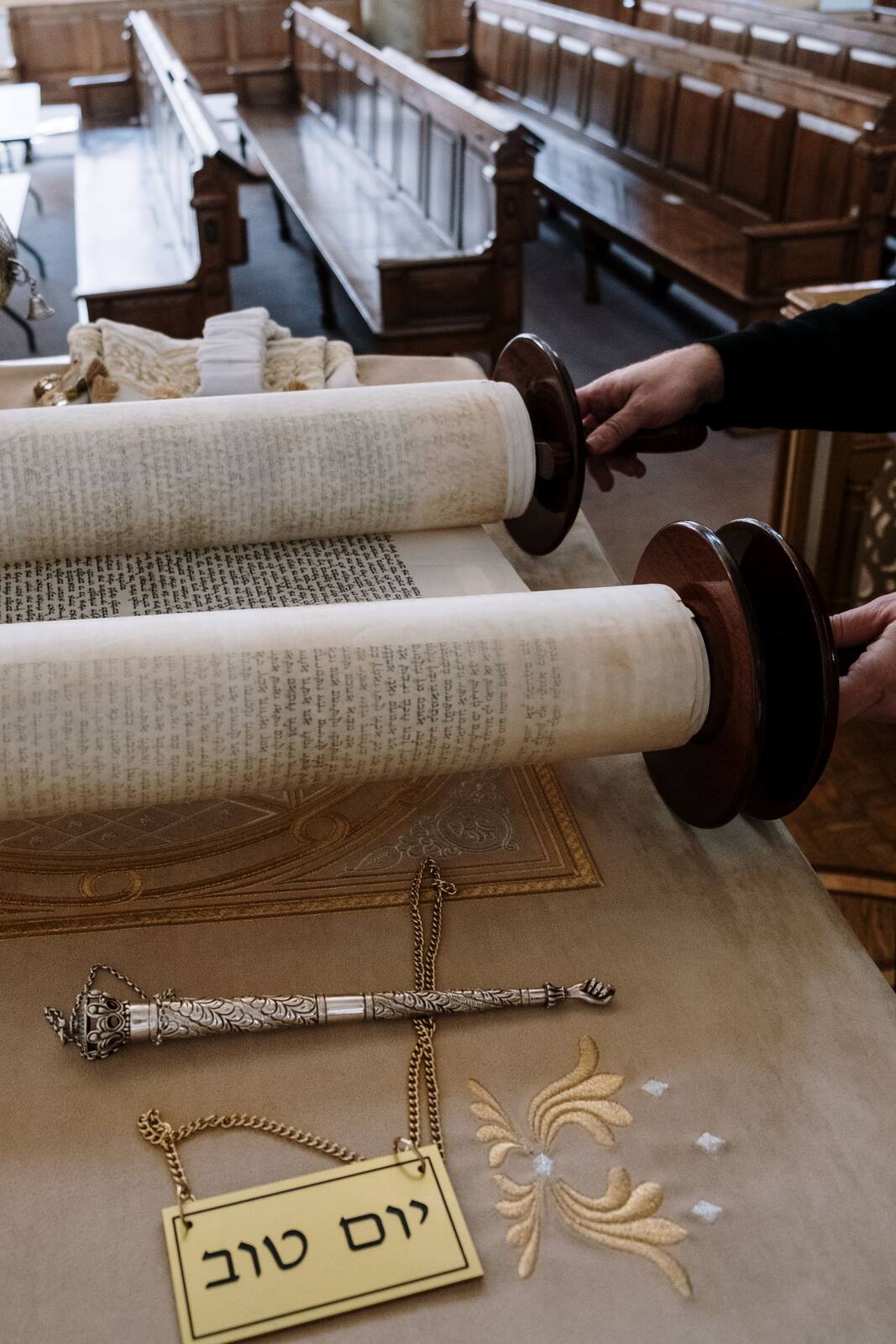
Who Wrote the Torah? The Jewish Answer and Why It Matters
Who wrote the Torah? Jewish tradition says Moses wrote it as G-d told it to him. Learn how, when, and what the sages say about the last verses.
Part 9 of 24 · Life's big questions
On this page · 2 min read
What "wrote" means hereHow and when Moses wrote itWho wrote the last verses?Passages that seem to disagreeWhy it mattersAccording to Jewish tradition, Moses wrote the Torah, but not as an author composing his own book. He acted as a channel: he received G-d's words and wrote them down faithfully. This is the difference between a human author and a prophet who "heard" G-d at Sinai and passed on what he heard.
What "wrote" means here
The Torah (תּוֹרָה, "teaching") is the Five Books of Moses. Moses was a conduit for Divine communication, relaying G-d's instructions precisely, without adding his own interpretation. That is why the Torah is called the word of G-d, not the words of Moses.
How and when Moses wrote it
Here is the traditional picture:
- At Sinai, Moses received the Ten Commandments and the laws that follow them, then spent forty days on the mountain.
- Over the following decades in the wilderness, he wrote in stages. Sometimes he wrote and then spoke the words to the people, sometimes he spoke first and then wrote down what he had said, and sometimes he recorded the counts of the people.
- Rashi teaches that Moses first gave the people an official version of Genesis and the part of Exodus up to that point.
- The Talmud records two views on timing: Moses wrote separate scrolls during the forty years and joined them later, or he wrote all five books near the end of his life. In every view, at the end Moses gathered it all together and gave copies to the tribes, with the instruction that each person write a Torah of their own. That is the root of the mitzvah to write a Torah scroll.
Who wrote the last verses?
The final verses of the Torah describe the death of Moses. The sages discuss who wrote them. Some say Joshua wrote them. Others say Moses wrote them "in tears." Rashi cites both views. Ibn Ezra holds that Joshua wrote them, while Nachmanides holds that the whole Torah is Moses' transcription. Jewish tradition welcomes this kind of discussion, because it takes the text seriously.
Passages that seem to disagree
People often ask about passages that seem to disagree. Here is an example. Genesis 6:3 seems to say that human life will be limited to 120 years, yet the Torah later reports longer lives. Rashi explains that the verse is about the generation of the Flood: G-d would give them 120 years to repent before the destruction. Such passages are an invitation to look deeper, and that is why there are so many commentaries on them.
Why it matters
If the Torah is from G-d, then its mitzvahs are not just ancient customs or good advice. They are a conversation with the Creator. That is why Jews have studied it for thousands of years. The Torah does not stand alone: the Oral Torah explains how to live it. For the bigger picture, see Torah and science, and Moses for the man who carried it down.
In Lamorinda: Curious about the Torah? Join a class in Lafayette at /programs/adult-education or call Rabbi Labkowski at 925-384-7242.
Common questions
Who wrote the Torah according to Judaism?
Moses wrote it, as a channel for the words G-d gave him. He relayed G-d's words precisely; he was not an author in the usual sense.
Did Moses write the whole Torah, even the part about his death?
The sages discuss this. Some say Joshua wrote the last verses, and others say Moses wrote them in tears. Nachmanides holds that the entire Torah is Moses' transcription.
When was the Torah written?
Moses received the first laws at Sinai and wrote over the following forty years of wandering. By the end of his life he had gathered it together and given copies to the tribes.
Does the Torah contradict itself?
Apparent contradictions point to deeper meanings, and the commentaries explain them. Genesis 6:3 and the 120 years is one well-known example.
Is it all right to ask these questions?
Yes. Questions are central to Jewish learning, and Torah study includes asking and debating. If a question troubles you, ask the Rabbi.
Where can I learn more in Lafayette, Moraga or Orinda?
Chabad of Lamorinda in Lafayette offers adult classes for every level. See Torah classes for adults or call Rabbi Labkowski at 925-384-7242.
Take the next step
- Read How to Start Learning Torah for a first step you can take this week.
- Come to a class in Lafayette: adult education.
- Keep reading in the series: Torah and science and What is the Oral Torah?.
Step by step · Part 9 of 24
Life's big questions
NextWhy Pray If G-d Already Knows What We Need?If G-d knows everything, why pray? The Jewish answer: prayer is not informing G-d but connecting to Him, and it changes the one who prays.All 24 parts
- Why Be Jewish? What Makes Jewish Life Worth Living
- What Does "the Chosen People" Mean in Judaism?
- Belief in G-d in Judaism: What Jews Believe About G-d
- Fear of G-d: What Yirat Shamayim Really Means
- How Can You Love G-d? The Mitzvah of Ahavat Hashem
- Doubts About G-d: A Jewish Approach to Questions of Faith
- What Do Jews Believe? Maimonides' 13 Principles of Faith
- Torah and Science: Can a Thinking Person Believe?
- Who Wrote the Torah? The Jewish Answer and Why It Matters
- Why Pray If G-d Already Knows What We Need?
- Does G-d Answer Prayers? A Jewish View of Yes, No and Not Yet
- The Soul in Judaism: What Is a Neshamah?
- Why Am I Here? The Jewish View of Life's Purpose
- Tikkun Olam: What "Repairing the World" Really Means in Judaism
- Free Will in Judaism: Do We Really Choose?
- Why Do Bad Things Happen? A Jewish View of Suffering and Faith
- The Book of Job: What It Teaches About Suffering
- Angry at G-d: A Jewish Answer for When It Hurts
- Hope in Hard Times: What Judaism Teaches About Not Giving Up
- Hashgacha Pratit: Divine Providence in Everyday Life
- Miracles: A Jewish View of the Wonders Big and Small
- The Afterlife in Judaism: What Happens After We Die?
- Moshiach: The Jewish Belief in the Messiah and the Messianic Era
- Techiyat HaMeitim: The Jewish Belief in the Resurrection of the Dead
Questions about this, or something on your mind? Message the Rabbi or the Rebbetzin privately, or call 925-384-7242. · Email
Read next
 Torah and Science: Can a Thinking Person Believe?How Judaism and Chabad teaching see science and faith, the age of the universe and evolution, and why there is no real conflict between truth and truth.Read next →