

Parashat Vaera
Exodus · Exodus 6:2-9:35
Parashat Vaera וארא
G-d tells Moses that He appeared to Abraham, Isaac and Jacob, and now He will keep His promise: I will take you out, I will save you, I will redeem you, I will take you as My people, and I will bring you to the land. Moses tells the people, but they cannot listen because of shortness of spirit and hard labor. The Torah lists the families of Reuben, Simeon and Levi, leading to Moses and Aaron. Moses and Aaron come before Pharaoh, and Aaron's staff becomes a serpent that swallows the staffs of Pharaoh's magicians. Then G-d brings the first seven plagues: the Nile turns to blood, frogs cover the land, lice, swarms of wild animals, a plague on the livestock, boils, and a terrible hail mixed with fire. The land of Goshen, where Israel lives, is spared from several of the plagues. Pharaoh promises again and again to let the people go, but each time he hardens his heart.
A lesson for today
The Torah says the people could not hear Moses because of shortness of spirit and hard work. Even the best news cannot get through when a person is overwhelmed. Chassidic teaching stresses that serving G-d with joy and calm opens the heart, while worry and sadness close it. If we want to hear the good that is coming, we need to make room for it: a few quiet minutes of prayer or learning each day. And when others are under pressure, we can be the gentle voice that helps them hear hope.
The Rebbe's teachingA storyIdeas for the Shabbat tableAn essay
The Rebbe's teaching
The Rebbe teaches that everything in the world happens for a purpose that serves the Jewish people and the Torah, so we should answer frightening events with more trust and more good deeds, and not with fear.
The Rebbe begins with a question about the plagues. G-d had already promised Abraham that He would judge the nation that enslaved his children, so the punishment of Egypt needed no further reason. Yet Rashi tells us that G-d hardened Pharaoh's heart so that Israel would "hear and fear" Him. What did the plagues do for the Jewish people?
The Rebbe answers with a principle: the whole world exists "for the sake of Israel and for the sake of the Torah," even events that seem to concern only other nations. The plagues also had a direct purpose in Egypt. Following Abarbanel, the Rebbe explains that Pharaoh denied three things: G-d's existence ("I do not know G-d"), His providence, and His power to change nature. The first three plagues (blood, frogs, lice) showed that G-d exists. The next three (wild animals, a plague on livestock, boils) showed His providence. The last four (hail, locusts, darkness, the firstborn) showed His power over nature.
The haftarah, the reading from the Prophets, ends with the prophet Ezekiel saying, "they will know that I am G-d." Ezekiel was already a known prophet, yet some Jews doubted him. A great war between Babylon and Egypt let those few see his words come true.
What it means for us: first, we should not be afraid when the world seems frightening. The Midrash quotes G-d telling Israel that all He did was for their sake. Respond with deeper trust and by strengthening Torah and mitzvot. Second, never dismiss your own influence because only a few people are within reach. Even if most of the Jews around you are already observant, it still matters to help one more Jew put on tefillin or keep Shabbat. Maimonides teaches that we should see ourselves and the world as evenly balanced, so one mitzvah can tip the scales for ourselves and the whole world.
A story
Meir Moss tells this story of his father, Sam Moss, who was born in Munkatch, in what was then Czechoslovakia, and studied in the yeshivah of the Munkatcher Rebbe. In 1944 the Nazis put the Jews of Munkatch in a ghetto and then sent them to Auschwitz and later Dachau. Sam fell gravely ill there, and survived because his father found a kitchen worker who secretly gave him extra food.
After the war Sam settled in Australia, married, and built a successful textile business. Bitter toward G-d, he kept away from synagogue, and his wife's death at 38 deepened the distance. Years later his son Meir became observant and went to study at a Chabad yeshivah in Melbourne. Sam was dismayed.
In 1975 he traveled to New York to see the Rebbe, probably hoping the Rebbe would tell Meir to leave. Sam refused to sit in front of the Rebbe, following a custom from Munkatch. The Rebbe answered that if Sam would not sit, he would not sit either. He stood up, came around his desk and stood beside Sam. He asked about the Munkatcher Rebbe, and about the ghetto and the camps. Sam broke down in tears, and the Rebbe put an arm around him and said, "Don't worry, everything is going to be alright."
The subject of Meir's yeshivah never came up. But afterward Sam stopped pressing his son to leave, and said he felt a great weight had been lifted.
A man carrying an enormous burden was met with warmth, and it opened something in him.
Ideas for the Shabbat table
- Ask: when do we feel too tired, busy or worried to hear good news? What helps us open up?
- Ask the children: the plagues showed the world something about G-d. What do you want people to see in you when they watch how you act?
- Discuss: is it true that one person, one mitzvah, can tip the scales? Can you share a time when a small act changed something?
- Talk about the Rebbe standing because Sam would not sit. How do we show someone that we respect where they stand?
- Adults: when the world feels frightening, what do you do? What would it mean to answer with one more good deed?
- Invite each person to name one mitzvah they could do this week.
An essay
Some weeks the news feels like a series of plagues. Wars, disasters, politics that tear families apart. It is easy to feel small and to think, "What difference can I make?"
The Rebbe teaches that this feeling is exactly what we are asked to question. The world is not running by itself while we watch. Everything in it, he says, has a purpose connected to the Jewish people and the Torah. That does not mean we know why each thing happens. It means that nothing is wasted, and that our response matters. The Rebbe's advice is clear and practical: do not meet fear with fear. Meet it with trust, and with more Torah and more mitzvot.
The second half of the teaching is as important as the first. It is easy to dismiss ourselves because we only reach a few people. The Rebbe, quoting Maimonides, asks us to see ourselves and the world as balanced evenly between good and bad, so that one mitzvah can tip the whole scale. A single candle, one call to a lonely neighbor, one moment of honesty, may be the weight that tips it.
Notice how the story of Sam Moss fits. He carried a heavy history, and no argument would have moved him. What moved him was that a great leader stood beside him, asked about his teacher and his suffering, and said, "Everything is going to be alright." Sometimes the most powerful mitzvah is simply to be present for someone.
You do not have to reach everyone. In Lafayette, Moraga and Orinda, there are neighbors who would welcome a warm invitation, a Shabbat meal or just a kind word. Choose one person and one mitzvah this week.
You are warmly invited to a Shabbat at Chabad of Lamorinda in Lafayette (call 925-384-7242), or to the Wednesday 1:00 PM Tanya class at the Rabbi's home (call for the address).
Common questions
What is Parshat Vaera about?
Parshat Vaera (Exodus 6:2-9:35) tells how G-d reassures Moses with the promises of redemption, Moses and Aaron go to Pharaoh, and the first seven plagues strike Egypt. Read more in the ten plagues and the Exodus story.
What does the Rebbe teach about Parshat Vaera?
The Rebbe teaches that everything in the world is for the sake of the Jewish people and the Torah, so frightening events call for trust and good deeds, and that one mitzvah can tip the scales for the whole world. See tefillin for one mitzvah the Rebbe encouraged Jewish men and boys over bar mitzvah to do.
What is the main lesson of Parshat Vaera?
The main lesson is that we should not fear, and that what we do matters, even when we feel small. Our guide on anxiety and worry offers more, and you can find this week's portion on the parsha page.
Learn more
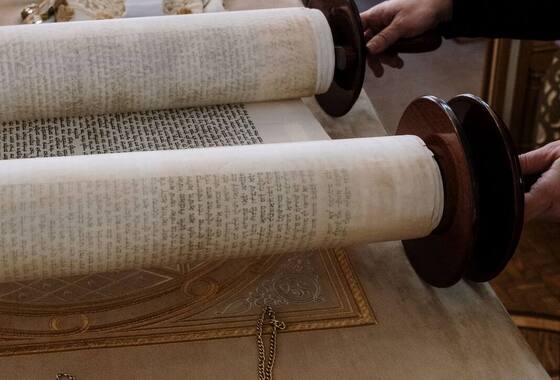 The Weekly Parsha: How the Torah Is Read Each WeekWhat the weekly Torah portion (parsha) is, how the 54 portions fit the Jewish year, and easy ways to study and discuss the parsha each week.
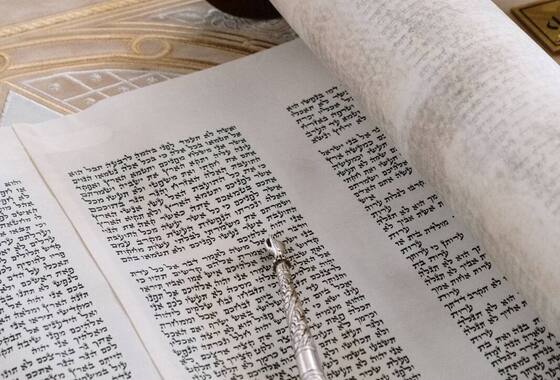 The Torah Reading in Synagogue: When, Why and HowWhen the Torah is read in synagogue, how the weekly cycle works, what happens during the reading, and what to do as it takes place.
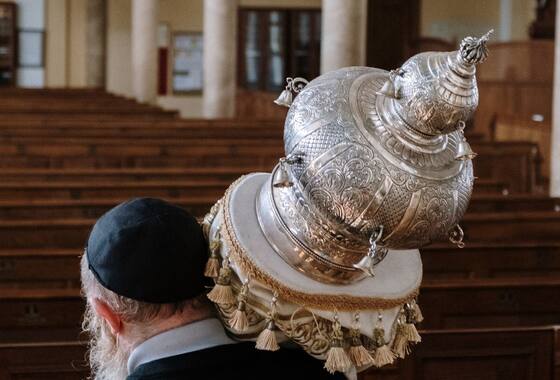 The Haftarah: What It Is and Why We Read ItWhat the Haftarah is, how it began, how it connects to the weekly Torah portion, who reads it, and what to know for a bar mitzvah.