

Parashat Devarim
Deuteronomy · Deuteronomy 1:1-3:22
Parashat Devarim דברים
The book of Deuteronomy contains Moses' words to the people of Israel in the last five weeks of his life, on the east bank of the Jordan, beginning on the first day of the eleventh month of the fortieth year. Moses reviews their journey. He recalls how he appointed judges to share the burden of leadership and charged them to judge fairly, without fear of any person. He retells the story of the spies, the people's refusal to enter the land, and G-d's decree that the generation would wander in the desert. He describes how Israel passed by Edom, Moab and Ammon without fighting them, as G-d commanded, and how they defeated Sihon and Og. The land east of the Jordan was given to the tribes of Reuben, Gad and half of Manasseh. Moses encourages Joshua not to fear, for G-d will fight for Israel. This portion is always read on the Shabbat before Tisha B'Av.
A lesson for today
Moses opens his words of rebuke by listing place names. Rashi explains that each name hints at a place where the people had sinned, and Moses mentioned them only by allusion, to protect their dignity. The Rebbe taught that when we must correct someone, it should be done with love and respect, never with humiliation. Gentle words are heard, while harsh ones push people away. As we approach the days of mourning for the Temple, destroyed because of baseless hatred, this sensitivity is part of the repair.
The Rebbe's teachingA storyIdeas for the Shabbat tableAn essay
The Rebbe's teaching
The Rebbe teaches that inspiration is not enough: a vision of the future Temple is shown to every Jew on the Shabbat before Tisha B'Av, and our task is to turn it into steady, everyday behavior.
The Shabbat on which Devarim is read is called Shabbat Chazon, "the Shabbat of vision," named after the opening of the haftarah. Rabbi Levi Yitzchak of Berditchev taught that on this day every Jew is shown, from afar, a vision of the future Beit HaMikdash. But most of us do not consciously see anything. The Rebbe asks: how can a vision we do not perceive change us?
The Rebbe answers with Rabbi Levi Yitzchak's own parable. A father has a precious garment made for his son, and the son tears it. He makes a second one, and it is also torn. He makes a third, and shows it to his son only from time to time, promising that he will give it once the son behaves properly. The vision is shown to everyone, but it is aimed above all at those who most need training and growth.
The Rebbe explains that a heavenly call to teshuvah stirs us, but the stirring fades unless we work to hold on to it. The vision of Shabbat Chazon is meant to last. It shapes a person, little by little, until good conduct comes naturally. This is also why Devarim, which begins with Moses' words of rebuke before his death, is connected to Shabbat Chazon: rebuke leads to teshuvah, a climb from below, and the vision is a gift from above. We need both.
Why will the Third Temple last, when the first two were destroyed? The Rebbe cites the Zohar, which says the first two were "mortal structures" while the third is the structure of the Holy One, blessed be He. The Third Temple joins the higher and lower worlds, so that the finite world is united with the infinite and becomes eternal.
For us the lesson is practical. A burst of inspiration is a beginning. What matters is what we do with it on an ordinary Tuesday. And those who feel farthest from the vision are exactly the ones for whom it was prepared. (Based on the Rebbe's talks on Parshat Devarim and Shabbat Chazon, printed in Likkutei Sichos.)
A story
Rabbi Levi Yitzchak of Berditchev (1740-1809), a student of the Maggid of Mezeritch, led the community of Berditchev for nearly twenty-five years. He is remembered above all as a defender of his people. Here are two short stories told about him. They are well-known stories; their details cannot be confirmed.
One Shabbat, Rabbi Levi Yitzchak saw a young Jewish man smoking in the street. He asked the young man whether he had forgotten that smoking is forbidden on Shabbat. The man said he had not forgotten. The rabbi asked whether something had pushed him to it. The man said no: he was doing it knowingly, by choice. Rabbi Levi Yitzchak looked up to Heaven and said, in effect: look how holy Your people are. They would rather call themselves sinners than tell a lie.
In the other story, he saw a Jew greasing the wheels of his wagon in the middle of prayer, while wearing tallit and tefillin. Rabbi Levi Yitzchak did not rebuke him. He turned to G-d and cried out: look how holy Your nation is, even when they grease their wagon wheels they are wearing tallit and tefillin.
Both stories are told as part of what Rabbi Levi Yitzchak is known for: finding the good in every Jew and presenting it to Heaven. He did not pretend that the Shabbat violation or the interrupted prayer was right. But he began by seeing the person.
Moses in our portion also has to speak words of rebuke. Rashi notes that he mentions the places of the people's sins only by allusion, to protect their dignity. A person who loves can say difficult things, and a person who has heard the good in us can hear them.
Ideas for the Shabbat table
- Ask the children: Moses did not list everything the people did wrong. He only hinted at it. Why do you think he did that?
- For everyone: think of a time someone told you something hard in a kind way. How did it feel? What made it kind?
- Ask: Rabbi Levi Yitzchak looked for the good in a person who was breaking a rule. Can you find one good thing in a person who irritates you?
- For the children: the father in the parable made a new garment each time the old one tore. When has someone given you another chance?
- Discuss: the Rebbe says inspiration must become a habit. What is one small habit that could keep this week's inspiration alive?
- Activity: each person says one good thing about someone at the table, before saying anything critical, as a "practice" of Rabbi Levi Yitzchak's way.
- Read together about giving criticism kindly and the Three Weeks.
An essay
Few of us enjoy giving criticism, and fewer enjoy hearing it. Yet most of us have been in a spot where something needed to be said: to a child, a spouse, a friend, a coworker. The book of Devarim is made almost entirely of that kind of speech. Moses, in his last weeks, tells the people hard truths.
The first lesson of Moses' speech is how he does it. He does not name every sin, only the places where they happened, and so he lets the people keep their dignity. Rabbi Levi Yitzchak's way is the same, from a different angle. Before he says one word to a person, he looks for the good, and sometimes he never says anything critical at all, he simply lifts the person up in the eyes of Heaven.
Both approaches grow out of one idea: you can only help a person grow if they feel that you are on their side. The Rebbe's teaching about the vision tells us the same, in the language of the Temple. The vision of what we can become is shown to all of us, especially those who are farthest from it. It is not a punishment for those who have fallen short, but an offering made with love, a new garment held out to a child who has torn the last one.
And the vision must be turned into habits. A single inspiring moment is not enough, and so the Rebbe says it must shape us until good conduct comes naturally. Perhaps this week, you might choose one small action, such as speaking more gently to someone at home, or remembering a good word before a critical one.
The days of mourning for the Temple remind us that its destruction came from baseless hatred, and that its rebuilding will come through love. If you would like to take one small step in that direction, you are warmly invited to a Shabbat at Chabad of Lamorinda in Lafayette (call 925-384-7242), or to the Wednesday 1:00 PM Tanya class at the Rabbi's home (call for the address).
Common questions
What is Parshat Devarim about?
Parshat Devarim (Deuteronomy 1:1-3:22) is the first portion of the book of Deuteronomy, in which Moses reviews the journey of the Israelites in the last five weeks of his life. He recalls appointing judges, the story of the spies, and the victories over Sichon and Og.
What does the Rebbe teach about Parshat Devarim?
The Rebbe teaches that on Shabbat Chazon every Jew is shown a vision of the future Temple, and that we must turn that vision into steady, everyday conduct. Devarim's words of rebuke lead to teshuvah, which prepares us for the vision.
What is the main lesson of Parshat Devarim?
The main lesson is that correction should be given with love and respect, and that inspiration should become lasting action. Rashi notes that Moses only hinted at the people's sins, to protect their dignity. Read about giving criticism kindly, and find this week's portion on the parsha page.
Learn more
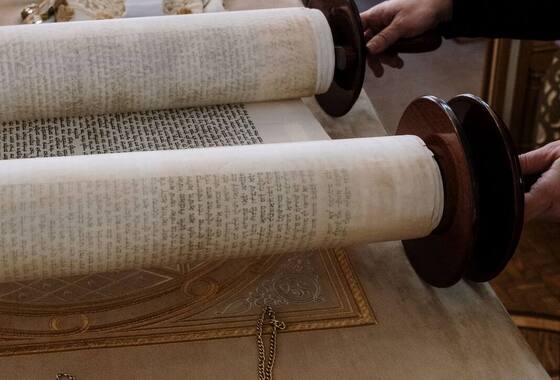 The Weekly Parsha: How the Torah Is Read Each WeekWhat the weekly Torah portion (parsha) is, how the 54 portions fit the Jewish year, and easy ways to study and discuss the parsha each week.
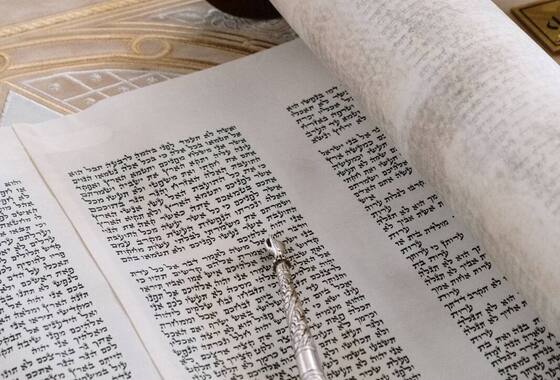 The Torah Reading in Synagogue: When, Why and HowWhen the Torah is read in synagogue, how the weekly cycle works, what happens during the reading, and what to do as it takes place.
 The Haftarah: What It Is and Why We Read ItWhat the Haftarah is, how it began, how it connects to the weekly Torah portion, who reads it, and what to know for a bar mitzvah.