

Parashat Bereshit
Genesis · Genesis 1:1-6:8
Parashat Bereshit בראשית
G-d creates heaven and earth in six days: light, the sky, dry land and plants, the sun, moon and stars, fish and birds, animals, and finally the human being, formed in the Divine image. On the seventh day G-d rests, and He blesses and sanctifies Shabbat. Adam is formed from the dust of the earth and given a living soul. He is placed in the Garden of Eden and commanded not to eat from the Tree of Knowledge of Good and Evil. Eve is formed from Adam's side. The serpent persuades Eve to eat the forbidden fruit, she gives it to Adam, and they are sent out of the Garden. Their sons Cain and Abel bring offerings to G-d, and Cain kills Abel out of jealousy. The Torah traces ten generations from Adam to Noah. As people grow corrupt, G-d regrets having made man, but Noah finds favor in His eyes.
A lesson for today
Chassidic teaching, beginning with the Baal Shem Tov, explains that creation did not happen only once. G-d's words, Let there be, continue to bring every detail of the world into being at every moment. This means that each day, and each moment, is truly new. Yesterday's mistakes do not have to define today. When we wake up and say Modeh Ani, we thank G-d for a fresh start, and we can use that new day to add goodness and light to a world that G-d is renewing just for that purpose.
The Rebbe's teachingA storyIdeas for the Shabbat tableAn essay
The Rebbe's teaching
The Rebbe teaches that light was the purpose of creation from the very first moment, and that each of us is asked to begin every day by choosing the purpose of bringing light into the world.
The Rebbe begins with a puzzle. Light was created on the first day, yet plants and other things that need light appeared only on the third day. Why create light before there was anything to use it? He answers with a builder: before a building goes up, the builder decides what it is for. In the same way, "Let there be light" set the goal of all creation, that the world be turned into light. Our Sages also say that the first light was hidden away, because a goal stays hidden inside the work until the work is finished. A ray of that light, however, is present in every created thing, helping it move toward its purpose. That is why the Torah says again and again, "G-d saw that it was good."
Even darkness has a purpose, the Rebbe explains: to be transformed into light.
Then comes the practical lesson. Just as G-d fixed the purpose first, we should begin each day, and even each moment, by deciding what the day is for. When we wake up we are like a new creation (see Modeh Ani). First settle the goal, that everything I do today should bring light. Then keep that goal in mind during ordinary tasks. The Rebbe adds that avoiding evil is not enough. We are asked to take our own corner of the world, our home, our desk, our family, and turn it into light through Torah and mitzvot. Even our own struggles can be turned into light.
A story
Diana Valencia lives in Elmont, New York, near the resting place of the Rebbe. She tells her story in a piece first published in A Chassidisher Derher and later on TheRebbe.org.
After a painful family ordeal in 2019, she wanted a fresh start for herself and her two daughters, and began looking for a new home. The search was very hard. At last she asked her rabbi, Rabbi Blachman of the Elmont Jewish Center, to pray for her. He told her to go to the Ohel and ask the Rebbe for a blessing. She had never been there before, so she read how to behave, and a young man at the welcome desk showed her which Psalms to say.
In her note to the Rebbe she described a house she loved, with many other buyers competing for it. That evening, tired, she lay down to rest. When she woke, her agent had texted that the owners were ready to sell and wanted a signed contract the following Tuesday. The bank then said approval of her loan could take several days, and she needed it by Tuesday. On Tuesday morning she prayed hard before work, and as she parked, the bank called to say the loan was approved.
She signed on Tuesday, August 20, and moved into her new home a week later. She says the experience strengthened her faith and her commitment to Torah observance.
Ideas for the Shabbat table
- Ask the children: what do you think is the very first thing you want to do when you wake up tomorrow? What could be your "light" for the day?
- Why do you think light came before the sun and the plants? Let everyone guess before sharing the Rebbe's idea of a builder who decides the purpose first.
- Take turns naming one corner of your world, such as a room at home, your classroom or your workplace, that could use a little more light this week.
- For adults: when you start your morning, do you begin with the purpose of the day or with your phone? What small change could you try?
- Is there an area of life where you would like a fresh start? What is one step you could take this week?
- Younger children can sing Modeh Ani together and talk about what "thank You for giving me my soul back" means.
An essay
There is a quiet courage in beginning again. Parshat Bereshit is the Torah's own new beginning: each year we return to the first verse, as if nothing had been read before. The Rebbe's teaching gives us a way to walk into that fresh start. Before we ask what we will do today, he suggests, we ask what the day is for.
Most of us live the other way around. We wake up and the tasks arrive: messages, schedules, the car pool, the long email. By evening we may have done a great deal and still feel we have not done anything that matters. The Rebbe's builder reminds us that the purpose is not found at the end of the work. It is the first decision, and it quietly shapes every step. A parent who starts the morning thinking "today I want my children to feel safe and loved" will answer the same spilled cereal differently.
The Rebbe also reminds us that not doing harm is not yet the goal. Many good people say, "I don't hurt anyone." The Torah's first message is bigger: the world was made to be filled with light, and each of us has a corner of it that only we can reach. It may be a kind word to a neighbor, a Shabbat candle lit in a dark week, a few minutes of Torah, or a phone call to someone who is lonely.
And the dark places in our own lives are not wasted. The Rebbe says darkness exists so that it can become light. A hard year, a mistake or a period of doubt does not have to define us. It can become the very material from which we build something warm.
If you would like to start your week with that light, come for Shabbat at Chabad of Lamorinda in Lafayette (call 925-384-7242), or join the Wednesday 1:00 PM Tanya class at the Rabbi's home (call for the address).
Common questions
What is Parshat Bereshit about?
Parshat Bereshit tells the creation of the world in six days, the first Shabbat, Adam and Eve in the Garden of Eden, and the story of Cain and Abel. It ends with ten generations from Adam to Noah. For an easy overview, see the Book of Genesis.
What does the Rebbe teach about Parshat Bereshit?
The Rebbe teaches that light was the purpose of creation, and that each person should begin every day by choosing to bring light into the world through Torah and mitzvot. He also teaches that even darkness is meant to be transformed into light.
What is the main lesson of Parshat Bereshit?
Every day is a new beginning with a purpose. Chassidic teaching explains that creation is renewed every moment, so we can start fresh each morning. Find the weekly portion on the parsha page.
Learn more
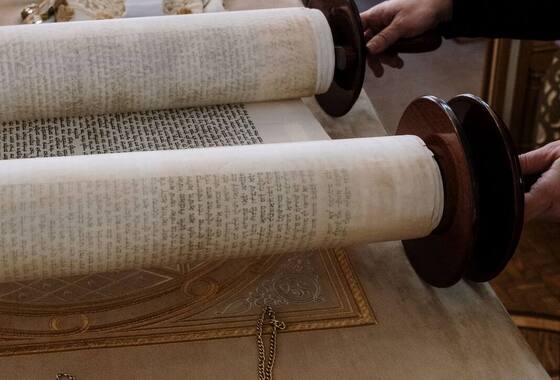 The Weekly Parsha: How the Torah Is Read Each WeekWhat the weekly Torah portion (parsha) is, how the 54 portions fit the Jewish year, and easy ways to study and discuss the parsha each week.
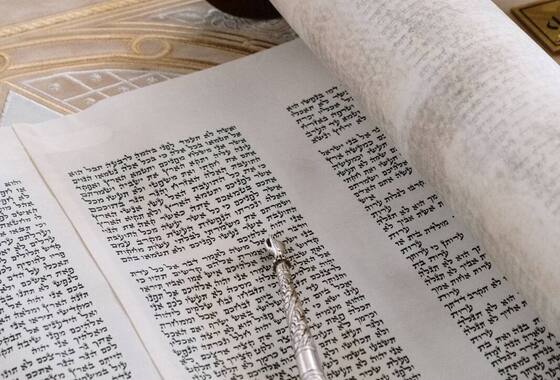 The Torah Reading in Synagogue: When, Why and HowWhen the Torah is read in synagogue, how the weekly cycle works, what happens during the reading, and what to do as it takes place.
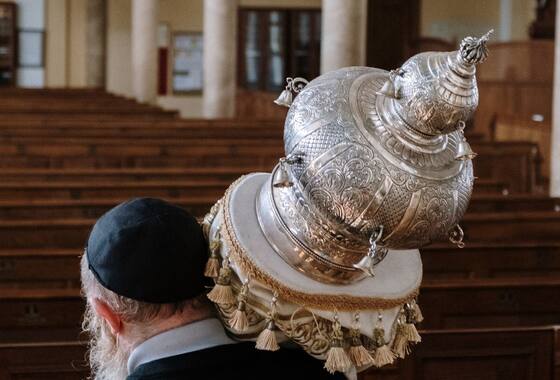 The Haftarah: What It Is and Why We Read ItWhat the Haftarah is, how it began, how it connects to the weekly Torah portion, who reads it, and what to know for a bar mitzvah.