
Learn › Jewish home › Mezuzah and setting up a home

Setting Up a Jewish Home: A Checklist for Newlyweds and New Movers
After a wedding or a move: mezuzahs, a kosher kitchen, tevilat kelim, Shabbat candlesticks, a pushka, Jewish books and a Shabbat table.
On this page · 2 min read
Mezuzahs on the doorsA kosher kitchenShabbat candlesticksA pushkaJewish booksA Shabbat tableHow the Rabbi can helpA new home is a new beginning. Whether you just got married or just moved, the first weeks are the easiest time to set things up the Jewish way. Jewish tradition calls the home a "small sanctuary," and a few simple steps make it one.
Mezuzahs on the doors
The first and most visible sign of a Jewish home is the mezuzah: a handwritten parchment with the Shema, placed on the right side of the doorway.
- Every doorway of rooms used for living needs one, not only the front door. Bathrooms do not get a mezuzah.
- Kosher scrolls are written by hand by a trained scribe. A printed scroll is not a mezuzah, no matter how nice the case.
- Check them twice in seven years, and whenever there is a reason to.
- Celebrate. Many people mark the occasion with a Chanukat Habayit, a housewarming with words of Torah.
A kosher kitchen
A kosher kitchen separates meat and dairy, with separate dishes, pots and utensils, and uses only kosher food. If you are starting fresh, it is much simpler to set it up from the beginning.
- Kashering. Some existing items, like many metal pots, ovens and sinks, can be made kosher; others cannot. The Rabbi can come and kasher what can be kashered.
- Tevilat kelim. New metal and glass dishes and utensils are immersed in a mikvah before first use. See Tevilat Kelim.
- Label and color-code meat and dairy so everyone in the house knows which is which.
Shabbat candlesticks
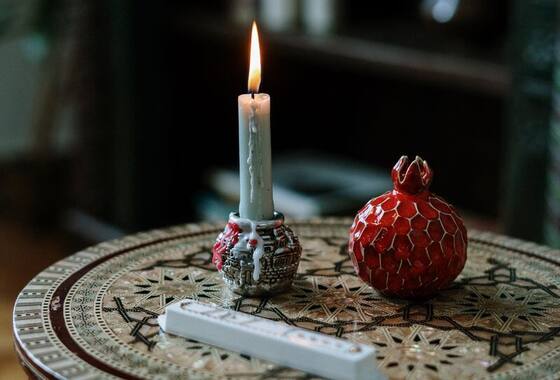
A Jewish woman lights Shabbat candles every Friday before sunset. Keep the candlesticks in a place of honor, ready for each week. Many grooms give their bride candlesticks as a wedding gift.
A pushka
A pushka, a tzedakah box, turns a house into a home of giving. The Rebbe encouraged keeping one in the kitchen, and in children's rooms too. Drop in a coin before lighting candles and on weekdays.
Jewish books
The Rebbe encouraged every family to make its home "a house full of books." Start with a siddur, a Chumash, a book of Tehillim and a Haggadah, and add over time. See The Jewish Home Library.
A Shabbat table
Set aside what you need for a beautiful Shabbat: a Kiddush cup, a challah board and cover, a nice tablecloth, and enough chairs to welcome guests. See Shabbat Meals and Hachnasat Orchim.
How the Rabbi can help
Rabbi Labkowski is glad to:
- Help you get kosher mezuzahs and put them up with the blessing.
- Kasher your kitchen and explain what can and cannot be kashered.
- Answer questions as you set up, one step at a time.
In Lamorinda: New home in Lafayette, Moraga, Orinda or the East Bay? Rabbi Yisroel Labkowski is glad to help put up mezuzahs and kasher your kitchen, 925-384-7242.
Common questions
Which doors need a mezuzah?
Most doorways of rooms used for living, including bedrooms and the kitchen. Bathrooms do not. Ask the Rabbi about garages, closets and unusual doors.
Do I need to do everything at once?
No. Start with mezuzahs and Shabbat candles, and add one step at a time.
We are renting. Do we still need mezuzahs?
Yes. Outside Israel, a renter puts up mezuzahs within thirty days of moving in. Ask the Rabbi about taking them down when you move out.
Can the Rabbi come to our home?
Yes. Call Rabbi Labkowski at 925-384-7242 to set a time to put up mezuzahs or kasher your kitchen.
Questions about this, or something on your mind? Message the Rabbi or the Rebbetzin privately, or call 925-384-7242. · Email
Read next
 Mezuzah: What It Is and How to Put One UpWhat a mezuzah is, where and how to hang it, the blessing in Hebrew and English, and how to make sure your mezuzah scroll is kosher.Read next →