

Parashat Tetzaveh
Exodus · Exodus 27:20-30:10
Parashat Tetzaveh תצוה
G-d tells Moses to command the children of Israel to bring pure olive oil, crushed for the light, to keep the lamp of the Menorah burning continually. Aaron and his sons are to serve as priests, and the Torah describes the special garments made for them, for glory and for splendor. The High Priest wears an ephod, and a breastplate set with twelve precious stones engraved with the names of the tribes, in which the Urim and Tumim are placed. He wears a blue robe with golden bells and pomegranates on its hem, and a golden plate on his forehead engraved with the words Holy to G-d. All the priests wear a linen tunic, a sash, a head covering and linen pants. The Torah then describes the seven day ceremony for installing Aaron and his sons as priests, the daily offering brought every morning and evening, and the golden altar on which incense is burned. Moses' name does not appear anywhere in this portion.
A lesson for today
This is the only portion from Moses' birth onward in which his name does not appear. A classic commentary connects this to Moses' plea after the Golden Calf, Erase me from Your book, when he was ready to give up everything for his people. The Rebbe taught that this absence reveals Moses' essence, a devotion to every Jew that goes beyond his own name and honor. We too can care for others so fully that our own recognition does not matter at all.
The Rebbe's teachingA storyIdeas for the Shabbat tableAn essay
The Rebbe's teaching
A person is more than a name, and Moses' missing name in Tetzaveh shows what is greater than a name: his very essence.
Tetzaveh is the only portion from Moses' birth until the book of Deuteronomy in which his name does not appear. The Rebbe asks two questions. How can this be a hint of Moses' passing, as some say, when a tzaddik's name and deeds live on? And why does the portion speak to him so directly, with the word "you" (v'atah, "And you shall command...")?
The Rebbe answers from a simple observation. A name is mainly a handle: it is how other people call us. It is not who we are. In fact, Moses' name was given to him not by his parents but by Pharaoh's daughter. The word "you," by contrast, addresses the whole person. In this portion Moses has risen to a level that a name cannot contain, and he is spoken to as his essence.
Classic commentators connect the missing name to the moment after the Golden Calf, when Moses told G-d that if the people were not forgiven, he should be erased from G-d's book. Rabbi Yossy Goldman of Johannesburg, building on this, explains that this was Moses' finest hour: not the Exodus or the splitting of the sea, but the moment he offered his own future for his people. The word "you" stands for that devotion.
What does this mean for us?
- A title or a reputation is not our true self; our essence is deeper.
- The best measure of leadership, in a family, a business or a community, is how much someone is willing to give up for others.
- We can care for others so fully that our own credit becomes beside the point.
A story
On one of those Sunday afternoons in the Rebbe's later years, an elderly Jewish woman waited in a long line of women and girls to receive a blessing from the Lubavitcher Rebbe and a dollar bill to give to tzedakah. This was the Sunday gathering at which thousands of people passed before the Rebbe, one after another.
When her turn came, she spoke to him in simple Yiddish. "Rebbe! I've been standing here for only an hour and I'm already exhausted." She meant it kindly. The Rebbe had been standing for hours and hours.
The Rebbe answered her: "When you are counting diamonds, you don't get tired."
That was all. But in one sentence he said what he saw in each person who came by: a diamond, a soul of great worth. His effort was not a burden, because the people were not a burden. They were what he lived for. A person who gives himself for others this fully does not look at the clock, or at himself.
Ideas for the Shabbat table
- Moses' name is missing from this portion. If someone could not use your name, how would they describe you?
- Children: who is someone who helps you without ever asking to be thanked?
- What is the difference between a name, a job title and who a person really is?
- The Rebbe called each person a diamond. Name one "diamond" you saw this week.
- Adults: when did you last do something for someone and ask for nothing back, not even a thank-you?
- What would it look like to care about a cause more than about who gets the credit?
An essay
Most of us carry a short list of labels: our name, our work, our role in the family. We spend a lot of energy protecting them. Tetzaveh quietly asks what is left when the labels are taken away.
The Rebbe's answer is that what remains is the most important thing. When the Torah speaks to Moses as "you," it speaks to the whole person, with nothing between. And that "you" is defined by what he gave: he was ready to lose his own name so that his people would not lose theirs.
This is not only a lesson about a great leader. Think of the quiet people you know who hold a community together: the one who sets up chairs, the one who brings a meal when someone is ill, the one who always remembers to call. Often their names are not on any plaque. They have taught themselves to count diamonds.
The story of the woman in the line shows how far that attitude can go. A person who sees every other human being as a diamond does not tire of them. Devotion becomes energy rather than weight. Perhaps that is the secret: we get tired of tasks, but not of treasure.
The practical step is small. This week, do one kind thing without your name on it. Do not post it, do not mention it, and let it be known only to the person who needed it. Notice how it feels to be, for a moment, just "you."
We would love you to join a Shabbat at Chabad of Lamorinda in Lafayette (call 925-384-7242), or the Wednesday 1:00 PM Tanya class at the Rabbi's home (call for the address).
Common questions
What is Parshat Tetzaveh about?
Parshat Tetzaveh is about the clothing of the priests, led by Aaron, and the oil for the Menorah, and the service that consecrates them. You can read about the garments in The Priestly Garments and about Aaron in Aaron the High Priest.
Why is Moses' name missing from Parshat Tetzaveh?
The Rebbe explains that a name is only how others call us, while the word "you" addresses a person's essence, and Moses had risen beyond what a name can hold. Commentators also link it to his plea after the Golden Calf, when he asked to be erased if the people were not forgiven.
What is the main lesson of Parshat Tetzaveh?
The main lesson is that our true self is deeper than our name and our credit. Real devotion to others, as in the story of Moses, is what lasts.
Learn more
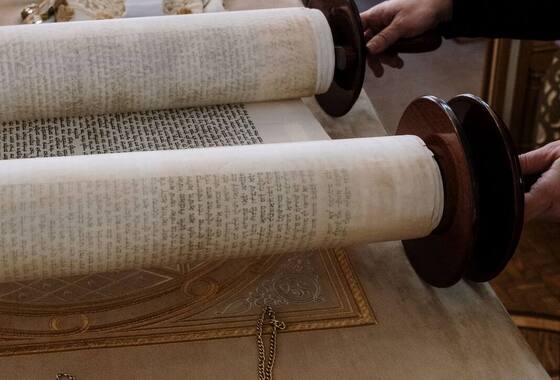 The Weekly Parsha: How the Torah Is Read Each WeekWhat the weekly Torah portion (parsha) is, how the 54 portions fit the Jewish year, and easy ways to study and discuss the parsha each week.
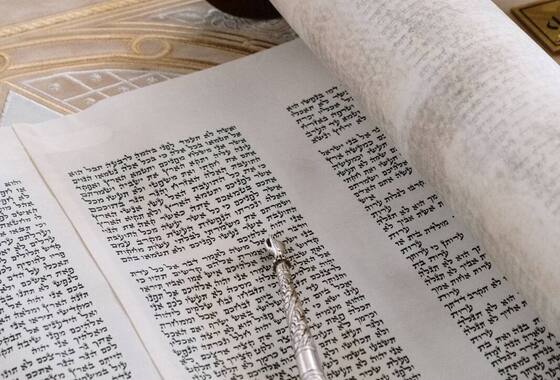 The Torah Reading in Synagogue: When, Why and HowWhen the Torah is read in synagogue, how the weekly cycle works, what happens during the reading, and what to do as it takes place.
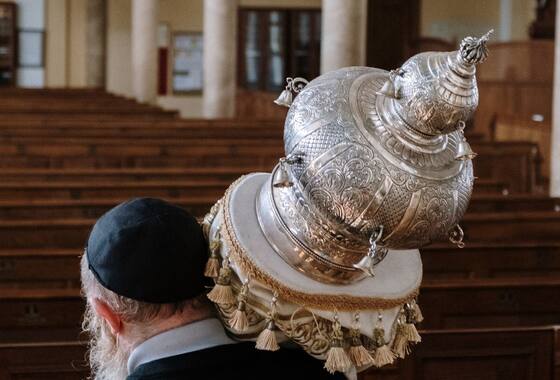 The Haftarah: What It Is and Why We Read ItWhat the Haftarah is, how it began, how it connects to the weekly Torah portion, who reads it, and what to know for a bar mitzvah.