

Parashat Terumah
Exodus · Exodus 25:1-27:19
Parashat Terumah תרומה
G-d asks Moses to collect gifts from every person whose heart moves them to give: gold, silver and copper, blue, purple and scarlet wool, fine linen, goat hair, animal skins, acacia wood, oil, spices and precious stones. With these the people are to build a Sanctuary, as G-d says: Make Me a Sanctuary, and I will dwell among them. The Torah then describes the Tabernacle and its furnishings in detail. The Ark is made of acacia wood covered with gold inside and out, with a cover of pure gold and two golden cherubim facing each other; it will hold the Tablets of the Covenant. There is a gold covered table for the showbread, and a seven branched Menorah hammered from a single piece of pure gold. The Torah describes the tapestries and coverings of the Tabernacle, its gold covered wall panels standing in silver sockets, the curtain that separates the Holy of Holies, the copper altar, and the hangings of the courtyard.
A lesson for today
G-d did not say I will dwell in it, but I will dwell among them, literally within them. The Rebbe, following the teachings of Chassidus, explained that G-d's deepest desire is to have a dwelling place in this lower, physical world. Every Jewish home, and every Jewish heart, can be a small Sanctuary. A home with Shabbat candles, a mezuzah, a charity box and words of Torah becomes a place where G-d feels at home, and our acts of goodness are the gold and silver from which it is built.
The Rebbe's teachingA storyIdeas for the Shabbat tableAn essay
The Rebbe's teaching
The Sanctuary was not only a building in the desert: the Lubavitcher Rebbe taught that every Jewish home and every Jewish heart can be a place where G-d dwells.
The Rebbe asks a simple question. The Torah reading opens with the command, "Make Me a Sanctuary, and I will dwell within them." The Holy Temple is gone, so how can we still keep this commandment? He gives several answers. The Temple Mount keeps its holiness even in ruins. In exile, synagogues became "small sanctuaries" where the Divine Presence rests. And the Torah says G-d will dwell "within them," not "within it," which hints that G-d dwells within every individual, in the spark of G-dliness each Jew carries in the heart.
Then the Rebbe turns to the home. The windows of the Temple were built to send light outward, not only to let light in. A Jewish home should be the same: not just a shelter from the world, but a lighthouse that sends its warmth and awareness of G-d into the street and the neighborhood around it.
What does this mean in practice?
- See your home as a lighthouse, not only a shelter.
- Know your own G-dly potential and let it show, because it changes the atmosphere of a home and spreads outward.
- Learn about the Temple and its service. The Rebbe explains, from the prophet Ezekiel, that studying the Temple is counted as if we were building it.
Rabbi J. Immanuel Schochet, writing from the Rebbe's talks, adds three simple things to keep at home that echo the Temple: a Chumash, a siddur (prayer book) and a charity box, for Torah, prayer and kindness.
A story
This Chassidic account comes from the family of the Chabad Rebbes, as the Sixth Rebbe told it. Rabbi Menachem Mendel of Lubavitch, later known as the Tzemach Tzedek, lost his mother as a small child and was raised by his grandfather, the Alter Rebbe. In his youth, his grandfather would appear to him in dreams and visions and answer his Torah questions. Later the visits stopped, and he grieved.
One morning, on his way to the synagogue through the Lubavitch marketplace, a poor but devout trader, Reb Mordechai Eliyahu, asked him for a five-ruble loan so he could trade that day. He agreed to give it after prayers.
In the synagogue, as he began to put on his tallit, he realized that the trader's time was precious, and he should have paid at once. He took off the tallit, hurried home for the money and searched the crowded market until he found the man.
Back in the synagogue, as he put on his tallit and tefillin, he saw his grandfather standing before him, glowing with joy.
He later told his youngest son, Rabbi Shmuel: "When one helps a fellow earn seventy kopeks on the sale of a calf, the gates of the heavenly chambers are opened before him." A marketplace had become a Sanctuary, because one person put another first.
Ideas for the Shabbat table
- G-d asks us to build a place for Him "within them." Where in our home does it feel most like a Sanctuary? Where could it feel more so?
- Children: if our house had windows that send light out, what kind of "light" would neighbors see from ours?
- Look at the mezuzah, the candlesticks, the books and the charity box in the house. What is each one for?
- Adults: Rabbi Schochet suggests a Chumash, a siddur and a charity box. Which of the three would be easiest to add this week?
- The trader needed his money at once. Who needs something from us today, not tomorrow?
- Each person says one talent they have and how it could be given as a "gift" to others.
An essay
We often think holiness lives somewhere else: in Jerusalem, in the synagogue, in a rabbi's study. Parshat Terumah gently refuses that idea. The Torah does not say, "I will dwell in it," but "within them." The Rebbe reads the plural as a promise to every one of us.
That is a demanding promise and a comforting one. Demanding, because a Sanctuary is not built by accident; the Torah spends chapters on the care required, from the gold to the lamp. Comforting, because the materials are ordinary. The people simply brought what was in their hands and what their hearts moved them to give.
A home is built the same way. A candlestick on the Friday table, a mezuzah on the doorpost, a book of Torah on the shelf, a few coins in the charity box: none of it is large. But the Rebbe's image of the Temple's windows says something more. A Sanctuary does not hoard its light. A family in Lafayette, Moraga or Orinda that welcomes a neighbor to the table, or helps a friend quietly, sends the light out of the windows.
And the story of the marketplace shows the same lesson in miniature. Nothing in it looks holy: a loan of five rubles, a crowded market, a delayed prayer. Yet the moment a person puts another's need first, heaven opens. Perhaps that is what "within them" means: the Sanctuary is wherever we turn a plain moment into a gift.
This Shabbat, ask yourself where in your home you can add a little more light, and whom you can send it to. We would love to welcome you for Shabbat at Chabad of Lamorinda in Lafayette (call 925-384-7242), or to the Wednesday 1:00 PM Tanya class at the Rabbi's home (call for the address).
Common questions
What is Parshat Terumah about?
Parshat Terumah is about G-d's request that the Jewish people bring gifts from the heart and build a Sanctuary in the desert. The reading describes the Ark, the Table, the Menorah, the curtains and the altar. You can learn more in The Mishkan.
What does the Rebbe teach about Parshat Terumah?
The Rebbe teaches that the commandment to build a Sanctuary still applies, because every Jewish home and every Jewish heart can be a place where G-d dwells. A home should also send its light outward, like the windows of the Temple.
What is the main lesson of Parshat Terumah?
The main lesson is that holiness is built from ordinary things given with a willing heart. A mezuzah, Shabbat candles and tzedakah turn a house into a small Sanctuary.
Learn more
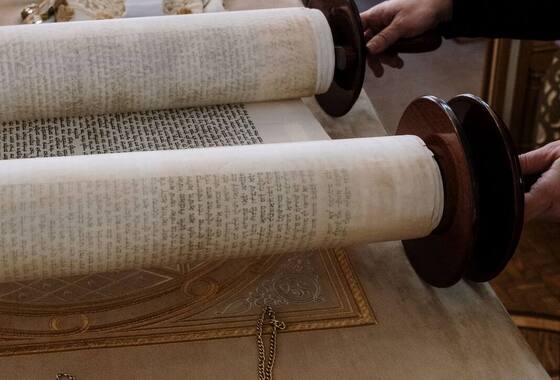 The Weekly Parsha: How the Torah Is Read Each WeekWhat the weekly Torah portion (parsha) is, how the 54 portions fit the Jewish year, and easy ways to study and discuss the parsha each week.
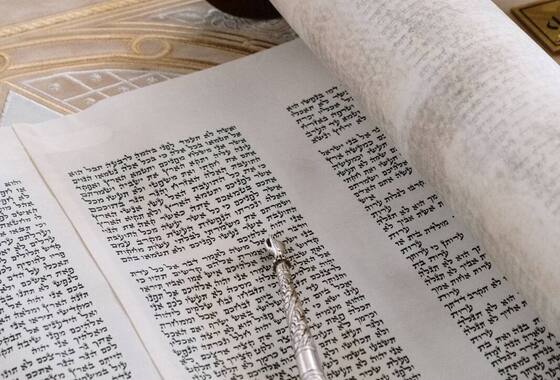 The Torah Reading in Synagogue: When, Why and HowWhen the Torah is read in synagogue, how the weekly cycle works, what happens during the reading, and what to do as it takes place.
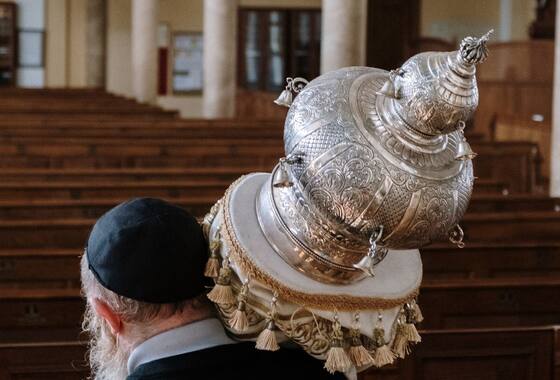 The Haftarah: What It Is and Why We Read ItWhat the Haftarah is, how it began, how it connects to the weekly Torah portion, who reads it, and what to know for a bar mitzvah.