

Parashat Sh'lach
Numbers · Numbers 13:1-15:41
Parashat Sh'lach שלח
Moses sends twelve men, a leader from each tribe, to scout the land of Canaan, among them Caleb son of Yefuneh and Hoshea son of Nun, whom Moses renames Joshua. After forty days they return carrying a huge cluster of grapes, pomegranates and figs. They report that the land flows with milk and honey, but ten of the spies say its people are powerful and its cities fortified, and that Israel cannot conquer it. The people weep through the night and speak of returning to Egypt. Joshua and Caleb insist that the land is very, very good and that with G-d's help they will succeed. G-d decrees that the generation will wander in the desert for forty years, one year for each day of the scouting, and only their children, with Joshua and Caleb, will enter the land. The portion continues with laws of offerings, separating challah, a man who gathered wood on Shabbat, and the mitzvah of tzitzit.
A lesson for today
The Rebbe explained that the spies were not simply afraid. In the desert, life was spiritual and protected, with manna from heaven and Torah from Moses. They did not want to enter the land and deal with plowing, planting and building. But G-d's plan was for Israel to bring holiness into the physical world, not to escape it. Our mission too is not only in the synagogue or study hall. It is in the office, the kitchen and the marketplace, where we make the world a dwelling for G-d.
The Rebbe's teachingA storyIdeas for the Shabbat tableAn essay
The Rebbe's teaching
The Rebbe teaches that holiness is not meant to be kept away from daily life, but to be brought into it. The spies feared the Land of Israel because they thought spiritual life and ordinary life could not live together.
The Rebbe asks a simple question. The spies had just seen the Exodus, the splitting of the sea and years of miracles. Why were they afraid? Even Caleb, in his answer, did not point to those miracles.
The Rebbe explains that in the desert the people lived on manna, drank from Miriam's well and were sheltered by the Clouds of Glory. Their days were governed by miracles and their minds were free for Torah. In the Land they would have to plow, plant and earn a living. The spies feared that "the land devours its inhabitants" (Numbers 13:32): that the natural world would swallow up their spiritual life.
Joshua and Caleb answered that G-d is with His people, so the Canaanites "are our bread" (14:9). What looks like a threat can become nourishment. The Rebbe adds a deep point: a miracle that is hidden inside nature is higher than a miracle that breaks nature, because it shows that G-d is not limited by either one. He points to the Holy of Holies, where the Ark took up no space at all, though the room had measurements.
What does this mean for us? Each day has a "desert," our prayer and study, and a "land," our work, home and family. The mistake is to believe that work drains the soul and that real spirituality exists only apart from it. The Rebbe teaches that we should live by the verse "Know Him in all your ways." He also reminds us that thought stays inside us, while speech and deed reach outward. Entering the Land means caring for other people and drawing them closer to Torah. (Likkutei Sichos, vol. 4, adapted from a talk on Shabbat Parshat Sh'lach, 5722.)
A story
Rabbi Yehoshua B. Gordon tells a story from his own life that he connects to this portion.
In 1973 he and his wife moved to Encino, California, to lead Chabad activity in the San Fernando Valley. He did what any sensible person would do and asked local supporters for advice. They told him to go home. It could not be done.
Rabbi Gordon says that this is exactly what the spies sounded like: a sensible report, full of reasons. He points out two things in the portion. First, before the spies reported, Caleb took a detour to Hebron to pray at the Cave of Machpelah, asking the patriarchs and matriarchs to help him not be swayed by the others. Second, when the people despaired, Caleb stood and said, "We shall surely ascend and take possession of it."
The Rebbe, Rabbi Gordon writes, taught that this kind of resolve must overcome the inner voice of panic, and often sent his emissaries off with a short instruction: "Go make it happen." Rabbi Gordon also notes the spies' own words, "we were like grasshoppers in our eyes." How we see ourselves, he says, shapes how others see us, and a healthy self-image rooted in our connection to G-d makes much more possible.
It is a modern story from a real person, and it asks us a simple question: when the sensible voices say "impossible," whose voice are we listening to?
Ideas for the Shabbat table
- Ask the children: the spies saw giant grapes. Why do you think they still said "we can't"?
- For everyone: where do you feel that your daily work and your Jewish life pull in different directions? What would it mean to bring them together?
- Ask: what is one "impossible" thing in your life that Caleb would say, "We can surely do it"?
- For children: what do you think Caleb was thinking when he prayed in Hebron before the report?
- Discuss: the Rebbe said thought stays inside, but speech and action reach other people. Who could you reach this week with one kind word or one invitation?
- Try this at the table: each person finishes the sentence "A small step I can take this week is..."
- See the weekly Torah portion and Parsha for Kids for more ways to talk about the parsha.
An essay
Most of us have a "desert" and a "land." The desert is the quiet hour: a prayer, a page of Torah, a peaceful Shabbat. The land is Monday morning: the inbox, the carpool, the grocery bill, the difficult colleague.
The spies' mistake was an attractive one. It sounds humble to say, "I am not ready for the real world, let me stay where it is holy." Many of us say a version of it: "I'll be more Jewish when the kids are older," or "when work calms down." The Rebbe's teaching gently refuses this. The Torah was not given to angels. It was given to people who plant, cook, argue with their teenagers and pay rent. The goal of creation, Chassidic teaching says, is to make a home for G-d right here, in the lower world.
There is also encouragement here. The Rebbe says miracles hidden in nature are higher than miracles that break nature. That means your ordinary Tuesday, with a Torah-minded choice in it, may be holier than a dramatic miracle. Kindness in an office, honesty in a bill, a Shabbat candle lit in a busy house: these are the "land."
And notice the last part of the Rebbe's teaching. It is not enough to hold on to our own holiness. Thought stays inside; speech and action travel. Entering the Land means reaching out to a neighbor, a coworker, someone who feels far away. When we do, the fear that this will pull us down turns out to be mistaken. Giving lifts us up.
Whatever your "land" looks like this week, you do not have to cross it alone. You are welcome at Shabbat at Chabad of Lamorinda in Lafayette (call 925-384-7242), or at the Wednesday 1:00 PM Tanya class at the Rabbi's home (call for the address), where we study how to bring G-d into the middle of everyday life.
Common questions
What is Parshat Sh'lach about?
Parshat Sh'lach (Numbers 13:1-15:41) tells how Moses sent twelve spies to scout the Land of Israel, how ten of them gave a frightening report, and how Joshua and Caleb urged the people to trust G-d. The portion also teaches the laws of challah offerings, the sin of a person who desecrates Shabbat, and the mitzvah of tzitzit.
What does the Rebbe teach about Parshat Sh'lach?
The Rebbe teaches that the spies feared that daily life in the Land would pull them away from holiness, but G-d wants us to bring holiness into the physical world. Our work, home and marketplace are where the dwelling for G-d is built.
What is the main lesson of Parshat Sh'lach?
The main lesson is that we should not run away from the ordinary world, but transform it with faith and confidence. Caleb's words, "We shall surely ascend," remind us to answer fear with trust. To learn about tzitzit, see the guide to tzitzit, and find this week's portion on the parsha page.
Learn more
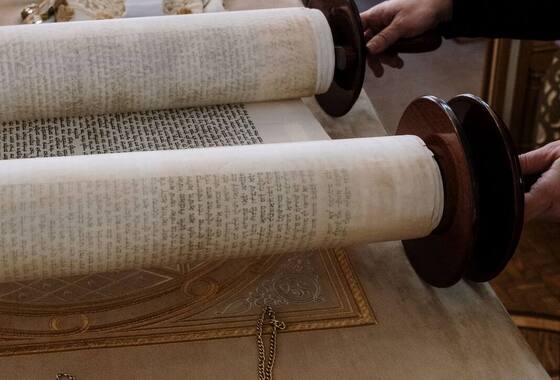 The Weekly Parsha: How the Torah Is Read Each WeekWhat the weekly Torah portion (parsha) is, how the 54 portions fit the Jewish year, and easy ways to study and discuss the parsha each week.
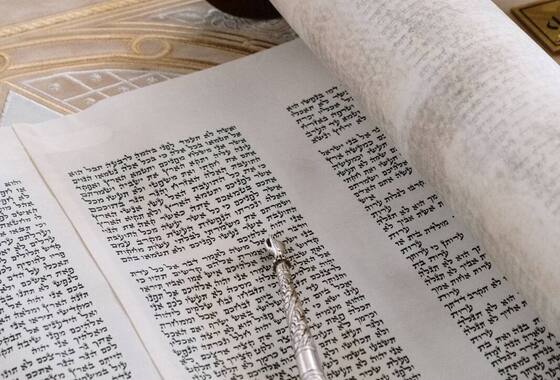 The Torah Reading in Synagogue: When, Why and HowWhen the Torah is read in synagogue, how the weekly cycle works, what happens during the reading, and what to do as it takes place.
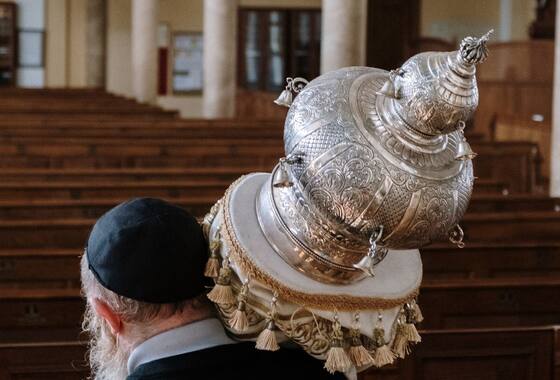 The Haftarah: What It Is and Why We Read ItWhat the Haftarah is, how it began, how it connects to the weekly Torah portion, who reads it, and what to know for a bar mitzvah.