

Parashat Korach
Numbers · Numbers 16:1-18:32
Parashat Korach קרח
Korach, a Levite, joined by Dathan, Abiram and two hundred and fifty leaders of the community, challenges Moses and Aaron: The whole community is holy, so why do you raise yourselves above G-d's congregation? Moses proposes a test: the next day all of them will bring incense before G-d, and G-d will show whom He has chosen. Dathan and Abiram refuse even to come to Moses. The earth opens and swallows Korach's followers and their households, and a fire consumes the two hundred and fifty men offering incense. When the people then complain against Moses and Aaron, a plague breaks out, and Aaron stops it by standing with incense between the dead and the living. To settle the matter, each tribe's leader places a staff in the Tabernacle, and the next morning Aaron's staff has sprouted, blossomed and produced almonds. The portion ends with the duties of the priests and Levites and the gifts given to them, including the tithe.
A lesson for today
Korach's words sounded noble: everyone is holy. But he used them to divide the people and to seek honor for himself. Our Sages call this a dispute that is not for the sake of Heaven. In contrast, Aaron, whose staff blossomed, is remembered in Pirkei Avot as one who loved peace and pursued peace. The Rebbe urged us to follow Aaron's way, bringing people together rather than pulling them apart. Where there is disagreement, we can choose to be the one who builds bridges.
The Rebbe's teachingA storyIdeas for the Shabbat tableAn essay
The Rebbe's teaching
The Rebbe teaches that real peace does not come from erasing our differences, but from letting each person fulfill his or her own role while we work together.
The Rebbe begins with a puzzle. Korach was punished in two ways: the earth swallowed his household and his allies Dathan and Abiram, while fire consumed the two hundred and fifty men who offered incense. What do these punishments have to do with rebellion? And why was Korach himself punished in both ways? Another puzzle is that Korach's words sounded like a call for unity: "The entire community is holy, so why do you raise yourselves above the congregation?" Yet his words created division.
The Rebbe answers that creation is built on distinctions. In his reply, Moses reminded Korach that G-d separated day from night, Israel from the nations, and Aaron from the rest of Israel. True peace, the Rebbe explains, is not the absence of conflict. It exists when each part fulfills its own mission and also influences the others, like the limbs of one body, an image the Alter Rebbe uses. A total, undivided oneness belongs to G-d's essence and will be revealed in the future. For now, unity has to be built through diversity. Korach grasped the ideal at its source, but he misjudged the time. Moses led by giving each person a role that fit his gifts.
The Rebbe also explains the punishments as measure for measure. Fire consumes the refined, rising part of a thing, and earth swallows the lowest part. The two hundred and fifty were elite leaders, so fire took their lofty souls. Dathan, Abiram and their households were more coarse and materialistic, so the earth swallowed them. Korach, the root of the rebellion, was punished in both ways.
For us the lesson is practical. In a family, a community or an office, we do not make peace by pretending everyone is the same. We make peace by respecting the roles and differences G-d gave each person, and building cooperation between them. (Likkutei Sichos, vol. 18, Korach, third talk.)
A story
A story that Rabbi Aryeh Citron tells, which he heard directly, shows how the Rebbe lived this teaching.
A groom asked the Rebbe how to resolve a disagreement about who walks whom to the chuppah, the wedding canopy. His family followed the Chabad custom, in which the fathers escort the groom and the mothers escort the bride. His future in-laws preferred the custom followed in most other Orthodox circles, where each set of parents escorts its own child.
The Rebbe's answer had several parts. A Jewish custom carries the weight of Torah, so a couple should normally keep their own. But that holds only if it can be kept peacefully. If it would cause discord in the family, they should give it up. The Rebbe explained that the entire Torah was given to bring peace to the world, as Proverbs says that its paths are paths of peace, so it makes no sense for a custom to cause a dispute.
Our Sages tell of Aaron, Moses' brother, a very different person from Korach. The Midrash (Avot D'Rabbi Natan 12) says that when Aaron heard that two people were quarreling, he visited each one separately and said that the other wanted to make peace and had sent him to ask for reconciliation. He did this with both sides. When the two met, each believed the other wanted peace, and the quarrel ended. Hillel taught in Pirkei Avot: "Be a disciple of Aaron: a lover of peace, a pursuer of peace."
Ideas for the Shabbat table
- Ask the children: Korach said, "Everyone is holy, so why does Moses lead?" What was right in that sentence, and what was missing?
- For everyone: think of a time a family disagreement ended well. What made peace possible?
- Ask: in a family, why does it help that each person has a different job and a different talent?
- Discuss the Rebbe's wedding answer: when is it right to keep a custom, and when is it right to let go of it for the sake of peace?
- A game for all ages: each person says something good about the person on their right, the way Aaron would carry a kind message between people.
- Challenge: is there someone you could make peace with this week? What would be a first kind sentence?
- More on this theme: Aaron the High Priest and forgiveness and making peace.
An essay
Korach's slogan was beautiful: everyone is holy. Who could disagree? And yet our Sages remember his dispute as the very model of an argument that is not for the sake of Heaven. The difference is not in what was said, but in what was wanted. Korach wanted honor and power. Moses and Aaron wanted to serve.
Most of us meet a small Korach in our lives. It may be the voice that says, "Why should she decide? I'm as good as she is," at a committee meeting, or in the family kitchen on a holiday. The Rebbe's teaching gives us a more hopeful way to look at disagreement. Differences are not a problem to be erased. A body has hands and feet, a heart and a mind, and it is healthy exactly because each does a different thing and they serve each other.
That is the peace of Aaron. Notice what Aaron does. He does not lecture the two quarreling neighbors, and he does not decide who is right. He carries a kind message from one to the other until each person remembers that the other wants peace. This is hard, humble work, and it is the opposite of Korach's grabbing for the front of the line.
There is one more thing in the story of the wedding. The Rebbe was asked about a custom that mattered to a family, and he did not say "never give up a custom." He said that peace is the purpose of the whole Torah. Sometimes the highest way to honor a tradition is to keep the family together.
This week, you might try Aaron's way: find one person whom you have been distant from, and send one warm message. And you are welcome to a Shabbat at Chabad of Lamorinda in Lafayette (call 925-384-7242) or to the Wednesday 1:00 PM Tanya class at the Rabbi's home (call for the address), where we study how to live in peace with everyone.
Common questions
What is Parshat Korach about?
Parshat Korach (Numbers 16:1-18:32) tells how Korach and his followers challenged Moses and Aaron, how the earth swallowed the rebels and fire consumed the men offering incense, and how Aaron's staff blossomed to show that G-d chose him. The portion also describes the gifts given to the Kohanim and the Levites.
What does the Rebbe teach about Parshat Korach?
The Rebbe teaches that true peace is built on distinctions: each person fulfills his or her own role and also helps others, like the limbs of one body. Korach's call for sameness led to strife, not unity.
What is the main lesson of Parshat Korach?
The main lesson is to seek peace as Aaron did, and not to seek honor for ourselves as Korach did. A dispute for the sake of Heaven can last, while a dispute for the sake of ego destroys everyone involved. See forgiveness and making peace, and find this week's portion on the parsha page.
Learn more
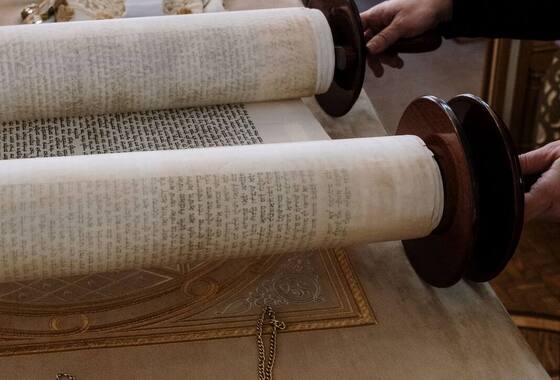 The Weekly Parsha: How the Torah Is Read Each WeekWhat the weekly Torah portion (parsha) is, how the 54 portions fit the Jewish year, and easy ways to study and discuss the parsha each week.
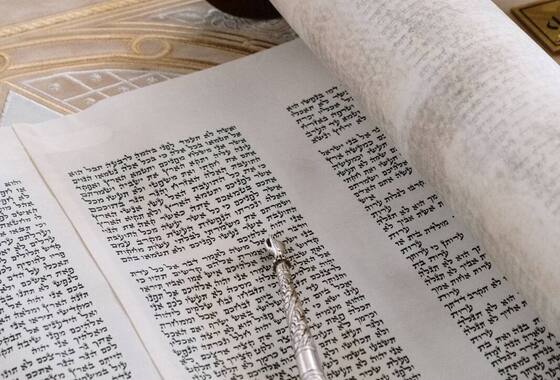 The Torah Reading in Synagogue: When, Why and HowWhen the Torah is read in synagogue, how the weekly cycle works, what happens during the reading, and what to do as it takes place.
 The Haftarah: What It Is and Why We Read ItWhat the Haftarah is, how it began, how it connects to the weekly Torah portion, who reads it, and what to know for a bar mitzvah.