

Parashat Masei
Numbers · Numbers 33:1-36:13
Parashat Masei מסעי
The Torah lists the forty two journeys of the children of Israel, from the day they left Egypt until they camped on the plains of Moab by the Jordan. Along the way it notes that Aaron passed away on Mount Hor on the first day of the fifth month, in the fortieth year. G-d commands Israel, when they enter the land, to drive out its inhabitants and destroy their idols, and He defines the borders of the Land of Israel. Leaders from each tribe are appointed to divide the land. The Levites are to receive forty eight cities with surrounding fields, and six of these are to be cities of refuge, where a person who killed someone unintentionally may flee and live until the death of the High Priest. The Torah distinguishes between murder and accidental killing and requires witnesses. The book of Numbers ends with the daughters of Tzelofchad marrying within their tribe, so that the tribal inheritance remains whole.
A lesson for today
The Baal Shem Tov taught that the forty two journeys of Israel in the desert correspond to the stages of every person's life, from birth until we reach our own Promised Land. Some stops feel like oases and some like dry desert, but each one has a purpose. The Rebbe explained that the journeys are named for the goal, the going out of Egypt, because every stage is part of our personal liberation. Wherever we find ourselves right now, we are moving forward on a path that G-d has planned.
The Rebbe's teachingA storyIdeas for the Shabbat tableAn essay
The Rebbe's teaching
The Rebbe teaches that every stage of our lives is a journey, not a place to settle, and that each stop is holy and part of our personal journey out of Egypt, out of our limits.
The portion lists the forty-two stops of the Israelites in the desert. The Rebbe asks two things. Why is the portion called Masei, "journeys," a word of movement, when the Torah is listing places where they camped? And why name each stop, as if it were important in itself, when each was only temporary?
His answer begins with a thought: movement is a sign of life. A stone stays where it is. A living soul grows and moves forward. Chassidic thought reads a verse in Zechariah, "I will grant you the ability to walk among those who stand," as a contrast with the angels, who remain on one spiritual level, while a person in this world can grow without limit. The word Masei also points to leaving: true progress is not only coming close to a set destination, but setting out toward unknown horizons, as the people followed the pillar of cloud. And each stop still has lasting value, because each was made "according to the word of G-d," and each carries a lesson from what happened there.
The Alter Rebbe asks why the Torah says "journeys" in the plural, when the Exodus was one trip. His answer is that every journey of the Jewish people, in every age, leads from the limitation of Egypt toward the ultimate freedom of redemption. The Baal Shem Tov taught that the forty-two journeys also correspond to the forty-two stages of each person's life.
The Rebbe draws three lessons for us:
- Do not treat any stage as final. Each achievement is a step toward the goal, not the goal itself.
- Honor the present stage. Each phase has its own holiness and importance.
- A fall is not the end. A setback can lead to a higher climb, through teshuvah.
And moving forward takes trust in G-d, being willing to set out without knowing the destination. (Likkutei Sichos, vol. 2, p. 348, and other talks.)
A story
This is the true story of one very long journey. In the summer of 1927 (5687) the sixth Lubavitcher Rebbe, Rabbi Yosef Yitzchak Schneersohn, was arrested in the Soviet Union and held in solitary confinement in the Spalerno prison in Leningrad. He was sentenced to death. The timely intervention of leading foreign statesmen saved his life, and the sentence was changed to banishment to Kostroma for three years.
After further pressure, the authorities decided to release him. He learned of the decision on his birthday, the twelfth of Tammuz. The next day he was allowed to leave and settled in Malachovka, near Moscow. After more intervention, he received permission to leave Russia for Riga, Latvia. On the day after Sukkot, he left for Riga with his family and most of his library.
There he did not stop to rest. He went on working for the Jews he had left behind, and in the following years he arranged matzot for Jews in Russia.
It is a journey with unusual stops: a prison cell, an exile, a train station, a new city. Yet the account shows that at every stop, even the hardest, the Rebbe's work for Jewish life went on, and at the end of the journey it began again in a new place.
It is a story that helps us look at our own difficult stops. We do not have to be in a prison to feel stuck. The Torah's lesson is that there is a purpose to each stop, and a place beyond it.
Ideas for the Shabbat table
- Ask the children: the Torah lists all forty-two stops, even the boring ones. Why do you think it counts each one?
- For everyone: name a "stop" in your life, such as a school, a job, a city. What did that stop teach you?
- Ask: the Rebbe says every stage is part of leaving our own "Egypt," our limits. What is one limit you would like to leave behind this year?
- For the children: what is one thing you could do this year that you could not do last year?
- Discuss: the Rebbe's teaching says a fall is not the end. When has a setback turned into a step up?
- Activity: each person draws a simple road with a few "stops" from their own life and says what each stop taught.
- Read the story of the Exodus in the Exodus story, and about teshuvah.
An essay
At every age we are somewhere along a road. The child counts the days until a birthday. The college student waits to begin a career. The retired person wonders what the next chapter holds. It is natural to see our current stop as "waiting," as the dull part before the real thing begins.
The Torah disagrees. The Torah takes the time to name every place the Israelites camped, as if each address mattered. Some were green and some were harsh. The Rebbe teaches that each one is called a journey, a stage of movement, because each one is part of our liberation. There is no "wasted" stop.
This idea can change how we hold hard times. A difficult year, a layoff, an illness, a loss: none of these is where the story ends. They are stops on a road that G-d has planned, and the Baal Shem Tov taught that the whole of a life has this shape. What looks like a dry desert may be the place where we learn the very thing we need.
The Rebbe also gives us a gentle warning against the opposite mistake: settling down at the first comfortable place and calling it the destination. Every achievement is a step. Even a good life, a happy marriage, a strong career is a place from which to keep growing, in learning, in kindness, in connection to G-d.
If you are somewhere in the middle of the road, you are not alone. You are invited to a Shabbat at Chabad of Lamorinda in Lafayette (call 925-384-7242), or to the Wednesday 1:00 PM Tanya class at the Rabbi's home (call for the address).
Common questions
What is Parshat Masei about?
Parshat Masei (Numbers 33:1-36:13) lists the forty-two journeys of the Israelites from Egypt to the plains of Moab, defines the borders of the Land of Israel, and appoints leaders to divide it. It also sets aside the Levites' cities and the cities of refuge, and ends with the case of the daughters of Tzelofchad.
What does the Rebbe teach about Parshat Masei?
The Rebbe teaches that the journeys are named for movement because progress is the highest expression of the human soul. Each stage, even a difficult one, is part of our own journey out of limits toward freedom.
What is the main lesson of Parshat Masei?
The main lesson is that every stage of life has a purpose, so we should honor the present stage and keep moving forward with trust in G-d. A fall is not the end, because teshuvah lets us climb again. Read about teshuvah, and find this week's portion on the parsha page.
Learn more
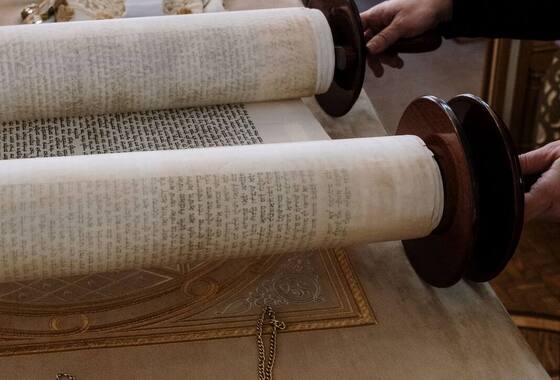 The Weekly Parsha: How the Torah Is Read Each WeekWhat the weekly Torah portion (parsha) is, how the 54 portions fit the Jewish year, and easy ways to study and discuss the parsha each week.
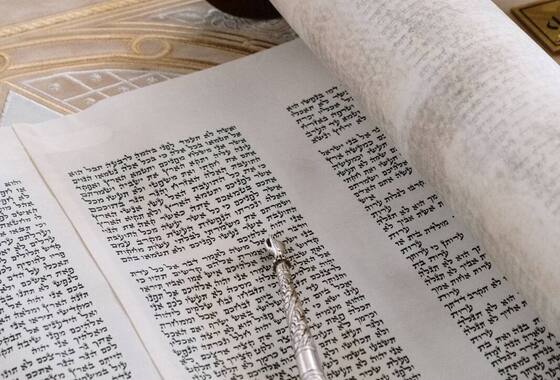 The Torah Reading in Synagogue: When, Why and HowWhen the Torah is read in synagogue, how the weekly cycle works, what happens during the reading, and what to do as it takes place.
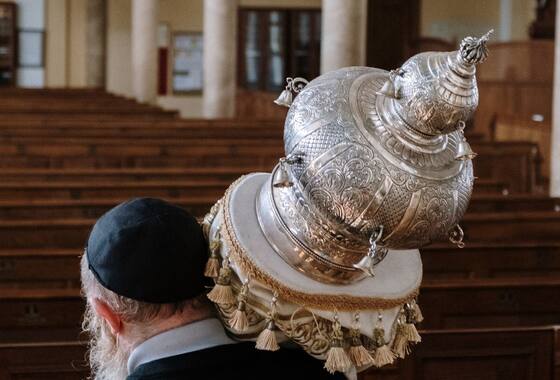 The Haftarah: What It Is and Why We Read ItWhat the Haftarah is, how it began, how it connects to the weekly Torah portion, who reads it, and what to know for a bar mitzvah.