

Parashat Lech-Lecha
Genesis · Genesis 12:1-17:27
Parashat Lech-Lecha לך לך
G-d tells Abram to leave his land, his birthplace and his father's house and go to the land that He will show him, promising to make him a great nation and a blessing. Abram travels to Canaan with his wife Sarai and his nephew Lot. Because of a famine they go down to Egypt, where Pharaoh takes Sarai, and G-d strikes Pharaoh's house with plagues until he returns her. Abram and Lot separate, and Lot settles in Sodom. When four kings capture Lot, Abram pursues them, rescues him, and is blessed by Malchizedek, king of Shalem. In the Covenant Between the Parts, G-d promises Abram that his descendants will be strangers in a foreign land and then go free with great wealth. Sarai gives Hagar to Abram, and Ishmael is born. At age ninety nine Abram is renamed Abraham, Sarai becomes Sarah, G-d promises them a son, Isaac, and Abraham circumcises himself and his household.
A lesson for today
The words Lech Lecha literally mean go to yourself. The Rebbe explained that every journey G-d asks of us is really a journey toward our own true self, the soul within. Abraham had to leave behind his familiar surroundings and habits to discover who he truly was. We too are asked to keep moving and growing, never settling for yesterday's level. Each step forward, even when it feels like leaving our comfort zone, brings us closer to the person G-d created us to be.
The Rebbe's teachingA storyIdeas for the Shabbat tableAn essay
The Rebbe's teaching
The Rebbe teaches that "Lech Lecha" is G-d's call to every person to leave behind the limits we place on ourselves and to discover who we truly are.
The Rebbe asks a question. Abraham had already come to know his Creator as a young child, had grown in faith and was even willing to give his life for it. Why does the Torah begin his story only with the command "Go"? His answer is that until then Abraham's service was his own striving toward G-d. Now G-d spoke first. The Sages teach that someone who does a mitzvah because he was commanded is greater than someone who does the same act on his own, because a command connects us to G-d without limit, while our own good ideas stay within our own horizons.
The words "Lech Lecha" also mean "go to yourself." Abraham set his own will aside and answered G-d's call, and that allowed the G-dly core of his soul to come out. The destination is left unnamed, the Rebbe notes, because growth guided by G-d is not capped by what we think we can do.
This growth includes challenges. Soon after Abraham reached the land, famine forced him down to Egypt, yet he left very wealthy. The Rebbe explains that challenges bring out strengths of the soul that would stay asleep if life were easy, and they let us discover the holiness hidden in the physical world.
The Rebbe draws several practical points for our lives:
- Do a mitzvah because G-d asks, not only when you feel inspired. You need not wait for certainty.
- Do not treat your present level as a ceiling.
- Meet difficulty as an opportunity.
- Let your own growth widen into helping others.
- Bring holiness into ordinary life: work, food and family are the material we are meant to elevate.
A story
Rabbi Mordechai (Motti) Rubin, who directs Colonie Chabad and Chabad life at Siena University in New York's Capital Region, tells this story about his father, Rabbi Yisroel Rubin. His father passed away on Simchat Torah at the age of 78.
As a young man, Rabbi Yisroel loved deep Torah learning. It seemed he would spend his life teaching gifted students and writing scholarly works. In 1974, however, the Rebbe sent him to establish Chabad in Albany, New York. He was not sent to lead a yeshiva or a scholarly congregation, but to reach every Jew, learned or not. In Albany he became a teacher and counselor, organized and raised funds, and befriended thousands. Each new challenge brought out strengths he had not known he had, and his experiences shaped his Torah insights.
Rabbi Motti connects this to the beginning of our portion, where Abraham is told to go to "the land that I will show you," with no map, only a direction. He recalls a teaching the Rebbe shared in a talk given weeks after a serious heart attack on Shemini Atzeret in 1977, when the Rebbe's office had been turned into a temporary intensive-care room. The Rebbe quoted the Alter Rebbe, who explained that G-d was saying not only "I will show you the land" but also "I will show you yourself."
After his father's passing, Rabbi Motti said the main lesson he took from him was that people underestimate themselves. We think we must be sure of success before we act, but that certainty rarely comes. His father, like Abraham, could not see the whole road. He took the next step, and that step revealed strengths that standing still never would have.
Ideas for the Shabbat table
- Ask the children: if G-d told you to pack and go somewhere new, but did not say where, what would you bring? How would you feel?
- Abraham was told "go to yourself." What does it mean to find out who you really are? What is something about you that you discovered only when you tried something new?
- Share a time you moved, changed schools or began a new job. What was hard? What strength did you discover?
- Talk about the Rebbe's idea that we do a mitzvah because G-d asks, even before we feel inspired. Is there a good habit you started before you felt like it, and later loved?
- For adults: is there a limit you have placed on yourself, "I could never do that," that might be a ceiling you can lift this year?
- Read about Abraham and Sarah together and ask what they gave up and what they gained.
An essay
Most of us know the feeling of standing at the edge of something new, and deciding that we will wait until we feel ready. We wait until the children are older, the job is more stable or we know a little more. Parshat Lech Lecha speaks to that wait. Abraham receives a direction without a destination. He is not asked to be ready. He is asked to go.
The Rebbe's teaching gives this journey a surprising meaning: the journey is toward ourselves. We often imagine that we know our own limits very well, but the Rebbe suggests that the limits we feel are usually narrower than the truth. There is a deeper strength in each person, a G-dly core, that does not show up in the comfortable parts of life. It appears when we are asked to do more than we thought we could.
That is what Rabbi Yisroel Rubin found in Albany. He was a scholar who was sent to be a friend to thousands, and the new work did not take him away from himself. It showed him himself. His son describes it as taking the next step with an unseen road ahead.
You need not move to a new city for this. For one person, Lech Lecha may be the first Friday night candles. For another, it may be a first Torah class, a conversation with an estranged relative or an open door to a neighbor. The Rebbe teaches us to begin with action, to do the good thing because it is good, and to let the feeling follow.
And along the way there will be a famine here and there, as there was for Abraham. The Rebbe does not hide that. He says only that the same difficulty draws out strengths, and the journey is worth it.
If you would like to take one next step, come for Shabbat at Chabad of Lamorinda in Lafayette (call 925-384-7242), or join the Wednesday 1:00 PM Tanya class at the Rabbi's home (call for the address).
Common questions
What is Parshat Lech Lecha about?
Parshat Lech Lecha tells how G-d calls Abraham to leave his homeland for the land of Canaan, promising him a great nation. It includes his journey to Egypt, his battle to rescue Lot, the covenant of the pieces and the commandment of circumcision. See Abraham and Sarah.
What does the Rebbe teach about Parshat Lech Lecha?
The Rebbe teaches that "Lech Lecha" means "go to yourself," a call to discover the G-dly core within and not to treat our present level as a ceiling. He also teaches that we do mitzvot because G-d commands them, not only when we feel inspired.
What is the main lesson of Parshat Lech Lecha?
Growth begins with a first step, even when we cannot see the whole road. Challenges are not obstacles but the way hidden strengths come out. To learn about the commandment first given in this portion, see brit milah.
Learn more
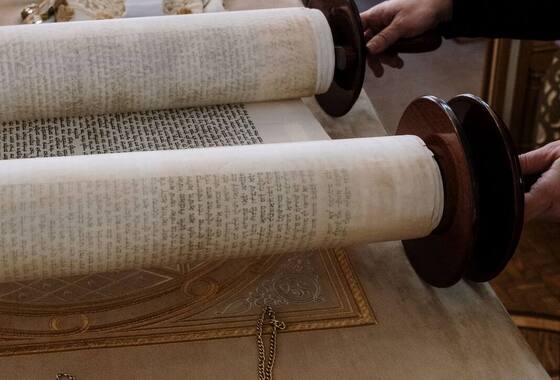 The Weekly Parsha: How the Torah Is Read Each WeekWhat the weekly Torah portion (parsha) is, how the 54 portions fit the Jewish year, and easy ways to study and discuss the parsha each week.
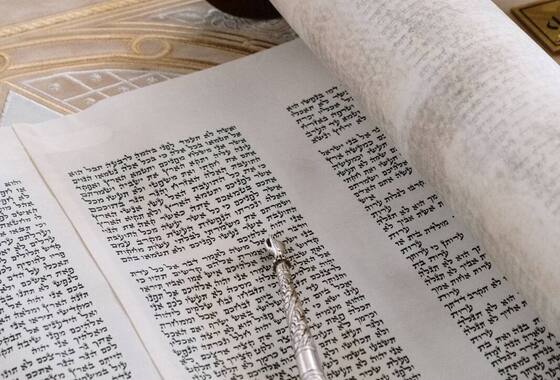 The Torah Reading in Synagogue: When, Why and HowWhen the Torah is read in synagogue, how the weekly cycle works, what happens during the reading, and what to do as it takes place.
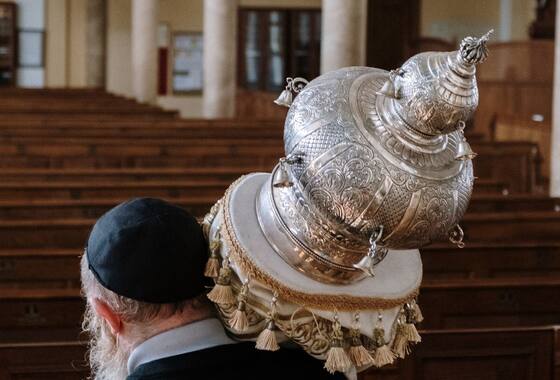 The Haftarah: What It Is and Why We Read ItWhat the Haftarah is, how it began, how it connects to the weekly Torah portion, who reads it, and what to know for a bar mitzvah.