

Parashat Ki Tavo
Deuteronomy · Deuteronomy 26:1-29:8
Parashat Ki Tavo כי תבוא
When Israel enters the land, each farmer is to bring the first fruits, bikkurim, in a basket to the Temple and declare his gratitude, retelling the story of the nation: My father was a wandering Aramean; we went down to Egypt, were enslaved, and G-d brought us out and gave us this land. A declaration is also made after giving the tithes. Moses tells the people that on this day they have become G-d's people. When they cross the Jordan, they are to set up large stones and write on them the words of the Torah. The Levites are to proclaim a series of curses for hidden sins, and the people will answer Amen. The portion then describes the abundant blessings that will come if Israel follows G-d's commandments, and the severe hardships that will follow if they abandon them. Moses reminds the people that for forty years in the desert their clothes did not wear out, and urges them to keep the covenant.
A lesson for today
The mitzvah of first fruits teaches gratitude. The farmer did not wait until the harvest was in his storehouse; he brought the very first and best fruits to the Temple and thanked G-d out loud. The Rebbe taught that we can live this way every day: begin each morning with Modeh Ani, offer the first part of our day to prayer, and give the first portion of our income to charity. Putting G-d first, with thanks, fills everything that follows with blessing.
The Rebbe's teachingA storyIdeas for the Shabbat tableAn essay
The Rebbe's teaching
The Rebbe taught that real gratitude is shown in deeds, not only in words, and that our observance of the Torah is itself a way of saying thank you to G-d.
Ki Tavo opens with the mitzvah of bikkurim, the first fruits. A farmer who has labored all year would seem to have every right to enjoy his harvest first. Yet the Torah tells him to take the first and best fruits, put them in a basket, and bring them to the Temple in Jerusalem.
The Rebbe asked why. The answer is hakarat hatov, recognizing the good that has been given to us. The farmer did not create his crops; they exist only because of G-d's blessing. A quick "thank you" could be said in a moment. Instead, the farmer makes a journey and puts his appreciation into action, before he has even seen the full harvest in his storehouse.
The same idea, the Rebbe said, lies behind the covenant mentioned in this portion. G-d gives us life, health and well-being, and He asks us to follow His Torah. We keep the mitzvot as an expression of gratitude.
The Rebbe also drew a second lesson from the portion. Rashi notes that the obligation of first fruits began only after the last Jew had received his share of the land. Why wait for everyone? Because, as the Rebbe taught, no one can feel complete joy until everyone is in a position to rejoice. Our joy is bound up with the wellbeing of the people around us.
What this means for us: gratitude is something we do. We can say Modeh Ani each morning, give the first part of our day to prayer and the first part of our income to tzedakah, and notice when someone else is still waiting for what we already have. See Modeh Ani and gratitude in the Tanya.
A story
This story comes from Hayom Yom, a daily book of Chabad sayings and customs compiled by the Rebbe, in the month of Elul.
During a week when the Alter Rebbe, Rabbi Shneur Zalman of Liadi, was away, someone else read the portion of Ki Tavo from the Torah in his place. His son, Rabbi Dov Ber, who would one day lead Chabad, was not yet Bar Mitzvah. When the curses of the portion were read, the boy was deeply shaken. He was so distressed that, as Yom Kippur approached, it was unclear whether he would be able to fast.
When he was asked why he was so much more affected than in earlier years, he answered that when his father read the Torah, he never heard any curses.
The Alter Rebbe, the story says, viewed the curses as concealing blessings.
Chassidic teaching is that nothing the Torah says is meant only to frighten us. Even the hard words carry a hidden kindness, and the way a thing is read, with love and understanding, shapes how we hear it. The same is true for the way we speak to our children and to each other.
Ideas for the Shabbat table
- Ask everyone: what is one thing from this week that you did not earn but received, and who should we thank?
- For children: the farmer put the very first fruits in a basket for G-d. What is the first and best thing you could give today, such as the first piece of challah for a friend?
- Adults: How do we show gratitude to the people in our life with actions, not only words?
- Discuss: Rashi says the first fruits waited until everyone had their portion. When have you been unable to enjoy something fully because someone near you was struggling?
- Talk about it: in the story, a harsh text sounded gentle when read with love. Why does tone matter so much?
- Try this: at Shabbat dinner, take turns finishing the sentence "I am grateful for..." and then choose one action that turns the words into a deed.
An essay
We live in a culture that teaches us to say thank you politely and move on. Ki Tavo asks for something more. It asks the farmer to stop in the middle of his busiest season, pick his first fruits, travel to Jerusalem, and speak out loud. The gratitude takes time and effort. That is how we know it is real.
The Rebbe's reading is that gratitude shown in action is the kind that lasts. A thank-you note is lovely, but a life arranged around gratitude is something else. A parent who stays up to help a child with homework, a friend who shows up with soup, a family that gives the first coin of the day to charity, are all offering first fruits.
There is another side to the portion that is easy to miss. The first fruits were not brought until everyone in the nation had received a portion of the land. The Rebbe's lesson is that my happiness and yours are linked. If a neighbor is lonely, my table is a little less full. If a family in our community is struggling, we cannot be at complete ease. And so the first step of gratitude becomes the first step of kindness: to ask who is still waiting.
The story of Rabbi Dov Ber adds a final layer. The curses in the portion are hard to hear, and a child was shaken by them. Yet his father heard blessings in them. We can choose, with practice, to read life this way: not by denying difficulty, but by looking for the good hidden inside it, and by speaking about it with love.
If you would like to put gratitude into action, you are welcome to join us for Shabbat at Chabad of Lamorinda in Lafayette (call 925-384-7242 for the times) or the Wednesday 1:00 PM Tanya class at the Rabbi's home (call for the address), where families from Lafayette, Moraga and Orinda learn together.
Common questions
What is Parshat Ki Tavo about?
Parshat Ki Tavo (Deuteronomy 26:1-29:8) begins with the mitzvah of bringing the first fruits to the Temple, continues with the declaration after giving tithes and the blessings and curses of the covenant, and ends with Moses reminding the people of the miracles of the desert.
What does the Rebbe teach about Parshat Ki Tavo?
The Rebbe teaches that bikkurim, the first fruits, express gratitude through action, and that the Torah wants our thanks to G-d to show in how we live. The Rebbe also teaches that our joy is complete only when everyone can rejoice.
What is the main lesson of Parshat Ki Tavo?
Gratitude is a deed: put the first and best of what we have toward G-d and toward others. See the weekly parsha for ways to study a portion each week.
Learn more
 The Weekly Parsha: How the Torah Is Read Each WeekWhat the weekly Torah portion (parsha) is, how the 54 portions fit the Jewish year, and easy ways to study and discuss the parsha each week.
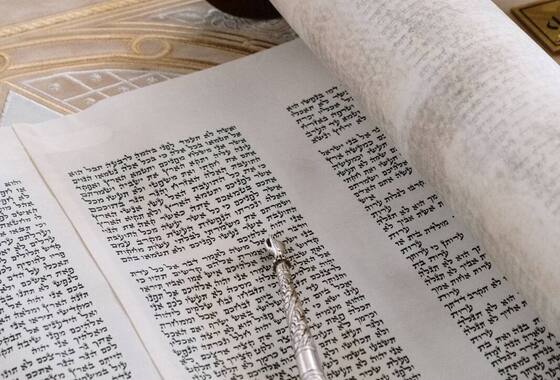 The Torah Reading in Synagogue: When, Why and HowWhen the Torah is read in synagogue, how the weekly cycle works, what happens during the reading, and what to do as it takes place.
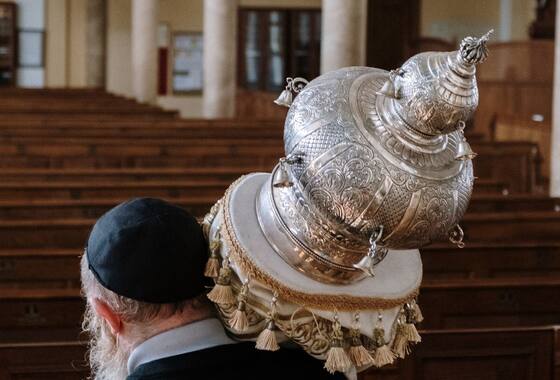 The Haftarah: What It Is and Why We Read ItWhat the Haftarah is, how it began, how it connects to the weekly Torah portion, who reads it, and what to know for a bar mitzvah.