

Parashat Eikev
Deuteronomy · Deuteronomy 7:12-11:25
Parashat Eikev עקב
Moses promises that if Israel listens to G-d's laws, G-d will keep His covenant and bless them with children, crops and health. They should not fear the nations of Canaan. He reminds them of the manna, which taught that man does not live by bread alone, but by everything that comes from G-d's mouth. He describes the good land, a land of wheat, barley, grapes, figs, pomegranates, olives and dates, and commands: You will eat and be satisfied, and you shall bless G-d, the source of the blessing after meals. Moses warns them never to think, My strength and the power of my hand made me this wealth. He recalls the Golden Calf, the broken Tablets and the second Tablets. He asks, What does G-d ask of you, but to fear Him, walk in His ways and love Him? The portion includes the second paragraph of the Shema, about reward, rain in its season, tefillin, mezuzah and teaching children.
A lesson for today
The word eikev means because, but it also means heel. Rashi explains that the Torah refers here to the mitzvot that people tend to trample with their heels, the ones that seem minor. The Rebbe taught that there is no such thing as a small mitzvah. We cannot know the true weight of any good deed, and a simple blessing, a coin for charity or a kind word may be exactly what G-d values most. Each one deserves our full attention and joy.
The Rebbe's teachingA storyIdeas for the Shabbat tableAn essay
The Rebbe's teaching
The Rebbe taught that no mitzvah is small: the ones we think of as minor are the ones that carry a special blessing.
The portion opens with a promise of blessing "eikev tishme'un," which can mean "because you will listen." But eikev also means "heel," and Rashi reads the verse that way: if you take care with the mitzvot that people tend to trample under their heels, G-d will bless you.
The Rebbe asked the natural question: why would the Torah promise a special reward for these mitzvot? His answer was that they are the ones woven quietly into daily life, the ones nobody would notice if we skipped. The obviously important mitzvot we keep almost out of necessity, because everyone sees their weight. But a mitzvah that is easy to overlook asks us to go beyond what comes naturally. That extra commitment is what draws extra blessing.
The Rebbe also found a message for our own time. Our Sages call the last generation before Moshiach "the heels of Moshiach." Heels are the least refined part of the body, yet they respond to the will at once, and they carry the whole body forward. A generation that may feel far from greatness can still show a simple, direct devotion, and that is exactly what brings redemption closer.
What this means for us: do not wait for a big, impressive moment to begin. A blessing said before eating, a coin in the tzedakah box, a kind word, a few minutes of Torah: each one counts fully. We can start with the small mitzvah that is within reach this week.
A story
Rochel Holzkenner, who co-directs Chabad of Las Olas in Florida, tells about a birthday resolution she made. She could have chosen something impressive. Instead she chose something that sounded almost too simple: to make a fresh dinner for her family twice a week. She admits that for her it was a real struggle, and that is exactly why she chose it. It was what she needed.
Then she opened Parshat Eikev and noticed the word heel. She learned that Rashi speaks of the mitzvot people trample with their heels, and she connected it to the Rebbe's talk on this portion from Shabbat Eikev in 1991. Her thought was that the smallest, least glamorous commitments are not trivial at all. Dull, ordinary work in the lowest places of life is how G-d's presence is brought into the world, and it is a path the Torah says brings blessing.
She does not claim that a fresh dinner changes the world by itself. Her point is quieter: if a person truly needs a simple act, then that simple act is her mitzvah of the week, and it is as precious as any grand gesture.
Ideas for the Shabbat table
- Ask everyone: what is a mitzvah that seems small but that you think matters a lot? Why?
- For children: Our feet carry us everywhere but we hardly notice them. What is a "feet" job in our home that nobody thanks us for, and could we thank someone tonight?
- Adults: Which good habit have you let slide because it felt too small to matter?
- Talk about it: Rashi says the word eikev means heel. Why might the Torah hide a big lesson in a small word?
- Try this: each person chooses one small mitzvah to do this week (a blessing, a call to a lonely relative, a coin for charity) and reports back next Shabbat.
- Look together at the blessings after food and discuss why the Torah tells us to say thank you after we are full, not only before we eat.
An essay
Most of life is made of small things. We wash dishes, answer messages, drive children to school, say good morning at work. Almost none of it will be remembered. It is easy to conclude that only the big moments, a wedding, a promotion, a crisis, really matter spiritually.
Parshat Eikev says the opposite. It speaks of blessing that follows the mitzvot we tread on without thinking, the heel mitzvot. The Rebbe explained that these are precious because they require us to choose them. Nobody applauds a quiet blessing over a sandwich or a few coins dropped into a charity box. If we do them anyway, it is because we mean them.
There is great freedom in that idea. We do not have to become someone else to begin. A parent who lights Shabbat candles for two minutes on Friday afternoon has done something as real as a scholar's long study. Someone who says "Thank you" to G-d after a meal, as the portion commands, is practicing gratitude in the middle of an ordinary day. A tzedakah coin is small, and yet our teachers said it can be exactly what G-d values most.
The Rebbe's remark about the generation of the heels may be the most encouraging part. If we feel that we are not great, not learned, not far enough along, that may be the very place from which something real begins. Heels are close to the ground, and the ground is where we actually live. When we bring care and joy to a small mitzvah, we turn that ground into a place where G-d is at home.
This week you might choose one small thing and give it your full attention. Then come to Shabbat services and a meal at Chabad of Lamorinda in Lafayette (call 925-384-7242 for the times), or join the Wednesday 1:00 PM Tanya class at the Rabbi's home (call for the address), where families from Lafayette, Moraga and Orinda learn how small steps become a life.
Common questions
What is Parshat Eikev about?
Parshat Eikev (Deuteronomy 7:12-11:25) is part of Moses' farewell speech. He promises blessing for keeping the mitzvot, recalls the manna and the Golden Calf, and teaches the second paragraph of the Shema and the blessing after meals.
What does the Rebbe teach about Parshat Eikev?
The Rebbe teaches that the word eikev, "heel," points to the seemingly small mitzvot that people trample, and that these deserve special devotion and bring special blessing. See also the weekly parsha.
What is the main lesson of Parshat Eikev?
There is no such thing as a small mitzvah: every good deed has a weight that we cannot measure, and a simple blessing or kind act may be what matters most to G-d.
Learn more
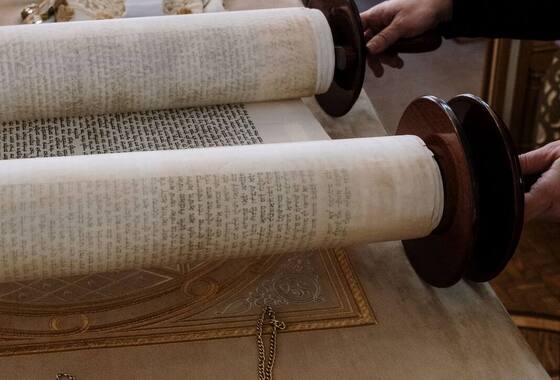 The Weekly Parsha: How the Torah Is Read Each WeekWhat the weekly Torah portion (parsha) is, how the 54 portions fit the Jewish year, and easy ways to study and discuss the parsha each week.
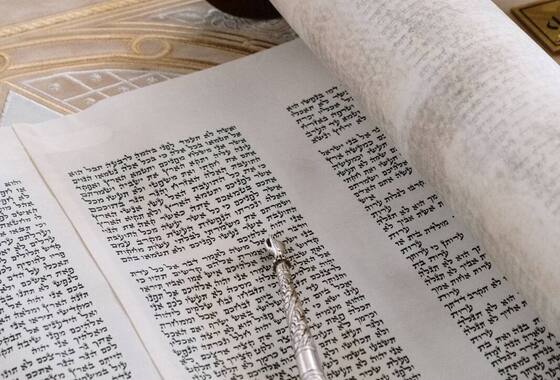 The Torah Reading in Synagogue: When, Why and HowWhen the Torah is read in synagogue, how the weekly cycle works, what happens during the reading, and what to do as it takes place.
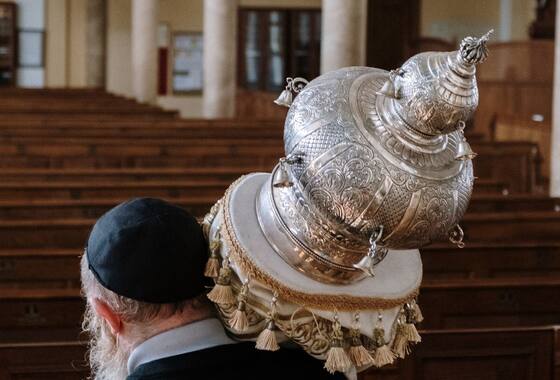 The Haftarah: What It Is and Why We Read ItWhat the Haftarah is, how it began, how it connects to the weekly Torah portion, who reads it, and what to know for a bar mitzvah.