

Parashat Chukat
Numbers · Numbers 19:1-22:1
Parashat Chukat חקת
The portion opens with the law of the red heifer, whose ashes, mixed with spring water, purify a person who has become impure through contact with the dead. Nearly forty years later, Miriam passes away at Kadesh, and the people have no water. G-d tells Moses to speak to the rock, but Moses strikes it twice with his staff. Water flows, but G-d tells Moses and Aaron that they will not lead the people into the land. The king of Edom refuses to let Israel pass through his country. Aaron passes away on Mount Hor, his son Elazar becomes High Priest, and all Israel mourns him for thirty days. When the people complain about the manna, venomous snakes attack them; Moses makes a copper snake on a pole, and whoever looks at it lives. Israel sings a song to the well, and defeats Sihon king of the Amorites and Og king of Bashan, camping finally on the plains of Moab across from Jericho.
A lesson for today
The red heifer is called a chok, a law beyond human understanding. Rashi explains that G-d says, It is a decree before Me. The Rebbe taught that our connection with G-d is deeper than our understanding. We study and seek to understand as much as we can, but our commitment does not depend on it. A relationship of love includes doing what the other asks, even when we do not fully grasp why. That kind of trust can purify and lift us, just like the red heifer.
The Rebbe's teachingA storyIdeas for the Shabbat tableAn essay
The Rebbe's teaching
The Rebbe teaches that the red heifer, the ultimate chok, a law beyond human reason, reaches the deepest place in our connection to G-d, and that this same selfless spirit is what lets us help another Jew.
The portion opens with the red heifer, whose ashes purify a person who has become impure through contact with the dead. The Torah calls it "the chok of the Torah." The Rebbe asks why, and why this mitzvah has such strange features. It makes the pure impure while purifying the impure, and it is done outside the camp.
The Rebbe explains that the commandments express G-d's will in different ways. Some are "clothed" in reason, and human intellect can appreciate them to a degree. A chok expresses G-d's essential will, which is above reason. Even King Solomon, who understood the reasons behind the other mitzvot, admitted that he could not grasp the red heifer. Its meaning was revealed only to Moses. This is why the Torah calls it the chok of the whole Torah: it reveals what lies behind every mitzvah.
Impurity from a corpse is the opposite of holiness, which is bound up with life. The ashes overturn even this impurity, because they draw down a Divine light that no framework can limit. That is why the rite takes place outside the camp, in the place farthest from holiness.
The Rebbe also shows what this means for us. To draw down that light, a person must set his own interests aside and help another Jew, even knowing that he may become impure in the process, and without expecting any reward. The Rebbe draws practical lessons:
- Never despair of any Jew, however distant.
- Help others selflessly, without looking for recognition.
- Remember that we are agents, not the source of success.
- Do not forget your own growth. The ashes were divided into three parts: one to purify others, one for the priests, and one kept as a "testimonial" so that giving to others never leaves us empty.
(Based on the Rebbe's talks on Parshat Chukat, printed in Likkutei Sichos.)
A story
This story is told by the sixth Lubavitcher Rebbe, Rabbi Yosef Yitzchak Schneersohn, about his own childhood, and about his father, Rabbi Shalom DovBer, the fifth Rebbe.
When the boy was very young and just beginning to speak, his father told him to bring every question to him. Later he was taught to say Modeh Ani, the first words of the morning, with one hand placed against the other and his head bowed. When he was a little older, he asked his father why.
His father reminded him that he should not really be asking "why." But since he had invited every question, he did not simply refuse. Instead he called for Reb Yosef Mordechai, a servant about eighty years old. How, he asked, do you say Modeh Ani each morning? The old man answered that he said it with the same posture. And why? He did not know. He had been taught that way as a small child.
The father explained to his son that the servant does it because his own father taught him, and so on, back through the generations to Moses and Abraham. We keep such customs, he said, without demanding a reason.
The boy protested, "I'm just a little boy." His father answered that everyone is "little," and that it is only as we grow older that we begin to realize how small we are.
The story does not say that questions are wrong. The father had invited them. It shows that a faith handed down for generations holds a trust that goes deeper than any answer we may find.
Ideas for the Shabbat table
- Ask the children: do you know a family custom you do just "because we always do"? Where did it come from?
- For everyone: what is a mitzvah you keep even though you do not fully understand it? What does that give you?
- Ask: why do you think Rashi says G-d calls the red heifer "a decree before Me"?
- Discuss: the ashes were divided in three, one part to help others and one part "kept as a reminder." How can we help others without losing ourselves?
- Try the Modeh Ani of the story at the table: say it together, and ask the children what they are thankful for this week.
- Challenge: is there a person who feels far from Judaism? What is one gentle way to show them they are not forgotten?
- Read about Modeh Ani and the 613 mitzvot together.
An essay
We live in a time that wants reasons. We read reviews before we buy a toaster. So it is a good moment to meet a commandment that comes with no reasons at all.
It is easy to think that a relationship with G-d should work like a good business deal: I understand, I agree, I do it. The Rebbe's teaching on the chok is about something closer to love. If someone you love asks for something small and you do it before you understand why, you are not being foolish. You are showing that the relationship is bigger than the explanation. We still study, we still ask. The father in the story invited every question. But the commitment does not depend on the answer.
Notice that the same teaching has a second half. The red heifer cannot be done by a person who is only thinking of himself. It asks a person to step out of his own concerns and help someone else, someone who may feel completely "impure," far away, cut off. This is not a coincidence. When we stop demanding that everything fit inside our own understanding, we become free to give to others without keeping score.
And then the Rebbe adds the gentle balance: keep the "testimonial." The giver must also stay whole. Many of us know people who gave and gave until nothing was left. Judaism asks for a rhythm of giving to others and keeping our own inner life alive, with prayer, learning and Shabbat.
Perhaps this week you can pick one mitzvah that you do just because it is a mitzvah, and do it with a little more joy. If you would like to talk about it, you are welcome at a Shabbat at Chabad of Lamorinda in Lafayette (call 925-384-7242) or at the Wednesday 1:00 PM Tanya class at the Rabbi's home (call for the address).
Common questions
What is Parshat Chukat about?
Parshat Chukat (Numbers 19:1-22:1) begins with the law of the red heifer and then tells of the passing of Miriam and the loss of water, Moses striking the rock, the passing of Aaron, and Israel's journeys and battles on the way to the Land.
What does the Rebbe teach about Parshat Chukat?
The Rebbe teaches that the red heifer is a chok, a law above reason that expresses G-d's essential will, and that it calls us to help others selflessly while keeping our own spiritual growth. Our commitment to G-d reaches deeper than our understanding.
What is the main lesson of Parshat Chukat?
The main lesson is that our connection to G-d goes deeper than understanding, and that it should lead us to help others with humility. We keep studying and asking, but we also keep mitzvot with love. Read about the 613 mitzvot, and find this week's portion on the parsha page.
Learn more
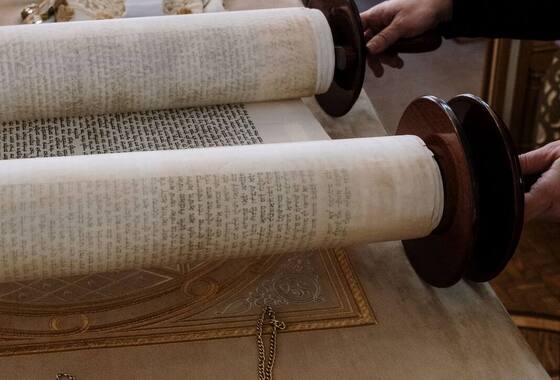 The Weekly Parsha: How the Torah Is Read Each WeekWhat the weekly Torah portion (parsha) is, how the 54 portions fit the Jewish year, and easy ways to study and discuss the parsha each week.
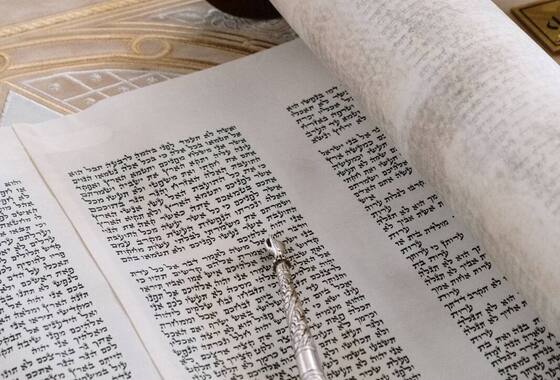 The Torah Reading in Synagogue: When, Why and HowWhen the Torah is read in synagogue, how the weekly cycle works, what happens during the reading, and what to do as it takes place.
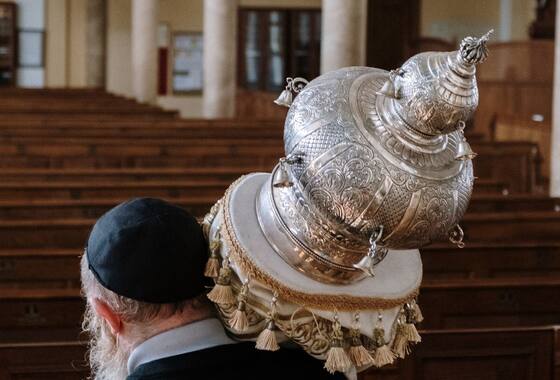 The Haftarah: What It Is and Why We Read ItWhat the Haftarah is, how it began, how it connects to the weekly Torah portion, who reads it, and what to know for a bar mitzvah.