

Parashat Bo
Exodus · Exodus 10:1-13:16
Parashat Bo בא
G-d brings the eighth plague, locusts that devour everything left after the hail, and the ninth, a thick darkness over Egypt for three days, while all the children of Israel have light in their dwellings. Moses warns Pharaoh of the final plague, the death of the firstborn. G-d gives Israel its first commandment as a nation: to sanctify the new moon and count the months. Each family is to take a lamb, offer it as the Passover sacrifice, put its blood on the doorposts, and eat it roasted with matzah and bitter herbs. At midnight G-d strikes the firstborn of Egypt and passes over the houses of Israel. Pharaoh sends them out, and they leave in such haste that their dough has no time to rise. About six hundred thousand men, besides women and children, go out after four hundred and thirty years. The portion gives laws of Passover, of the firstborn, and of tefillin, a sign on the hand and between the eyes.
A lesson for today
Twice in this portion the Torah commands that the Exodus be a sign upon your hand and a reminder between your eyes, the source of the mitzvah of tefillin. The Rebbe encouraged every Jewish man and boy over bar mitzvah to put on tefillin each weekday, and launched a worldwide campaign to help people do so. Binding tefillin on the arm, facing the heart, and on the head reminds us to dedicate our feelings, thoughts and actions to G-d, and it brings a personal Exodus into each day.
The Rebbe's teachingA storyIdeas for the Shabbat tableAn essay
The Rebbe's teaching
The Rebbe teaches that the light a Jew gains through Torah and prayer is meant to enter the "Egypt" of everyday life, where it lifts up what is holy.
The Rebbe begins with the plague of darkness. The Torah says that during it, "all the Children of Israel had light in their dwellings." The Midrash reads this as a miracle: a special light accompanied the Jews wherever they went, and it let them see the hidden gold, silver and treasures of the Egyptians. Rashi reads it differently. For Rashi, the only miracle was the darkness itself, which left the Egyptians helpless, so that the Jews could look through their houses by ordinary light. The Rebbe asks why they differ.
He explains that a basic principle of Jewish life is to do mitzvot through natural means and not through miracles. For example, when the Alter Rebbe was traveling by boat, he waited to say the blessing on the new moon until the official in charge agreed to stop the boat, rather than relying on a miracle. Rashi applies the principle here. The Midrash gives reasons why it did not apply to the Egyptian wealth: the principle mostly governs mitzvot given after Sinai, this was a reward promised to Abraham rather than a commandment, and reaching hidden treasures needed a special light.
The Rebbe then gives a deeper reading. The Midrash includes the light in the plague, because the light we gain through Torah and prayer has to enter the "Egyptian homes" of the physical world and bring out the holiness in it. Rashi's reading shows a later stage, when the world has been refined and the soul returns to its true place.
The practical lessons are these. Jewish life has two parts: the inner work of Torah and prayer, and the outer work of making the physical world holy. The inner light should reach the outer work. Even in the darkness of exile, G-d arranges circumstances so that we can serve Him without obstacles, though the mitzvah itself remains natural. And the promise of light in "your dwellings" applies both physically and spiritually.
A story
This is how the Rebbe's tefillin campaign began, with a story told by one of his chassidim. In early June 1967, while Israel was surrounded by hostile armies and just days before the Six Day War began, the Rebbe spoke at a gathering. He cited the Torah's promise that "all the nations of the world will see that the Name of G-d is proclaimed upon you and will fear you," which the Sages read as referring to the tefillin worn on the head. He said that this mitzvah gives the Jewish people added strength in times of crisis.
Chassidim around the world, especially in Israel, answered quickly. They looked for ways to offer soldiers and civilians a chance to put on tefillin. Shortly after the Western Wall was liberated, many Lubavitch chassidim, some in uniform, invited soldiers praying there to put on tefillin. Soon a pushcart with spare pairs stood at the Wall, staffed by approachable chassidim. Many people first met the mitzvah there.
A London businessman, Benzion Rader, was once asked by a neighbor why the Rebbe had chosen this mitzvah. He had no answer. Later in 1967, during a private audience, he asked the Rebbe himself. The Rebbe gave two answers. First, the Talmud says that a Jew who has worn tefillin on his head even once no longer belongs to a certain category. Second, a Jew in Miami who sees a photo of Jews putting on tefillin at the Wall may be inspired to do the same.
In 1974 Rader visited Miami on business. A local accountant who had not worn tefillin since his bar mitzvah told him that a photo of Jews putting on tefillin at the Western Wall had moved him to begin again.
One photograph, one pair of tefillin, a light carried into a distant home.
Ideas for the Shabbat table
- Ask: what is "light" in our home? A candle, a kind word, a song, a story?
- Ask the children: the Israelites had light in their homes while it was dark outside. When is our home a bright place for someone who needs it?
- Discuss: "Torah and prayer" are the inner work, and our job and daily tasks are the outer work. How can the first touch the second?
- Talk about the photograph in the story. Has a picture or a story ever inspired you to do something Jewish?
- For children: tefillin remind us to serve G-d with our heart and mind. What would you like to dedicate your heart and mind to?
- Adults: is there a Jewish activity you stopped, like the accountant in Miami with his tefillin, that you could begin again?
An essay
Most of us live in two worlds. One is the world of our quiet moments: a blessing before eating, a Shabbat candle, a few words of Psalms. The other is the world of emails, traffic, deadlines and meals on the run. It is easy to feel that the first world is holy and the second is "Egypt," something to get through.
The Rebbe's teaching on Bo says that the light is meant to move from the first to the second. The plague of darkness shows it: the Israelites had light in their dwellings, and with that light they could see what lay hidden in the Egyptian homes. The point is that the light we gain through Torah and prayer is not for hiding in a corner. It is for going into our workplaces, kitchens and conversations, and finding the holiness already waiting there.
This is why mitzvot are done with real things: a pair of tefillin, a candle, a coin for charity, a loaf of challah. They bring something spiritual into the physical world. In the story, one photograph from the Western Wall carried that light to a man in Miami who had not worn tefillin since his bar mitzvah. The Rebbe understood that a single picture can speak to the soul.
You do not have to leave your life to find the light. Begin with one place that feels "dark," a busy morning, a tense family dinner, a lonely evening, and ask what small light you could bring there: a blessing, a kind word, a minute of quiet before the meal.
For families in Lafayette, Moraga and Orinda, a first step could be as simple as joining us on Shabbat. Call Chabad of Lamorinda in Lafayette at 925-384-7242, or ask about the Wednesday 1:00 PM Tanya class at the Rabbi's home (call for the address).
Common questions
What is Parshat Bo about?
Parshat Bo (Exodus 10:1-13:16) tells of the last three plagues (locusts, darkness, the death of the firstborn), the first mitzvot given to the Jewish people as a nation, the Passover offering and the Exodus from Egypt. Read more in the ten plagues and the Passover Seder.
What does the Rebbe teach about Parshat Bo?
Where does the mitzvah of tefillin come from in Parshat Bo?
The Torah says twice in this portion that the Exodus should be "a sign upon your hand and a reminder between your eyes," which is the source of the mitzvah of tefillin. See starting tefillin before bar mitzvah or find this week's portion on the parsha page.
Learn more
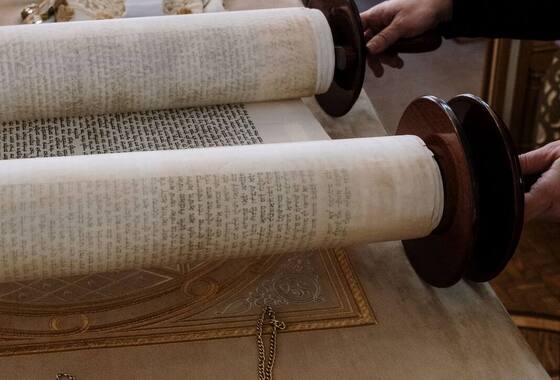 The Weekly Parsha: How the Torah Is Read Each WeekWhat the weekly Torah portion (parsha) is, how the 54 portions fit the Jewish year, and easy ways to study and discuss the parsha each week.
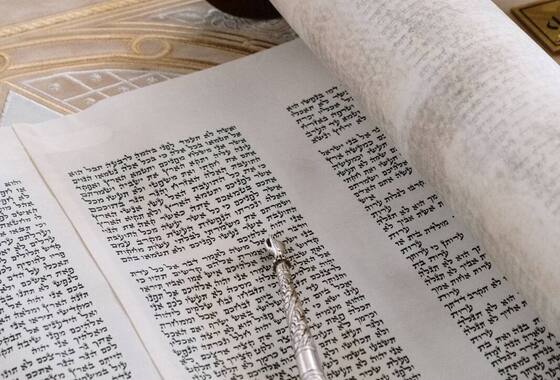 The Torah Reading in Synagogue: When, Why and HowWhen the Torah is read in synagogue, how the weekly cycle works, what happens during the reading, and what to do as it takes place.
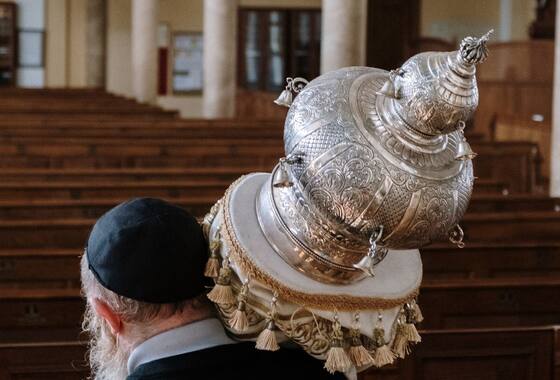 The Haftarah: What It Is and Why We Read ItWhat the Haftarah is, how it began, how it connects to the weekly Torah portion, who reads it, and what to know for a bar mitzvah.