

Parashat Bamidbar
Numbers · Numbers 1:1-4:20
Parashat Bamidbar במדבר
In the Sinai desert, in the second year after the Exodus, G-d commands Moses to count the men of Israel aged twenty and up, tribe by tribe, with the help of a leader from each tribe. The total is 603,550. The Levites are not counted with the others, because they are appointed to care for and carry the Tabernacle. The Torah describes the arrangement of the camp: the Tabernacle stands in the center, surrounded by the Levites, and the twelve tribes camp around it in four groups of three, each under its own banner. The Levites are counted separately, from the age of one month, and they are taken in place of the firstborn of Israel; the firstborn who outnumber the Levites are redeemed with five shekels each. The portion describes the duties of the Levite family of Kehot, who carry the holiest vessels after the priests have covered them.
A lesson for today
The book of Numbers opens with a census, and Rashi explains that G-d counted Israel often because they are dear to Him. In a count, the greatest scholar and the simplest person each count as exactly one. The Rebbe taught that every single Jew is precious and irreplaceable, and that no one can be left out. Bamidbar is usually read just before Shavuot, reminding us that the Torah was given in the open desert, belonging equally to every one of us.
The Rebbe's teachingA storyIdeas for the Shabbat tableAn essay
The Rebbe's teaching
Counting puts every person on the same level, because it reveals something in the soul that is equal in all of us. Parshat Bamidbar begins with a census of the Jewish people in the Sinai desert. Rashi says G-d counts Israel often because they are dear to Him. The Rebbe asks: why would an all-knowing G-d need a public count? And why did the Torah record a census more than once, with a gap of a month before the third?
The Rebbe explains that in a count, each person is counted as one, whether a great scholar or a simple person, whether wealthy or poor. A census does not measure merit. It points to the essence of every Jewish soul, the part that is the same in everyone. This bond with G-d is deeper than thinking or feeling, beyond time, and always active. It explains why a Jew who is asked to give up his faith will refuse, even if he never learned why: he acts from a place that does not calculate.
The three censuses in the Torah, the Rebbe says, mark stages in how that inner bond became visible. The first awakened the people's readiness for self-sacrifice. The second reached their minds and hearts as they prepared the Tabernacle. The third came when their own actions brought the Divine presence into the camp. The gap between the second and third counts connects the month of Nissan, when revelation comes from above, with Iyar, the month of the Omer, when we build upward through our own effort.
What it means for us: every person is precious and cannot be replaced. The essential connection to G-d that we all share should not stay hidden, in crises only. We can let it shape our ordinary conduct, so that the commitment shows in how we act every day. Bamidbar is read just before Shavuot, which is a reminder that the Torah was given to all of us together.
A story
This is a true story from the Rebbe's life. In 1986 the Rebbe began a weekly receiving line on Sundays. For many years he had met people privately late into the night, but as the numbers grew, that became impossible. Now he stood in a small room near his office at 770 Eastern Parkway in Crown Heights, and thousands of men, women and children filed past him each week, to see him and receive a blessing.
Many asked a question and received a word of advice. And the Rebbe gave each person a dollar bill, appointing them his personal agent to give it to the charity of their choice. He explained that his father-in-law, the previous Rebbe, used to say that "when two people meet, something good should result for a third." The Rebbe wanted every one of those many meetings to produce a mitzvah.
The Rebbe was well into his eighties and would stand for as long as eight hours without a break. Each person felt that he was there only for them.
One elderly woman asked him how he did not get tired. The Rebbe answered that every soul is a diamond, and asked her whether one can grow tired of counting diamonds.
Ideas for the Shabbat table
- Ask: when did you last feel that you really counted, that you were needed and would be missed?
- For children: if our family had a gathering and one person was missing, what would be different? Let each child say why they are needed at the table.
- Discuss: the Torah counts everyone as one. Why might that be a comfort? Why might it be challenging?
- Ask the adults: where in our community do we need to "count" someone who has been left out?
- Talk about the Rebbe's dollar: when two people meet, something good should come out for a third. What could we do the next time we meet a friend?
- Read about Ahavat Yisrael, Shavuot and self-worth in Tanya.
An essay
Most of us have been counted without being seen: a number in a queue, a line in a database. The Torah's census is different. Each person is counted by name, family and tribe, and the whole nation stands in order around the Tabernacle. Being counted means being accounted for, and being accounted for means that you matter.
The Rebbe's teaching gives this a deep meaning. When you are counted as one, no one asks about your résumé. You are not a great scholar or a simple person. You are one. That sounds like a loss of individuality, but in fact it points to something that cannot be improved or lost, the essence of the soul itself. Nobody can add to it, and nobody can take it away.
This changes how we see ourselves, and others. On our bad days, when we feel we have not done enough, there is a part of us that counts fully. And on the days we are tempted to judge someone, the same part is there in them, whether or not they look the part.
The Rebbe lived this. A line of thousands came past him each Sunday, and each person was given his full attention and a task, to do something good for someone else. When asked how he could stand so long, he said that no one tires of counting diamonds.
So, this week, count someone. Notice a person you usually pass, a neighbor, a colleague, a parent at the school gate. Say their name, ask how they are, and mean it.
If you would like to be counted among us, we would be glad to welcome you to a Shabbat at Chabad of Lamorinda in Lafayette (925-384-7242), or to the Wednesday 1:00 PM Tanya class at the Rabbi's home (call for the address).
Common questions
What is Parshat Bamidbar about?
Parshat Bamidbar (Numbers 1:1-4:20) begins the Book of Numbers with a census of the men of Israel in the Sinai desert, tribe by tribe, and the organization of the camp around the Tabernacle. It also describes the special duties of the Levites.
What does the Rebbe teach about Parshat Bamidbar?
The Rebbe teaches that counting reveals the equal essence of every Jewish soul, so each person counts as one and no one can be left out. He explains that this inner bond should be revealed in our daily actions.
Why is Bamidbar read before Shavuot?
It is usually read on the Shabbat before Shavuot, which recalls that the Torah was given in the open desert to every one of us. Read more about Shavuot and see this week's parsha.
Learn more
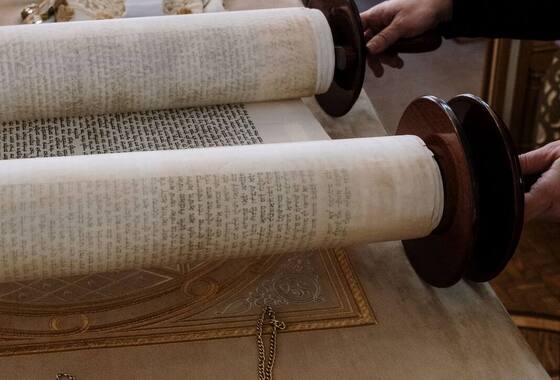 The Weekly Parsha: How the Torah Is Read Each WeekWhat the weekly Torah portion (parsha) is, how the 54 portions fit the Jewish year, and easy ways to study and discuss the parsha each week.
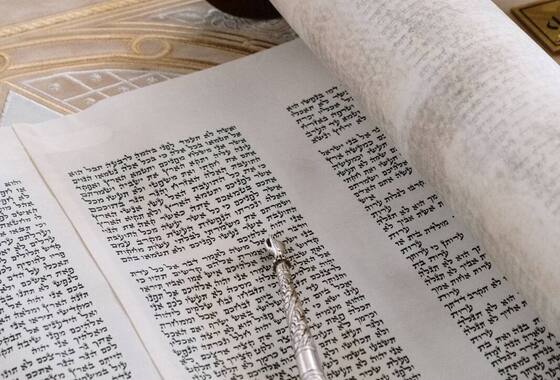 The Torah Reading in Synagogue: When, Why and HowWhen the Torah is read in synagogue, how the weekly cycle works, what happens during the reading, and what to do as it takes place.
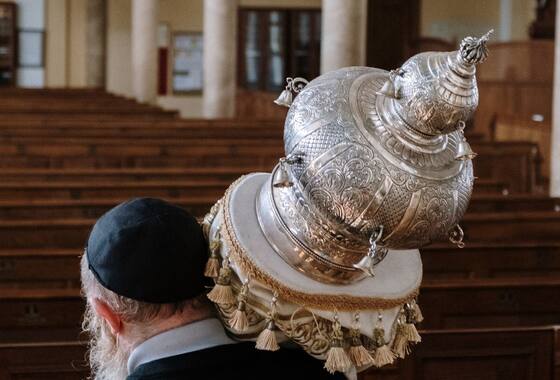 The Haftarah: What It Is and Why We Read ItWhat the Haftarah is, how it began, how it connects to the weekly Torah portion, who reads it, and what to know for a bar mitzvah.