
Learn › Prayer & Torah › The synagogue and its services
Shabbat Morning Services Explained: What Happens, in Order
What happens at Shabbat morning services? A simple walk through the order of prayers, the Torah reading, Musaf and Kiddush, and how long it all takes.
On this page · 3 min read
The quick order at a glance1. Warming up: blessings and psalms2. The Shema and the Amidah3. The Torah reading4. A talk5. Musaf and the closing prayers6. Kiddush and lunchTips for first-timersShabbat morning services follow a set order: morning blessings and psalms, the Shema and its blessings, the silent Amidah, the Torah reading with the Haftarah, a second Amidah called Musaf, closing prayers, and then Kiddush with food and conversation. The whole service can last about three hours, and you are welcome to come partway through.
The quick order at a glance
- Morning blessings and psalms of praise
- The Shema and its blessings
- The Amidah, said silently while standing
- The Torah reading and the Haftarah
- A talk, often
- Musaf, an additional Amidah for Shabbat
- Closing prayers and songs
- Kiddush
For a close look at the parts that are the same every morning of the week, see The Morning Service (Shacharit). Here we focus on what makes Shabbat different.
1. Warming up: blessings and psalms
The service opens with morning blessings and a long section of psalms and songs of praise, called Pesukei d'Zimra (פסוקי דזמרה), "verses of song." Shabbat adds extra hymns and psalms to this section, which is why it takes longer than a weekday. Do not worry if you arrive later. The synagogue is often still filling up, and arriving partway through is normal.
2. The Shema and the Amidah
The prayer leader calls the congregation to bless G-d (Barchu), and everyone answers. Then comes the Shema, with its blessings, and the Amidah, the silent standing prayer at the heart of every service. Please stay quiet while people are praying it, and do not walk in front of them.
3. The Torah reading
This is the high point of the morning. The Torah scroll is taken from the ark, carried through the congregation, and read aloud from the bimah, the raised reading platform. The weekly portion, the parsha, is divided among several people who are called up for an aliyah (עֲלִיָּה, "going up"). To see this week's portion, visit the parsha page; to understand the reading, see Torah Reading and Aliyah. The scroll is then lifted and dressed; see Synagogue Honors.
After the Torah comes the Haftarah, a reading from the Prophets that is connected to the portion or the season.
4. A talk
The rabbi often gives a sermon on Shabbat and holiday mornings. Where it falls in the service can differ from one synagogue to another. Ask the Rabbi what to expect.
5. Musaf and the closing prayers
Musaf is an additional Amidah for Shabbat, recalling the additional offering in the Temple. It is followed by closing prayers and songs, including Aleinu. People often sing together at the end.
6. Kiddush and lunch
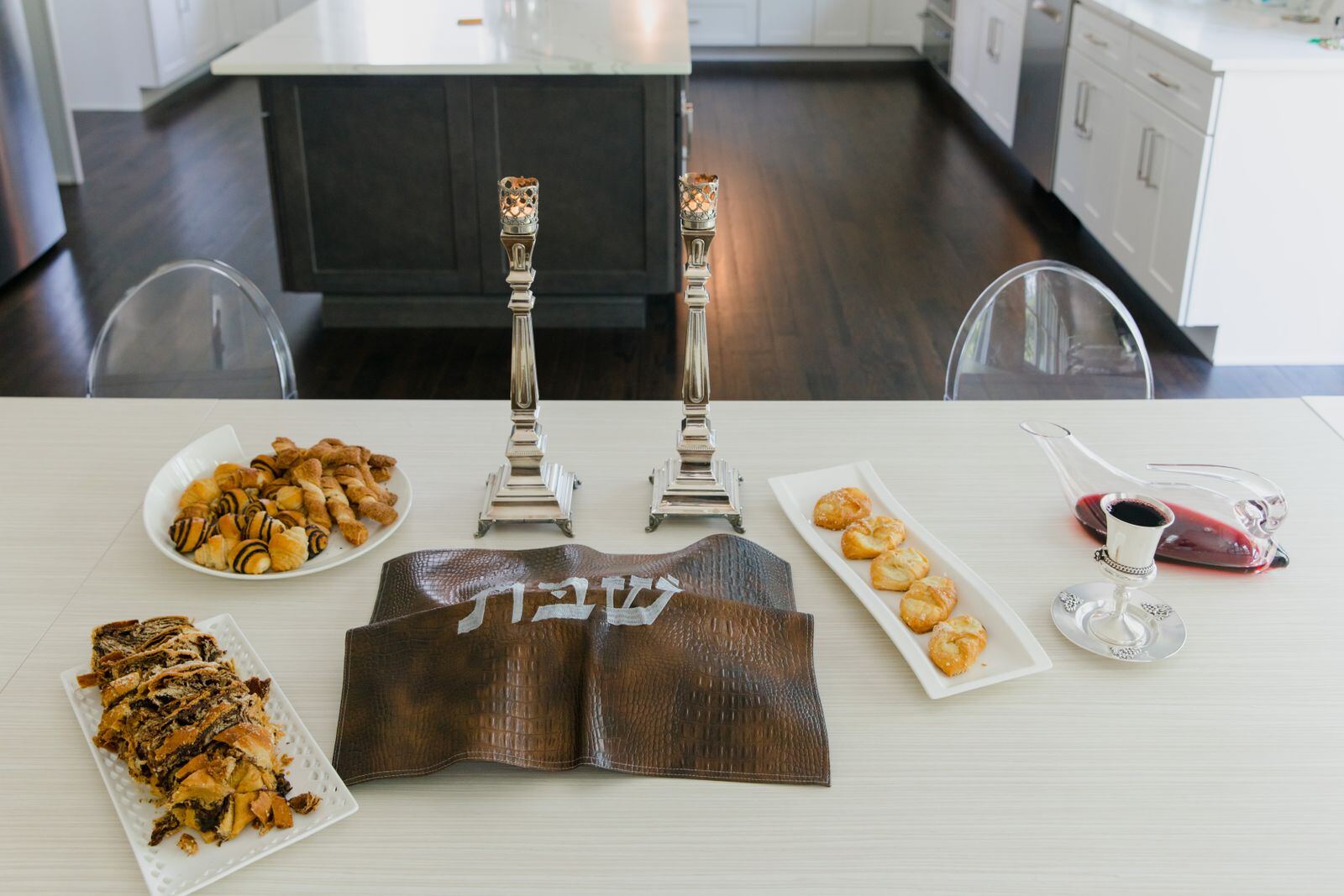
The service usually ends with Kiddush: the blessing over wine, followed by food and conversation. This is the best time to meet people. Read more in Kiddush, and if you would like to sponsor one, see Sponsor a Kiddush.
Tips for first-timers
- Use a siddur with English and learn how to find your place.
- Leave your phone at home or turned off; see Synagogue Etiquette.
- Ask a neighbor if you are lost. Everyone was new once.
In Lamorinda: Want to come this Shabbat? Call Rabbi Labkowski at 925-384-7242 to hear what is planned, or see /events.
Common questions
What happens at Shabbat morning services?
The service moves from morning blessings and psalms to the Shema, the silent Amidah, the Torah reading and Haftarah, Musaf, closing songs and Kiddush.
How long are Shabbat services?
Shabbat morning prayers with Musaf last about three hours on average. Call 925-384-7242 to ask when services begin and how long they usually run.
Can I come late to Shabbat services?
Yes. Many people arrive partway through. Come in quietly and join in.
Why is the Torah read on Shabbat?
The Torah is read aloud in synagogue on Shabbat morning, and the weekly portion is read in turn so the whole Five Books are completed each year. See Torah Reading.
What is Musaf?
Musaf (מוּסָף, "additional") is an extra Amidah said on Shabbat and holidays. See the Musaf guide.
Is there food after the service?
Usually yes. Kiddush is a light meal with wine and conversation. Ask the Rabbi what is planned.
Take the next step
- Read Synagogue Honors to see how a visitor might be invited to take part, then Going to Synagogue for the First Time.
- Families in Lafayette, Moraga and Orinda are welcome. Call 925-384-7242 to hear what is planned this Shabbat.
- Check our events and Shabbat times.
Questions about this, or something on your mind? Message the Rabbi or the Rebbetzin privately, or call 925-384-7242. · Email
Read next
 Going to Synagogue for the First Time: What to ExpectA friendly guide for first-time visitors to a synagogue: what to wear, what happens during services, Shabbat etiquette, and how to follow along.Read next →