
Learn › Lamorinda › The Jewish year in Lamorinda
A Jewish Year in Lamorinda's Seasons: Heat, Fire Season, Rain and Blossoms
How the Jewish calendar fits Lamorinda's dry summers, rainy winters and spring blossoms: holidays in the heat, prayers for rain, early Shabbat.
On this page · 4 min read
A Mediterranean climate, like the Land of IsraelHigh Holidays in late-summer heatSukkot and the first rainsEarly Shabbat on dark winter FridaysTu BiShvat: blossoms and orchardsLong summer Shabbat afternoonsThe Jewish calendar follows the seasons of the Land of Israel, which has dry summers and a rainy winter, and Lamorinda's Mediterranean climate matches it more closely than most places in America. Lafayette, Moraga and Orinda have warm, dry summers and cool, damp winters, so many Jewish holidays and prayers will feel surprisingly natural here.
A Mediterranean climate, like the Land of Israel
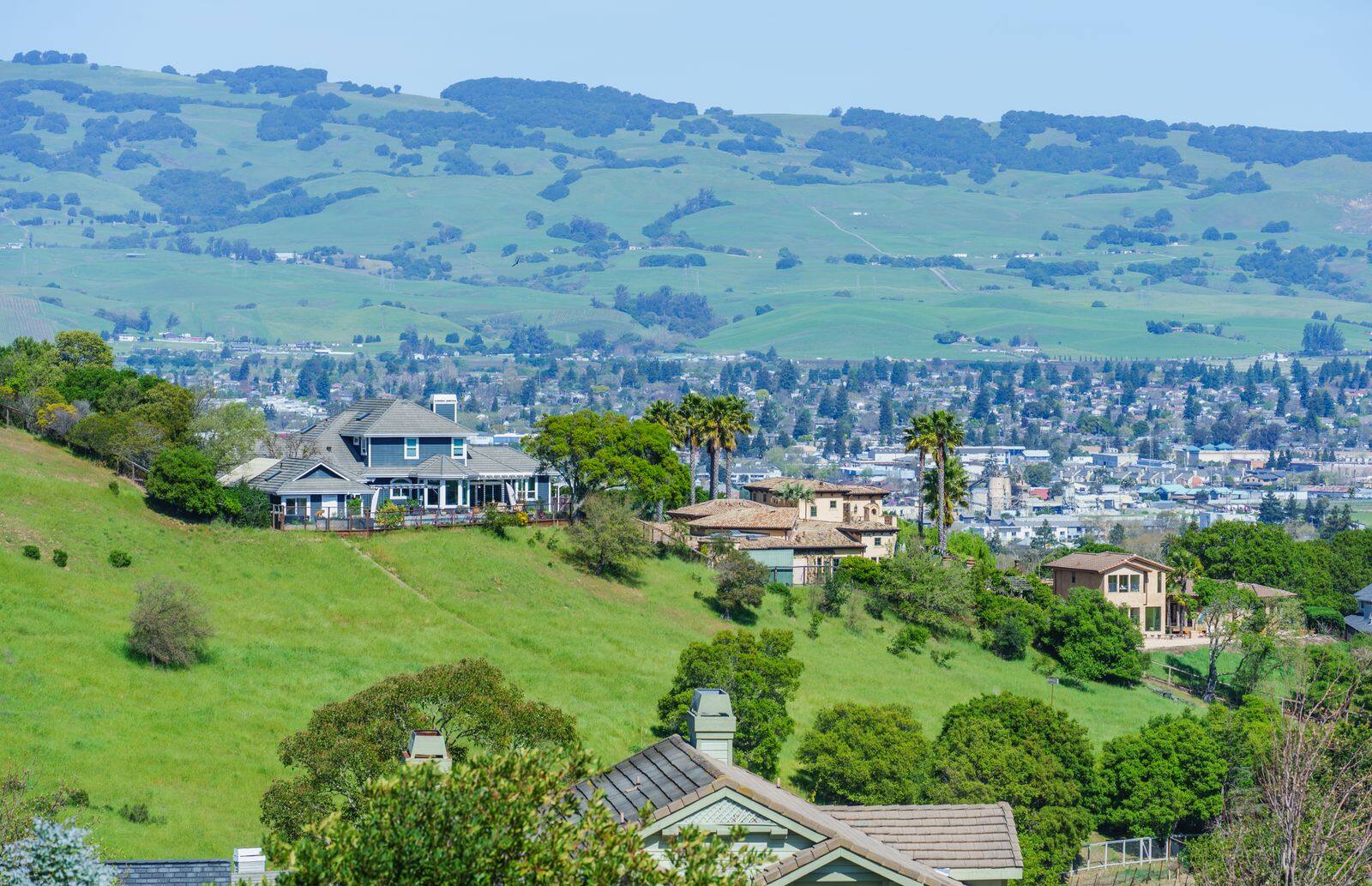
According to Wikipedia, Lafayette has a Mediterranean climate, like the rest of the Bay Area: summers are warm, dry and very sunny, winters are cool and damp, and most of the year's rain falls in winter. That is the same rhythm the Torah describes for the Land of Israel, where farmers wait all summer for the first rains and the whole year hangs on them.
This is why prayers about rain and dew, about first fruits and blossoming trees, are not abstract here. You can see the hills turn from gold to green. The Jewish year invites us to notice this and say thank you.
High Holidays in late-summer heat
Rosh Hashanah and Yom Kippur come at the end of summer, and in Lamorinda that can mean hot days and, in dry years, a fire-weather season. The calendar dates are worked out automatically on our Jewish holidays page, so we do not type them here.
A few practical thoughts:
- Dress for the weather. Our tradition values dignity on these days, and it also asks us to protect our health. Drink water the days before Yom Kippur, and if you have a medical condition, ask your doctor and the Rabbi about fasting. Health comes first.
- Tashlich, the custom of symbolically casting away our mistakes at running water on Rosh Hashanah afternoon, is done near a body of water. See our Tashlich guide, and call the Rabbi at 925-384-7242 to hear what is planned. When you go near any water or hills, follow posted signs and instructions.
- Fire season. If a Red Flag warning or power shutoff is announced, follow the official fire district and utility instructions. Jewish law places the saving of life above nearly everything, including Shabbat and Yom Kippur. If you are unsure whether something is permitted, ask the Rabbi.
For preparing the holidays themselves, see Rosh Hashanah for beginners and Yom Kippur for beginners.
Sukkot and the first rains
Sukkot, the festival of booths, comes in the fall. We sit in a sukkah, a temporary hut, and the Torah teaches that the sukkah is our home for the week. If rain makes it uncomfortable, a person may go indoors, since the sukkah is the one mitzvah you may leave when it bothers you. Many people still prefer to stay in, because the sukkah is a holy space. See our guide to the sukkah.
Immediately after, on Shemini Atzeret, Jewish communities begin to mention rain in the Amidah prayer, in the second blessing. We do not ask for rain during Sukkot, because rain then would be a sign of displeasure when we cannot sit in our huts. Only after the festival do we praise G-d as the One who "makes the wind blow and the rain fall." It is a perfect fit for the Bay Area, where the rainy season starts about now. Read more in prayers for rain and Shemini Atzeret.
Early Shabbat on dark winter Fridays
In winter the sun sets early, so Shabbat begins early. That is a gift for families with small children: dinner is not late, and the long Friday-night evening is a chance to sit together. This week Kabbalat Shabbat at Chabad of Lamorinda is at 4:30 PM, and the full candle-lighting list for Lafayette, Moraga and Orinda is on Shabbat times. Read Shabbat in winter for tips on preparing early.
Tu BiShvat: blossoms and orchards
Winter is also when the Jewish "new year of the trees," Tu BiShvat, arrives. In Israel the almond trees blossom around then, and here many backyards, orchards and streets begin to bloom as winter ends. There is a blessing to say when you first see fruit trees in blossom, described in the blessing on blossoming trees. Try a Tu BiShvat seder with fruits, or look for the holiday on our Tu BiShvat page.
Long summer Shabbat afternoons
Summer brings the opposite gift: long days and Shabbat that ends late. Many families enjoy a leisurely Shabbat lunch outside, a walk, and time to learn Torah in the afternoon. Our Shabbat guide has ideas for any season.
In Lamorinda: Wondering how your family can mark each season? Call Rabbi Labkowski at 925-384-7242 to hear what is planned.
Common questions
Does Jewish tradition connect holidays to the seasons?
Yes. The Torah connects Passover to spring, Shavuot to the early harvest and Sukkot to the fall harvest, following the seasons of the Land of Israel.
When do Jews begin praying for rain?
Jewish communities begin mentioning rain in the Amidah on Shemini Atzeret, after Sukkot. See prayers for rain.
What if it rains on Sukkot?
A person who is uncomfortable because of rain may eat indoors, since the sukkah is the one mitzvah you can leave when it bothers you. Ask the Rabbi about specifics.
Why does Shabbat start so early in winter?
Shabbat begins at sunset, which comes earlier in winter. This week's Kabbalat Shabbat time is 4:30 PM, and our Shabbat times page lists it for every week.
Is it safe to fast on Yom Kippur in a heat wave?
Jewish law puts health first. Anyone with a medical condition, or who is pregnant or elderly, should speak to a doctor and ask the Rabbi. This is not medical advice.
What do I do during fire season or a power outage on Shabbat?
Follow the official fire district and utility instructions. Saving life overrides Shabbat, and the Rabbi can answer your questions at 925-384-7242.
Take the next step
- Read the Jewish year in Lamorinda, then prayers for rain.
- See what is coming up and events.
- Call 925-384-7242 to hear what is planned for the next holiday.
Questions about this, or something on your mind? Message the Rabbi or the Rebbetzin privately, or call 925-384-7242. · Email
Read next
 The Jewish Year in Lafayette, Moraga and Orinda: Every Holiday with Chabad of LamorindaJewish holidays in Lafayette, Moraga and Orinda: High Holidays, Sukkot, Chanukah, Purim, Passover and more with Chabad of Lamorinda. All welcome.Read next →